


Table of Contents
- Why Muscle Recovery Tools Matter at Home
- How to Relieve Muscle Soreness After Lifting
-
Top 10 Muscle Recovery Tools Compared
- 1. Percussion Massage Guns
- 2. Foam Rollers
- 3. Compression Sleeves and Garments
- 4. Cold Therapy Devices
- 5. Red Light Therapy Panels
- 6. Electrical Muscle Stimulation Units
- 7. Recovery Footwear and Slides
- 8. Stretching and Mobility Tools
- 9. Topical Recovery Creams
- 10. Sleep and Stress Management Accessories
- Benefits of Percussion Massage Guns for Post-Workout Recovery
- Muscle Recovery Duration After Intense Exercise
- Recovery Tool Contraindications and Safety
- Building Your Home Recovery Protocol
- Conclusion
Last Updated: August 17, 2026
Why Muscle Recovery Tools Matter at Home
Muscle soreness doesn't stop when you leave the gym. Recovery is a structured process you can control with the right tools at home. At Nirvana Wellness Store, we offer a curated selection of wellness products designed to support your journey toward balance and vitality. Muscle recovery tools work by improving blood flow, reducing inflammation, and breaking up adhesions in soft tissue. A solid home recovery setup costs between $100-500 and delivers results comparable to professional treatment.
How to Relieve Muscle Soreness After Lifting
Muscle soreness peaks 24-72 hours post-workout (delayed onset muscle soreness, or DOMS). Active recovery, light movement, walking, or gentle stretching, increases circulation and clears metabolic waste in 10-15 minutes.
Cold therapy works best in the first 24-48 hours after intense exercise, reducing inflammation and pain through 10-15 minute sessions. After 48 hours, heat therapy becomes more effective, improving circulation and oxygen delivery to damaged muscle fibers.
Compression therapy improves lymphatic drainage and reduces swelling when worn for 2-4 hours post-workout or during sleep. Manual therapy, massage, foam rolling, and trigger point work, addresses muscle tension directly. Most athletes see the biggest gains when combining multiple modalities rather than relying on one tool alone.
Top 10 Muscle Recovery Tools Compared
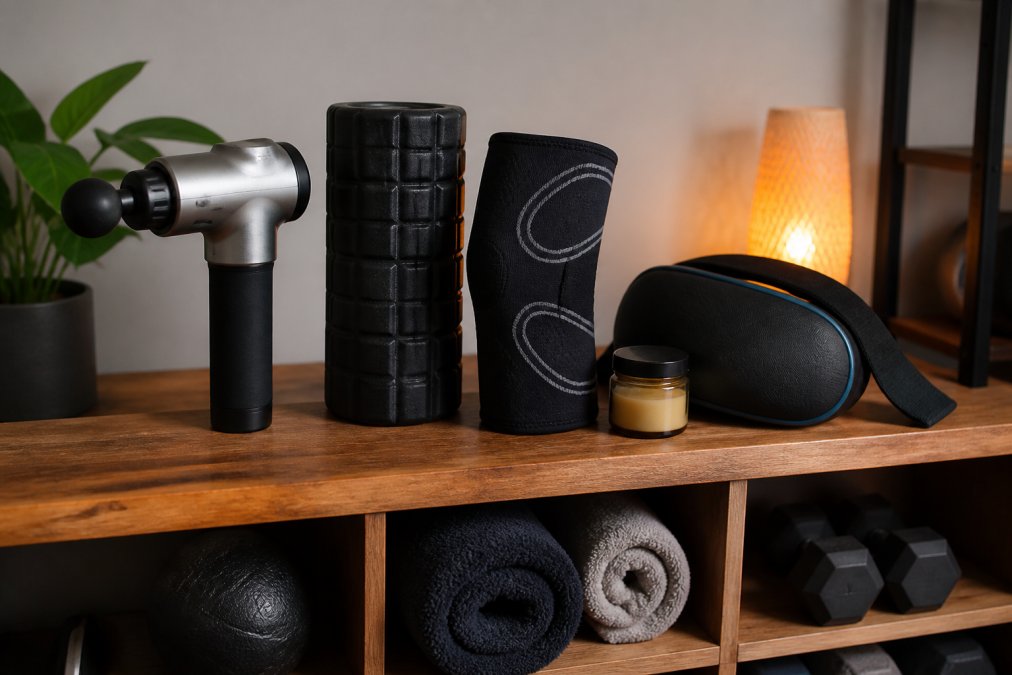
Building a complete home recovery setup means choosing tools that address different recovery mechanisms. The ten tools below cover every major category: percussion therapy, myofascial release, compression, cold therapy, light therapy, electrical stimulation, footwear, mobility work, topical relief, and sleep support.
1. Percussion Massage Guns
Percussion massage guns deliver rapid, targeted vibrations (typically 1,200-3,200 pulses per minute) that break up muscle tension, improve blood flow, and reduce soreness. Results are visible immediately, tension releases within minutes of use. Athletes typically use them 1-2 times daily, especially post-workout or before bed. A quality percussion gun costs $100-300 and lasts 2-3 years. The limitation is that they work best on larger muscle groups and can be uncomfortable on bony areas.
2. Foam Rollers
Foam rolling applies sustained pressure to soft tissue to break up adhesions and restore flexibility. Standard foam rollers cost $20-80 and come in different densities. Most people benefit from 1-2 minute rolling sessions per muscle group, 3-5 times weekly. Foam rolling works best when combined with other recovery tools.
3. Compression Sleeves and Garments
Compression garments apply consistent pressure to muscles, improving lymphatic drainage and reducing inflammation. External pressure moves fluid out of tissue spaces and back into circulation. Most athletes wear compression for 2-4 hours post-workout or overnight. Quality compression sleeves cost $30-80 per pair and last 6-12 months. The benefit is passive recovery; the limitation is that compression alone doesn't address muscle tension.
4. Cold Therapy Devices
Cold therapy reduces inflammation and pain in the first 24-48 hours after intense exercise. A simple ice bath costs almost nothing; specialized cold therapy devices run $200-500. The ideal duration is 10-15 minutes. Most athletes benefit from cold therapy 2-3 times weekly after intense sessions, not daily.
5. Red Light Therapy Panels
Red light therapy uses specific wavelengths of light (typically 600-1000 nanometers) to stimulate cellular energy production and reduce inflammation. Sessions typically last 10-20 minutes, and most athletes use them 3-5 times weekly. A quality red light panel costs $150-400. Results accumulate over time, making it best for long-term recovery optimization rather than acute soreness management.
6. Electrical Muscle Stimulation Units
Electrical muscle stimulation (EMS) uses low-level electrical current to trigger muscle contractions, increasing blood flow and reducing soreness. EMS units cost $50-300. Sessions last 15-30 minutes, and most athletes use them 2-3 times weekly. EMS works best for targeted muscle groups and is particularly effective for addressing DOMS.
7. Recovery Footwear and Slides
Recovery-focused slides reduce stress on feet and lower legs while improving circulation. Quality recovery slides cost $40-120 and are designed for post-workout wear. Wearing recovery slides for 1-2 hours post-workout significantly reduces soreness and improves next-day mobility.
8. Stretching and Mobility Tools
Stretching tools like lacrosse balls, massage sticks, and mobility blocks target specific muscle groups and improve range of motion. A lacrosse ball costs $5-10; massage sticks cost $30-60. Most athletes benefit from 10-15 minutes of stretching daily, either post-workout or before bed.
9. Topical Recovery Creams
Topical recovery creams provide localized pain relief and warming sensations that improve circulation. Nirvana Magic Cream ($24.99) combines natural ingredients designed to support muscle recovery and reduce soreness. Most athletes apply topical creams immediately post-workout or before bed. Topical creams are most effective paired with other recovery modalities.

10. Sleep and Stress Management Accessories
Sleep is where most muscle recovery happens. During deep sleep, your body releases growth hormone and increases protein synthesis, directly supporting muscle repair. A quality weighted blanket costs $100-300 and improves sleep onset and quality. Blackout curtains ($30-60) and white noise machines ($20-80) mask environmental disruptions. Stress management tools like meditation apps support psychological recovery, as mental stress triggers cortisol release, which impairs muscle recovery.
| Recovery Tool | Cost Range | Best For | Recovery Mechanism |
|---|---|---|---|
| Percussion Massage Gun | $100-300 | Acute soreness relief | Blood flow, tissue vibration |
| Foam Roller | $20-80 | Myofascial release | Sustained pressure, adhesion breaking |
| Compression Sleeves | $30-80 | Passive recovery, swelling reduction | Lymphatic drainage |
| Cold Therapy Device | $0-500 | Acute inflammation | Reduced metabolic activity, pain relief |
| Red Light Panel | $150-400 | Long-term tissue repair | Cellular energy production |
| EMS Unit | $50-300 | Muscle activation, DOMS | Electrical stimulation, circulation |
| Recovery Slides | $40-120 | Foot and leg recovery | Arch support, circulation |
| Stretching Tools | $5-60 | Flexibility, range of motion | Sustained pressure, tissue lengthening |
| Topical Recovery Cream | $15-30 | Localized soreness | Absorption, sensory stimulation |
| Sleep Accessories | $30-300 | Deep recovery, hormone release | Sleep quality improvement |
Benefits of Percussion Massage Guns for Post-Workout Recovery
Percussion massage guns deliver rapid, targeted vibrations that immediately improve muscle function and reduce soreness. Rapid vibrations increase blood flow to the target muscle, delivering oxygen and nutrients while clearing metabolic waste. The vibrations stimulate mechanoreceptors in muscle tissue, which send "all clear" signals to your nervous system and reduce pain perception. Percussion also breaks up muscle adhesions and tight spots that restrict movement.
Most athletes use percussion massage guns 1-2 times daily: once immediately post-workout (30-90 seconds per muscle group) and once before bed. Athletes using percussion guns consistently report returning to training 12-24 hours faster than those relying on passive recovery alone.
Muscle Recovery Duration After Intense Exercise
Recovery duration depends on training intensity, volume, and individual factors like age, fitness level, and sleep quality. Light training sessions require 24-48 hours of recovery. Moderate training sessions require 48-72 hours. Intense training sessions require 72-96 hours or longer.
Individual factors significantly influence recovery speed. Athletes who sleep 7-9 hours recover faster than those sleeping 5-6 hours. Those managing stress through meditation recover faster than those under chronic stress. Proper nutrition, especially protein intake and carbohydrate timing, directly supports faster recovery.
Athletes combining multiple modalities (compression, percussion, stretching, cold therapy, and sleep optimization) recover 25-50% faster than those using single tools. Age influences recovery speed; athletes in their 20s-30s typically recover in 48-72 hours, while those over 40 often need the full 72-96 hour range.
Recovery Tool Contraindications and Safety
Not every recovery tool is appropriate for every person or situation.
Percussion massage guns should not be used on bone, joints, or areas with acute inflammation. Avoid the spine, knees, or elbows. People with blood clotting disorders or taking blood thinners should consult a healthcare provider. Always start with lower settings and increase gradually.
Cold therapy should not be applied directly to skin without a barrier, and duration should not exceed 15 minutes per session. People with Raynaud's syndrome or severe circulatory issues should avoid cold therapy or use it under professional guidance.
Compression garments should fit snugly but not cut off circulation. If you experience numbness, tingling, or skin discoloration, remove the garment immediately. People with deep vein thrombosis or severe edema should consult a healthcare provider.
Red light therapy is generally safe but should not be used on areas with active skin conditions, infections, or recent surgical sites. Check with your healthcare provider if you take light-sensitive medications.
Electrical muscle stimulation should not be used over the heart, neck, or head. People with pacemakers or other electrical implants should avoid EMS entirely. Start with low intensity and short durations (10-15 minutes).
Topical recovery creams can cause allergic reactions or skin irritation in sensitive individuals. Always perform a patch test on a small area before full application. Avoid applying creams to broken skin or open wounds.
Building Your Home Recovery Protocol
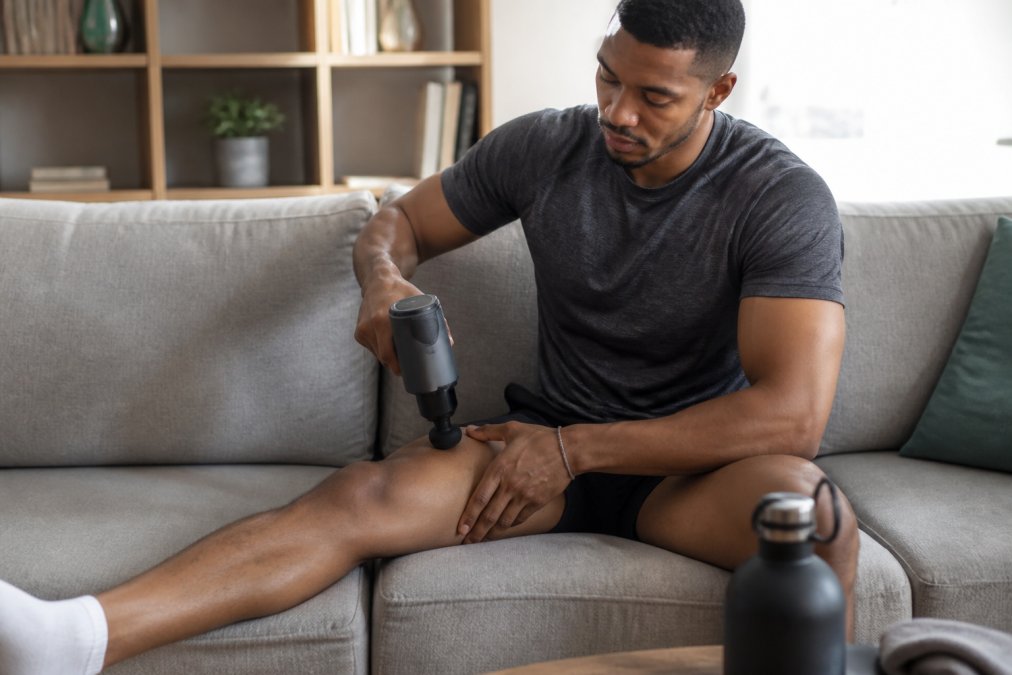
A sustainable recovery protocol integrates multiple modalities into a daily routine that doesn't feel like a chore.
Immediate post-workout (0-30 minutes): Start with 5-10 minutes of active recovery, light walking, or gentle movement. Follow with 10-15 minutes of cold therapy if training was intense.
Early recovery (30 minutes-2 hours post-workout): Apply compression garments and use percussion massage guns on primary muscle groups trained. Target 60-90 seconds per muscle group with lower intensity settings. Follow with 10-15 minutes of stretching and mobility work.
Evening protocol (before bed): Wear compression garments for 1-2 hours while doing other activities. Apply topical recovery cream like Nirvana Magic Cream ($24.99) to particularly sore areas. Use foam rollers or massage sticks on tight spots for 1-2 minutes per muscle group. Finish with 10-15 minutes of stretching or gentle yoga.
Sleep optimization: Aim for 7-9 hours nightly. Use sleep accessories like weighted blankets and blackout curtains to improve sleep quality. Manage stress through meditation or breathing exercises; even 5-10 minutes daily significantly improves recovery.
3-5x weekly additions: Red light therapy sessions (10-20 minutes) support long-term tissue repair. EMS units can be used 2-3 times weekly for targeted muscle activation and soreness management.
Maintenance and consistency: The most effective protocol is the one you'll actually follow. Start simple with compression, stretching, and sleep optimization. Add percussion massage guns and topical creams once you've established consistent use of basics. Consistency matters more than intensity.
Building an effective home recovery setup doesn't require expensive equipment or complicated protocols. Most athletes see noticeable improvement in soreness, mobility, and next-day performance within 1-2 weeks of consistent use.
Start with the basics: compression, stretching, and sleep optimization. Add a percussion massage gun and topical relief like Nirvana Magic Cream ($24.99) once you've established consistent recovery habits. Red light therapy and EMS units can be added later as your protocol becomes more comprehensive.
Recovery isn't an afterthought to training, it's where adaptation happens. Invest in your recovery setup the same way you invest in your training, and you'll return to workouts faster, stronger, and less sore.
Frequently Asked Questions
What is the most effective muscle recovery tool for home use?
The most effective tool depends on your specific needs and recovery goals. Percussion massage guns excel at reducing muscle tension and improving circulation through percussion therapy, making them ideal for post-workout soreness relief. Foam rollers provide sustained myofascial release and are excellent for addressing trigger points. For comprehensive recovery, combining multiple tools, such as a massage gun for immediate soreness, compression garments for inflammation reduction, and quality topical creams like Nirvana Magic Cream ($24.99), creates a more complete recovery protocol that addresses different aspects of muscle repair and blood flow restoration.
How long does muscle recovery duration take after intense exercise?
Muscle recovery typically occurs over 24-72 hours after intense exercise, though the timeline varies based on workout intensity, individual fitness level, and recovery methods used. Delayed onset muscle soreness (DOMS) peaks around 24-48 hours post-exercise. Active recovery tools like percussion massage guns and compression therapy can accelerate this process by enhancing circulation and reducing inflammation. Sleep, proper nutrition, and consistent use of recovery tools significantly shorten the recovery window. Most athletes experience substantial relief within 48 hours when using a comprehensive recovery protocol that combines multiple tools and techniques.
Are percussion massage guns worth the investment for home recovery?
Percussion massage guns offer measurable benefits for post-workout recovery, including improved blood flow, reduced muscle tension, and faster soreness relief. They're particularly valuable for athletes managing frequent training schedules or those with limited access to professional massage therapy. The benefits of percussion massage guns include enhanced neuromuscular recovery, improved range of motion, and reduced inflammation. For home use, they're cost-effective compared to regular massage appointments. However, they work best as part of a broader recovery strategy that includes foam rolling, compression therapy, stretching, and topical solutions. If you train regularly and experience significant post-workout soreness, the investment typically pays dividends in faster recovery and improved performance.
What should I avoid when using muscle recovery tools at home?
Avoid applying recovery tools directly over bones, joints, or areas with acute injuries. Never use percussion massage guns on the spine or over nerve clusters. Don't apply excessive pressure or use tools for extended periods on the same muscle group, typically 30-60 seconds per area is sufficient. Avoid using electrical muscle stimulation units if you have a pacemaker or heart conditions. Be cautious with cold therapy if you have poor circulation or Raynaud's syndrome. Always read product instructions and consider consulting a healthcare provider if you have chronic conditions, arthritis flare-ups, or sensitive skin before introducing new recovery tools into your routine.
This article was written using GrandRanker