
Table of Contents
- What Makes a Quality Natural Joint Soothing Recovery Balm
- Best Natural Ingredients for Joint Pain Relief
- How to Use Joint Recovery Balm for Maximum Benefit
- How Long Does Joint Balm Take to Work
- Key Benefits: Joint Flexibility, Muscle Recovery, and Skin Health
- Sustainability and Ethical Sourcing in Natural Balm Production
- Safety Considerations and Contraindications for Specific Conditions
- Where to Purchase Natural Joint Soothing Recovery Balm
Natural Joint Soothing Recovery Balm: A 2026 Buying Guide
Last Updated: July 13, 2026
When dealing with persistent joint stiffness or muscle soreness, finding the right relief becomes a priority. The market for natural joint soothing recovery balm has expanded significantly, but choosing a quality product requires knowing what actually works versus marketing hype. This guide walks you through ingredient science, application techniques, and how to identify products that deliver real results.
What Makes a Quality Natural Joint Soothing Recovery Balm
An effective natural joint soothing recovery balm combines specific botanical ingredients with carrier oils and natural emollients that reduce inflammation, improve blood flow, and support tissue recovery. Quality matters because your skin absorbs whatever you apply topically. Cheap formulations use fillers, synthetic fragrances, and low-grade botanicals that don't penetrate effectively. The best balms use cold-pressed oils, whole-plant extracts, and third-party testing to verify purity and potency.
According to research from the National Center for Complementary and Integrative Health, botanical topicals show measurable effects when formulated with sufficient active ingredient concentration. Effectiveness depends not just on what's in the balm, but how much of each ingredient is present.
Why Choose Natural Over Synthetic Options
Synthetic pain relief products rely on chemical compounds like menthol or camphor synthesized in laboratories. While they work quickly, they can cause skin irritation in sensitive individuals and don't address underlying inflammation the way botanical compounds do.
Natural balms contain polyphenols, terpenes, and other plant compounds with anti-inflammatory properties. Your body recognizes these as plant-based materials rather than foreign chemicals, meaning fewer side effects and better long-term tolerance for daily use. The trade-off is speed: a natural balm typically takes 5-15 minutes to reach peak effectiveness, but relief lasts longer without abrupt fading.
Best Natural Ingredients for Joint Pain Relief
Understanding core ingredients helps you spot quality formulations immediately. The best balms combine three categories: primary botanicals, supporting essential oils, and nourishing carrier oils.
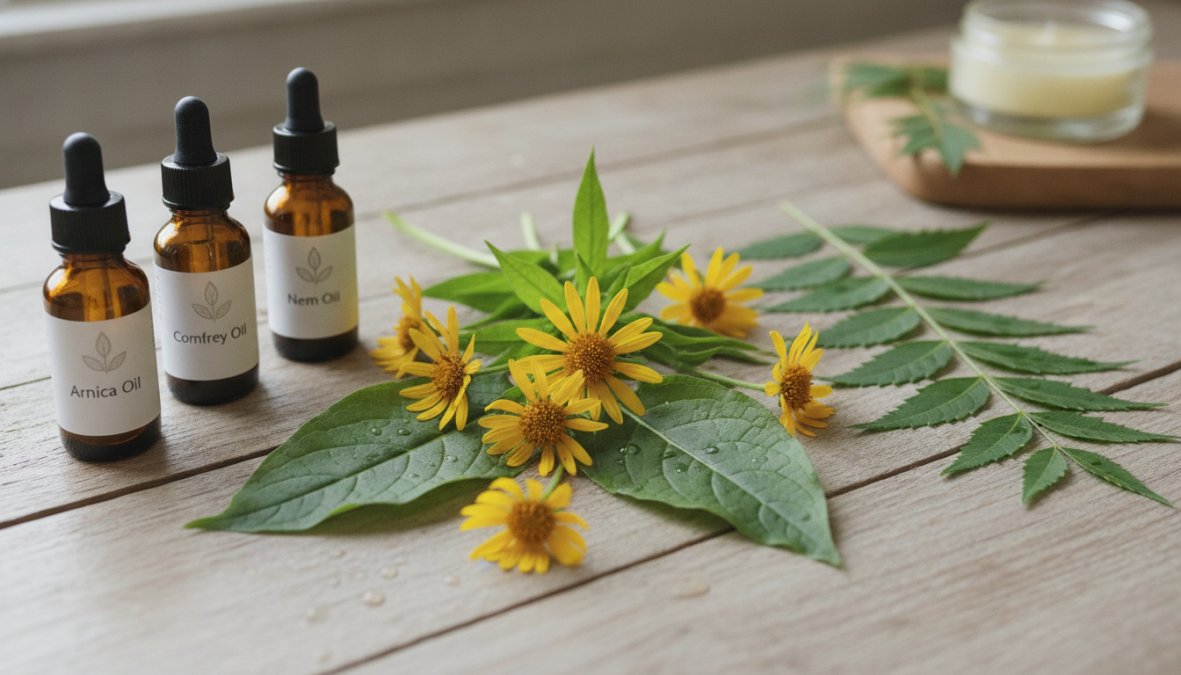
Arnica, Comfrey, and Neem: The Core Trio
Arnica montana is the most researched botanical for joint and muscle support. It contains helenalin and other sesquiterpenes that reduce inflammation and improve circulation. Comfrey root contains allantoin, a compound that promotes cell proliferation and collagen synthesis, making it particularly useful for joint stiffness and chronic soreness. Neem oil brings antimicrobial and anti-inflammatory properties while supporting skin health.
Together, these three ingredients address inflammation, tissue repair, and skin health simultaneously. A balm featuring all three typically outperforms formulations using only one or two.
Supporting Botanicals and Essential Oils
Quality balms include supporting botanicals that enhance efficacy. Eucalyptus oil improves blood flow and adds cooling sensation. Peppermint oil provides anti-inflammatory support. Frankincense and myrrh are traditional aromatics with documented anti-inflammatory properties; their presence indicates a formulation prioritizing effectiveness over cost reduction.
Turmeric and ginger add additional anti-inflammatory compounds. Turmeric contains curcumin, one of the most studied anti-inflammatory compounds in botanical medicine.
| Ingredient | Primary Benefit | Sensory Profile |
|---|---|---|
| Arnica | Anti-inflammatory, circulation | Herbal, neutral |
| Comfrey | Tissue repair, collagen support | Earthy, subtle |
| Neem | Antimicrobial, skin health | Distinctive, strong |
| Eucalyptus | Blood flow, cooling | Fresh, minty |
| Frankincense | Deep anti-inflammatory | Warm, resinous |
| Turmeric | Potent anti-inflammatory | Warm, spicy |
Carrier Oils and Natural Emollients
The carrier oil base determines absorption and longevity. Cold-pressed coconut oil absorbs quickly and provides antimicrobial support. Sesame oil penetrates deeply and is traditionally used in Ayurvedic medicine for joint support. Castor oil stays on skin longer, ideal for overnight applications. Shea butter and cocoa butter add skin-nourishing properties. Beeswax acts as a natural preservative and creates solid consistency.
Quality balms use organic, cold-pressed oils rather than refined versions. Cold-pressing preserves beneficial compounds that heating destroys, which is why premium balms cost more.
How to Use Joint Recovery Balm for Maximum Benefit
Application technique, frequency, and timing all influence effectiveness.
Application Techniques for Targeted Areas
Start with a small amount, roughly pea-sized for fingers, quarter-sized for a knee or shoulder. Warm the balm between your palms by rubbing your hands together for 3-5 seconds. This warming step helps the balm penetrate more effectively.
Apply directly to the affected area using gentle circular motions. Massage for 1-2 minutes, allowing the balm to absorb. For joint areas, extend the massage to surrounding muscles, as tension in surrounding tissue often contributes to joint discomfort. Apply when your skin is clean and dry. Many people apply before bed to allow overnight absorption without interference from daily activities.
Frequency and Dosage Guidelines
Most quality balms are designed for 1-3 applications daily. A common approach is applying in the morning after showering and again before bed. Don't exceed 3-4 applications daily; your skin can only absorb so much topical product at once.
For acute soreness following activity, apply within 2-4 hours. For chronic joint stiffness, consistent daily application for 2-3 weeks typically shows the most noticeable results.
How Long Does Joint Balm Take to Work
The timeline for experiencing relief varies based on several factors.
Fast-Acting Relief vs. Long-Term Recovery
Many quality balms provide noticeable relief within 5-15 minutes of application. This is when cooling and warming sensations kick in and initial inflammation reduction begins. Deeper, more lasting relief develops over hours and days as botanical compounds penetrate tissue and address underlying inflammation, typically peaking around day 3-7 of consistent use.
Long-term recovery, where you experience genuinely improved joint function and reduced baseline stiffness, usually requires 2-4 weeks of consistent application. This is when tissue-repair compounds in ingredients like comfrey begin showing effects.
Factors That Influence Effectiveness Timeline
Severity of your condition matters significantly. Mild stiffness responds faster than chronic arthritis. Your application technique influences timeline; proper massage and warm-up of the balm accelerates absorption. Ingredient concentration plays a major role, a balm with 20% arnica extract works faster than one with 5%.
Your individual biochemistry affects response time. Age, circulation quality, and overall inflammation levels all influence how quickly your body responds to topical botanicals.
Key Benefits: Joint Flexibility, Muscle Recovery, and Skin Health
A quality natural joint soothing recovery balm delivers benefits beyond temporary pain relief.
Anti-Inflammatory Action and Blood Flow Enhancement
The primary mechanism involves reducing inflammatory compounds that accumulate in joint tissue. Arnica, turmeric, and comfrey all contain compounds that inhibit inflammatory pathways. Improved blood flow is the second major mechanism; better circulation delivers oxygen and nutrients to tissues while removing inflammatory metabolites. Essential oils like eucalyptus and peppermint stimulate vasodilation, increasing blood flow to the area.
Research from the Journal of Herbal Medicine documents that topical botanical applications measurably increase local blood flow and reduce inflammatory markers in affected tissue.
Moisturizing and Skin Elasticity Support
Joint areas often develop dry, irritated skin from repeated movement. Quality balms address this through nourishing oils and natural emollients. Shea butter, cocoa butter, and cold-pressed oils provide deep hydration while addressing underlying joint issues. Balms containing neem prevent secondary skin issues while improving skin elasticity.
Sustainability and Ethical Sourcing in Natural Balm Production
The best natural joint soothing recovery balm comes from companies committed to sustainable sourcing and ethical production practices.
Organic, Cold-Pressed, and Cruelty-Free Standards
Organic certification ensures botanical ingredients were grown without synthetic pesticides or fertilizers. Organic ingredients also tend to have higher concentrations of beneficial compounds. Cold-pressed oils retain therapeutic compounds that heat-extraction methods destroy. Cruelty-free certification means no animal testing and no animal-derived ingredients except ethically-sourced beeswax.
Why Ingredient Quality Matters for Your Health
Lower-cost balms often use synthetic fragrance oils instead of pure essential oils, which can trigger skin sensitivity. Pesticide residues in non-organic botanicals accumulate on your skin with repeated application. The extraction method for active compounds affects potency; the best balms use multiple extraction methods to capture the full spectrum of beneficial compounds.
Safety Considerations and Contraindications for Specific Conditions
While natural joint soothing recovery balm is generally safe for topical use, certain conditions warrant caution.
When to Avoid or Modify Use
Avoid applying balm to broken skin, open wounds, or areas with active infections. If you're pregnant, consult a healthcare provider before using balms containing essential oils like peppermint or eucalyptus. People with sensitive skin should patch-test the balm on a small area before full application.
If you're taking blood thinners or have a bleeding disorder, consult your doctor before using balms containing comfrey or ginger. Avoid applying balm immediately before or after heat therapy; wait at least 30 minutes between applications. If you have a known allergy to any ingredient, avoid that balm.
Where to Purchase Natural Joint Soothing Recovery Balm
Nirvana Magic Cream: Fast-Acting Natural Pain Relief
Nirvana Magic Cream represents an excellent option for anyone seeking a proven natural joint soothing recovery balm. Priced at $24.99, it delivers professional-grade formulation at an accessible price point. The product has been trusted since 2018, indicating consistent quality and customer satisfaction.
The formulation combines multiple botanical ingredients for comprehensive joint support, uses natural carrier oils for effective absorption, and includes essential oils for enhanced circulation and anti-inflammatory action. What sets Nirvana Magic Cream apart is the balance between potency and accessibility. Many premium balms cost $40-60 per jar. Nirvana Magic Cream delivers comparable effectiveness at a fraction of the price, making it practical for daily use.
The fast-acting formulation means you experience relief within 5-15 minutes while the botanical base provides longer-term anti-inflammatory and tissue-support benefits. For anyone managing chronic joint stiffness, post-workout muscle soreness, or general joint maintenance, Nirvana Magic Cream offers the ingredient quality and proven track record necessary for confident daily use.
Choosing the right natural joint soothing recovery balm requires understanding ingredient science, application technique, and realistic timelines for results. Nirvana Magic Cream stands out through its combination of proven botanical ingredients, effective formulation, and accessible pricing. Start with consistent daily application, use proper technique, and give the balm 3-7 days to demonstrate effectiveness. Quality natural balms deliver measurable improvements in joint flexibility, reduced inflammation, and enhanced skin health when used correctly.
Frequently Asked Questions
What ingredients should I look for in a natural joint soothing recovery balm?
Look for arnica, comfrey, and neem as core anti-inflammatory botanicals. Essential oils like camphor, eucalyptus, and frankincense enhance relief, while carrier oils such as sesame oil, castor oil, and coconut oil provide deep penetration. Beeswax or shea butter ensures proper consistency and skin elasticity support. Cold-pressed, organic ingredients deliver maximum potency without pesticides or synthetic additives.
How long does joint balm take to work for pain relief?
Fast-acting formulas may provide noticeable relief within 15-30 minutes of application, while sustained relief typically develops over 2-4 hours. Long-term benefits for joint flexibility and muscle recovery improve with consistent use over days or weeks. Timeline depends on balm formulation, ingredient concentration, application technique, and severity of your condition. Some users experience immediate warmth and reduced stiffness, while others notice cumulative benefits over time.
Can I use natural joint recovery balm daily, and how often should I apply it?
Most natural joint soothing recovery balms are safe for daily use on targeted areas like knees, shoulders, and back. Apply 2-3 times daily or as needed, using a small amount and massaging gently into affected joints. Always follow product-specific instructions, as formulation strength varies. For chronic conditions, consistent daily application often yields better results than occasional use. Allow skin to fully absorb before covering with clothing.
Are there any contraindications I should know before using a joint balm?
Avoid application on broken skin, open wounds, or areas with acute inflammation without medical clearance. Some essential oils may cause sensitivity in pregnant or nursing individuals, consult healthcare providers first. If you have neuropathy or reduced skin sensation, test on a small area first. Certain botanical ingredients may interact with medications or conditions. Perform a patch test 24 hours before full application to check for allergic reactions.
This article was written using GrandRanker