
Table of Contents
- Understanding Finger Joint Stiffness: Causes and Natural Relief
- 1. Hand Exercises and Physical Therapy for Joint Mobility
- 2. Hot and Cold Therapy: Thermotherapy and Cryotherapy
- 3. Topical Natural Remedies: Capsaicin Creams and Herbal Salves
- 4. Dietary Supplements: Fish Oil, Turmeric, and Magnesium
- 5. Anti-Inflammatory Diet for Joint Pain and Stiffness
- 6. Paraffin Wax Baths and Splinting for Joint Support
- 7. Vitamin D and Nutritional Support for Cartilage Health
9 Natural Remedies for Finger Joint Stiffness That Work
Last Updated: July 11, 2026
If your fingers feel stiff when you wake up, you're not alone. Morning stiffness affects millions of people, and finding the best natural remedies for finger joint stiffness can make a real difference in daily function. Proven natural approaches exist that don't require prescription medication or invasive procedures. Below, we'll show you exactly how to implement remedies that address inflammation, improve range of motion, and restore hand mobility.
Understanding Finger Joint Stiffness: Causes and Natural Relief
Finger joint stiffness stems from arthritis, reduced synovial fluid production, inflammation, or prolonged immobility overnight. When cartilage deteriorates or inflammatory markers spike, joints lose their smooth gliding action. Natural remedies work by reducing this inflammatory response, improving circulation, and supporting cartilage health through dietary and topical interventions.
Research from Mayo Clinic's arthritis overview indicates that morning stiffness lasting more than 30 minutes often signals osteoarthritis or rheumatoid arthritis. The inflammation that builds overnight restricts blood flow to the joints. Most people see measurable improvement within 2-3 weeks of consistent application.
1. Hand Exercises and Physical Therapy for Joint Mobility
Movement is medicine for stiff finger joints. Targeted hand exercises increase synovial fluid production, strengthen stabilizing muscles, and gradually restore range of motion.
Essential Stretches and Strengthening Moves
Begin with gentle stretches before attempting resistance work. Hold each stretch for 15-30 seconds without forcing pain.
The Finger Spread: Hold your hand flat, palm down. Slowly spread fingers apart as far as comfortable, hold 5 seconds, release. Repeat 10 times.
The Fist Stretch: Make a loose fist, hold 3 seconds, then slowly straighten fingers completely. Repeat 15 times.
The Knuckle Bend: Keep your fingers straight while bending only at the knuckles (not the middle or tip joints). Hold 3 seconds, release. Do 12 repetitions per hand.
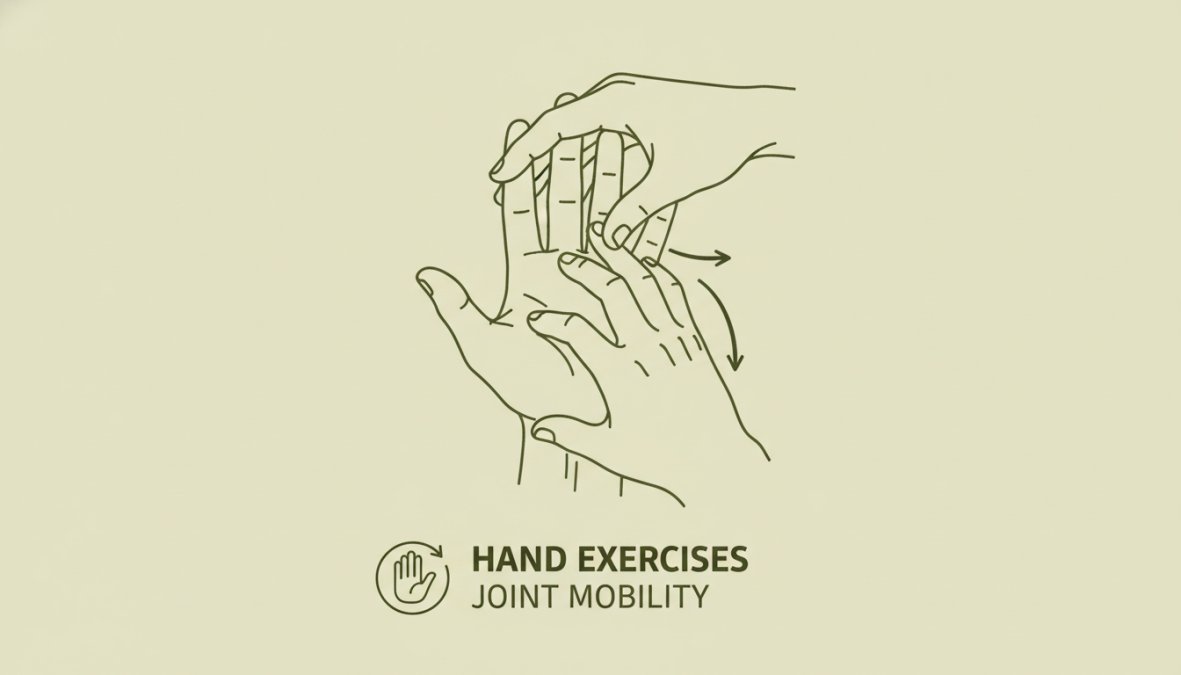
Resistance Work: Use therapy putty or a finger grip trainer. Squeeze for 5 seconds, rest 10 seconds, repeat 8 times. Progress to firmer resistance as flexibility improves. Most people notice decreased morning stiffness within one week of daily practice.
Consistency beats intensity. Five minutes of daily hand exercises outperforms 30-minute weekly sessions.
2. Hot and Cold Therapy: Thermotherapy and Cryotherapy
Temperature modulation directly addresses joint inflammation and stiffness. Heat increases blood flow and relaxes muscles; cold reduces inflammatory markers and numbs pain signals.
Heat therapy works best for:
- Morning stiffness (apply for 10-15 minutes before rising)
- Chronic pain and reduced mobility
- Preparing joints for exercise
Warm water soaks are simple and effective. Submerge hands in 104-107°F water for 10-15 minutes. Many people combine this with gentle hand exercises while soaking.
Cold therapy works best for:
- Acute swelling after activity
- Inflammatory flare-ups
- Post-exercise soreness
Ice packs or cold water submersion (59-68°F) reduce inflammation within 10-15 minutes. Apply cold for 10 minutes maximum to avoid tissue damage. Cold therapy is most effective within 48 hours of a flare-up.
Many people alternate: heat in the morning and evening, cold during midday if swelling occurs. This dual approach addresses both chronic stiffness and acute inflammation.
3. Topical Natural Remedies: Capsaicin Creams and Herbal Salves
Topical applications deliver pain relief directly to affected joints without systemic absorption. Capsaicin creams, derived from chili peppers, work by depleting substance P, a neurotransmitter that signals pain.
Why Nirvana Magic Cream Works for Joint Discomfort
Nirvana Magic Cream combines natural ingredients specifically formulated for joint and muscle discomfort. At $24.99, it provides fast-acting topical relief without the side effects of NSAIDs. Users report noticeable relief within 15-20 minutes of application. Apply a small amount (roughly pea-sized) directly to stiff joints, massage gently for 1-2 minutes, and allow 15 minutes before washing hands.
For best results, apply after heat therapy when skin is warm and more receptive to topical absorption. Use 2-3 times daily during acute flare-ups, then reduce frequency as stiffness improves.
Other effective topical options include Tiger Balm and arnica-based creams. For sustained improvement, combine topical creams with systemic approaches like supplements and exercise.
4. Dietary Supplements: Fish Oil, Turmeric, and Magnesium
Oral supplements address inflammation from within, supporting joint health at the cellular level. Three supplements have the strongest evidence for finger joint stiffness relief.
Fish Oil (Omega-3 Fatty Acids): Fish oil reduces inflammatory markers throughout the body, including in joint synovial fluid. Dosing typically ranges from 1,000-3,000 mg daily of combined EPA and DHA. Studies show measurable improvement in morning stiffness and joint pain within 8-12 weeks of consistent use.
Turmeric (Curcumin): Curcumin, the active compound in turmeric, inhibits inflammatory pathways similar to NSAIDs but without gastrointestinal side effects. Effective dosing requires 500-1,000 mg of standardized curcumin extract daily. Absorption improves dramatically when combined with black pepper (piperine). Many people notice reduced joint swelling and improved flexibility within 3-4 weeks.
Magnesium: Magnesium supports muscle relaxation and reduces inflammatory cytokines. Supplementing 300-400 mg daily (especially in the evening) reduces muscle tension around stiff joints and improves sleep quality. Magnesium glycinate is better tolerated than oxide forms.
Combine these three supplements for synergistic effect. Most people tolerate these supplements well with minimal side effects.
5. Anti-Inflammatory Diet for Joint Pain and Stiffness
What you eat directly influences inflammatory markers affecting finger joints. An anti-inflammatory diet reduces systemic inflammation and provides building blocks for cartilage repair.
Foods That Support Joint Health and Reduce Inflammation
Fatty Fish: Salmon, mackerel, sardines, and trout contain high omega-3 concentrations. Aim for 2-3 servings weekly.
Berries: Blueberries, strawberries, and raspberries contain anthocyanins that suppress inflammatory cytokines. A handful daily provides measurable benefit within weeks.
Leafy Greens: Spinach, kale, and collards contain vitamins K and C, essential for cartilage synthesis. Aim for 1-2 cups daily.
Bone Broth: Simmered bones release collagen, gelatin, and amino acids that support cartilage structure. Consume 1-2 cups daily for maximum benefit.
Extra Virgin Olive Oil: Contains oleocanthal, a compound with anti-inflammatory effects similar to ibuprofen. Use 2-3 tablespoons daily in salads or drizzled on cooked foods. Avoid cooking with it, as heat destroys the active compounds.
Avoid: Refined sugars, seed oils high in omega-6, processed foods, and excessive alcohol. These promote inflammatory markers and accelerate cartilage degradation.
6. Paraffin Wax Baths and Splinting for Joint Support
Paraffin wax therapy provides sustained heat penetration deeper than water or heating pads. A paraffin wax bath heats wax to approximately 130°F, then you dip hands repeatedly to build a thick coating. The wax insulates heat, maintaining joint temperature for 15-20 minutes. This extended warmth increases synovial fluid production and reduces stiffness more effectively than water soaks.
Home paraffin bath units cost $30-60 and last for years. Use 2-3 times weekly for chronic stiffness, daily during acute flare-ups. Most people report noticeable improvement in morning mobility within one week of regular use.
Splinting for Joint Protection:
Compression gloves and finger splints reduce joint movement during rest periods, preventing inflammation from recurring. Wear compression gloves during sleep or throughout the day if stiffness is severe. IMAK compression arthritis gloves ($20-30) offer proven relief for arthritis-related stiffness. Wear overnight for best results; many people wake with noticeably less morning stiffness after consistent nightly use.
7. Vitamin D and Nutritional Support for Cartilage Health
Vitamin D deficiency correlates strongly with increased joint pain and accelerated cartilage degradation. Vitamin D supports calcium absorption and modulates immune function, reducing autoimmune-driven inflammation.
Supplementing 1,000-4,000 IU daily restores adequate levels within 8-12 weeks. Many people notice joint pain reduction as vitamin D levels normalize.
Additional Nutritional Considerations:
Glucosamine and Chondroitin: These amino acids support cartilage structure. Dosing typically involves 1,500 mg glucosamine and 1,200 mg chondroitin daily for 8-12 weeks.
Collagen Peptides: Oral collagen supplements provide amino acids directly incorporated into cartilage. 10-20 grams daily shows promise in early research.
MSM (Methylsulfonylmethane): Contains sulfur necessary for cartilage and connective tissue synthesis. 1,500-3,000 mg daily may reduce joint pain and stiffness.
These nutritional approaches work slowly; expect 6-12 weeks before full benefits emerge. Combine with faster-acting approaches like heat therapy and exercise for comprehensive relief.
| Remedy Type | Best For | Timeline | Frequency |
|---|---|---|---|
| Hand exercises | Building strength and range of motion | 1-2 weeks to notice | Daily, 5 minutes |
| Heat therapy | Morning stiffness and chronic pain | Immediate relief | 2-3 times daily |
| Cold therapy | Acute swelling and flare-ups | 10-15 minutes relief | As needed |
| Topical creams | Quick pain relief during the day | 15-20 minutes onset | 2-3 times daily |
| Fish oil/turmeric | Reducing systemic inflammation | 8-12 weeks | Daily |
| Anti-inflammatory diet | Supporting cartilage health | 2-4 weeks | Ongoing |
| Paraffin wax baths | Deep joint heat penetration | 1 week regular use | 2-3 times weekly |
| Compression gloves | Nighttime joint protection | 1-2 weeks | Nightly |
| Vitamin D supplementation | Supporting bone and immune health | 8-12 weeks | Daily |
Practical Implementation: Creating Your Finger Joint Relief Protocol
Start with two or three remedies rather than attempting everything simultaneously. This approach allows you to identify which interventions work best for your specific situation while remaining sustainable long-term.
Week 1-2 Protocol:
- Morning: 10-minute warm water hand soak followed by gentle finger stretches
- Throughout day: Apply topical cream when stiffness increases
- Evening: Paraffin wax bath or heating pad, followed by compression gloves overnight
Week 3-4 Addition:
- Start fish oil and turmeric supplementation
- Increase hand exercises to 10 minutes daily
- Implement anti-inflammatory dietary changes
Week 5-8 Expansion:
- Add magnesium supplementation
- Introduce cold therapy on days with increased swelling
- Consider glucosamine/chondroitin if improvement plateaus
This gradual approach prevents overwhelm and allows you to track which interventions provide the most benefit. Most people identify their most effective remedies within 4 weeks.
Finding the best natural remedies for finger joint stiffness requires addressing multiple mechanisms simultaneously: inflammation reduction, improved circulation, cartilage support, and joint protection. The combination of heat therapy, targeted exercises, anti-inflammatory nutrition, and strategic supplementation addresses root causes rather than masking symptoms. Start with the remedies that align with your lifestyle, remain consistent for 4-6 weeks, and adjust based on your individual response. Most people experience significant improvement in finger mobility and reduced morning stiffness within this timeframe.
Frequently Asked Questions
What are the best natural remedies for finger joint stiffness?
The most effective natural remedies for finger joint stiffness include hand exercises and stretching, hot and cold therapy, topical creams with capsaicin, dietary supplements like fish oil and turmeric, anti-inflammatory foods, and compression support. Many people find relief by combining multiple approaches, for example, using heat therapy in the morning, performing gentle exercises, and applying a natural pain relief cream like Nirvana Magic Cream throughout the day. Results vary by individual and the underlying cause of stiffness.
Can exercises help reduce stiff finger joints?
Yes, exercises for stiff finger joints are highly effective for improving range of motion and reducing pain. Gentle stretching, knuckle bends, and fist stretches help maintain joint flexibility and increase blood flow to affected areas. Physical therapy exercises should be performed regularly but gently to avoid overexertion. Start with low-resistance movements and gradually increase intensity as comfort improves. Consistency is key, even 5-10 minutes daily can show noticeable improvement in joint mobility over time.
Does an anti-inflammatory diet help with finger joint pain?
An anti-inflammatory diet for joint pain can significantly reduce stiffness and discomfort by addressing inflammation at the source. Foods rich in omega-3 fatty acids (salmon, walnuts), turmeric, ginger, and leafy greens support cartilage health and reduce systemic inflammation. Reducing processed foods and added sugars further helps manage joint pain. While dietary changes take time to show effects, they address underlying causes rather than just masking symptoms, making them valuable for long-term joint health.
What causes morning finger stiffness and how can I prevent it?
Morning finger stiffness often results from reduced blood flow and fluid accumulation in joints during sleep, common in both osteoarthritis and rheumatoid arthritis. Prevention strategies include wearing compression gloves overnight, performing gentle stretches before bed, keeping hands warm with paraffin wax baths before sleep, and maintaining proper hand positioning. Anti-inflammatory supplements taken consistently may also reduce overnight stiffness. If morning stiffness lasts more than 30 minutes or worsens, consult a rheumatologist to rule out underlying conditions.
Are there topical creams that naturally relieve finger joint pain?
Yes, topical creams containing natural ingredients like capsaicin, arnica, and herbal extracts provide localized relief for finger joint pain. Nirvana Magic Cream, for example, combines natural pain-relief ingredients for fast-acting comfort without harsh chemicals. These creams work by improving blood flow and reducing inflammation at the application site. They're particularly useful for targeted relief before activities or combined with other remedies like exercises and supplements for comprehensive joint care.
This article was written using GrandRanker