
Table of Contents
- How to Reduce Joint Swelling Naturally: A Step-by-Step Approach
- Anti-Inflammatory Diet for Joint Pain and Swelling
- Heat and Cold Therapy Techniques for Joint Swelling
- Topical Pain Relief Creams and Natural Remedies
- Exercises for Joint Swelling and Mobility
- Best Natural Supplements for Joint Inflammation
- Weight Management and Sleep Hygiene for Joint Health
- When to See a Doctor for Joint Swelling
Last Updated: July 12, 2026
How to Reduce Joint Swelling Naturally: A Step-by-Step Approach
Joint swelling occurs when synovial fluid accumulates in and around joints, typically triggered by inflammatory responses to injury, overuse, or systemic conditions like arthritis. A layered approach combining diet, movement, and targeted therapies produces more sustainable results than relying solely on pharmaceutical interventions.
This guide covers seven proven methods to reduce joint swelling naturally: anti-inflammatory dietary shifts, thermal therapies, targeted exercises, and lifestyle adjustments that address root causes of inflammation rather than just masking symptoms.
| Method | Best Timing | Duration | Frequency |
|---|---|---|---|
| Anti-inflammatory diet | Ongoing baseline | Weeks 2-4 to see results | Daily |
| Heat therapy | After stiffness | 15-20 minutes | 2-3x daily |
| Cold therapy | After activity | 10-15 minutes | As needed |
| Targeted stretching | Morning/evening | 10-15 minutes | Daily |
| Weight management | Ongoing process | Months 2-3+ | Consistent effort |
| Quality sleep | Evening routine | 7-9 hours | Nightly |
| Topical creams | Localized pain | Apply as needed | 2-3x daily |
Anti-Inflammatory Diet for Joint Pain and Swelling
Your dietary choices directly influence inflammatory markers in your bloodstream. Foods rich in omega-3 fatty acids and antioxidants suppress the cytokines that trigger joint swelling, while a diet heavy in saturated fats and processed foods amplifies systemic inflammation. Research shows anti-inflammatory eating patterns can reduce joint swelling within 2-4 weeks for many people.
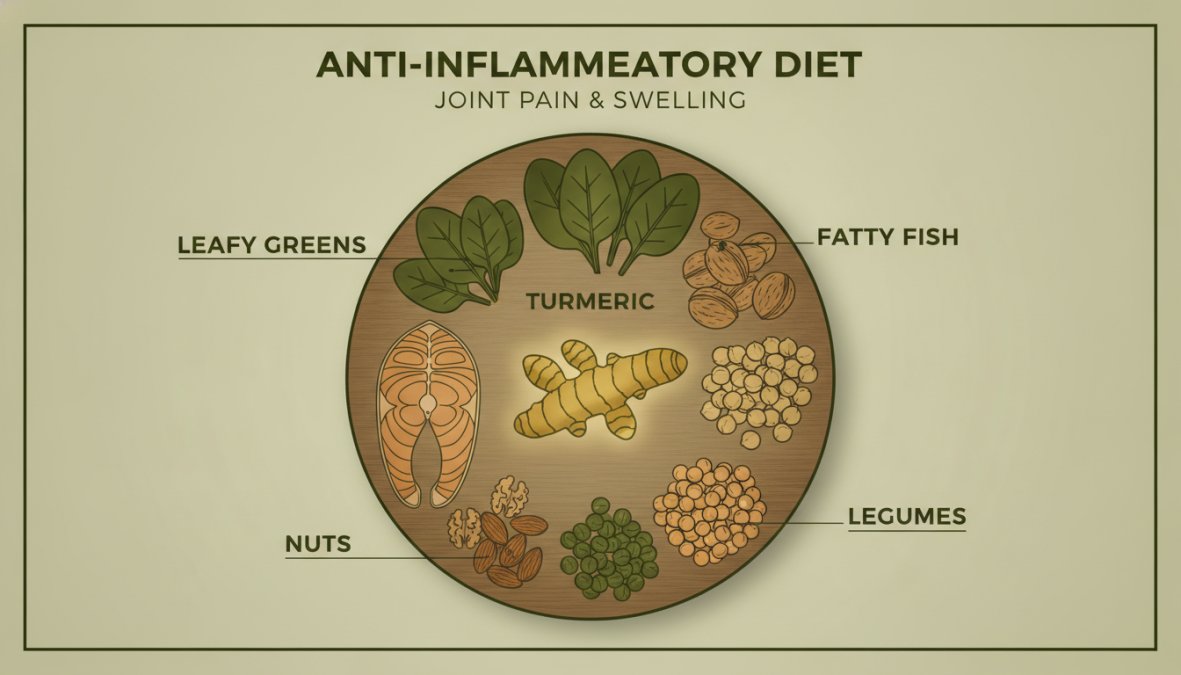
Foods to Eat for Joint Health
Fatty fish like salmon, mackerel, and sardines contain EPA and DHA, omega-3 compounds that directly suppress inflammatory markers. Aim for 2-3 servings weekly.
Turmeric contains curcumin, extensively studied for anti-inflammatory properties. Pair turmeric with black pepper (which contains piperine) to increase curcumin absorption by up to 2000%.
Leafy greens like spinach and kale contain vitamins K and C plus antioxidants that combat oxidative stress in joints.
Berries (blueberries, raspberries, strawberries) provide anthocyanins, potent antioxidants that reduce inflammatory markers. A single serving daily shows measurable effects within weeks.
Legumes like lentils and chickpeas offer plant-based protein plus polyphenols that suppress inflammatory responses.
Nuts and seeds provide magnesium and healthy fats that support cartilage health and reduce synovial inflammation.
Foods to Avoid: Saturated and Trans Fats
Saturated fats and trans fats directly amplify inflammatory signaling in your joints by increasing arachidonic acid levels, which your body converts into inflammatory molecules.
Eliminate or drastically reduce:
- Processed meats (bacon, sausage, deli meats)
- Deep-fried foods and fast food
- Refined carbohydrates (white bread, pastries, sugary cereals)
- Vegetable oils high in omega-6 (soybean, corn oil)
- Full-fat dairy products (if sensitive)
- Alcohol, particularly beer and spirits
Consistent consumption measurably increases joint swelling within 1-2 weeks, though occasional indulgence is fine.
Heat and Cold Therapy Techniques for Joint Swelling
Cold reduces inflammation immediately by constricting blood vessels and slowing metabolic activity. Heat increases blood flow and reduces muscle tension, making it better for chronic stiffness. Use heat before activity to prepare joints; use cold after activity to prevent swelling.
Therapeutic Heat Applications
Paraffin wax baths represent the gold standard for hand and foot joints. Dip your hand into melted paraffin wax 8-10 times, building a thick coating, then wrap in plastic and rest for 15-20 minutes. Expect noticeable mobility improvement within 3-5 sessions.
Heating pads work well for larger joints. Use medium setting for 15-20 minutes. Longer durations don't increase benefit and risk skin irritation.
Warm baths with Epsom salt combine heat therapy with magnesium absorption. Dissolve 1-2 cups of Epsom salt in warm bathwater and soak for 20 minutes, 2-3 times weekly.
Contrast therapy (alternating heat and cold) is particularly effective. Apply heat for 3 minutes, then cold for 1 minute, repeating 5-6 cycles. This pumps fluid out of the joint while improving circulation.
Cold Compresses and Cryotherapy
Ice packs should be applied within 15 minutes of activity that aggravates your joints. Wrap ice in a thin towel and apply for 10-15 minutes. Stop when numb.
Cryotherapy principles: The goal is to reduce metabolic activity and inflammatory signaling, not freeze tissue. Many people apply ice too long, causing tissue damage. Stick to 10-15 minute windows with at least 2 hours between applications.
Cold water immersion (2-3 minutes in 50-60°F water) reduces inflammatory markers throughout your body, not just the immersed joint.
Topical Pain Relief Creams and Natural Remedies
Topical applications deliver anti-inflammatory compounds directly to joint tissue, bypassing systemic absorption. They're particularly useful for localized pain without the side effects of oral medications.
Nirvana Magic Cream ($24.99) combines natural ingredients specifically formulated for joint and arthritis pain. Many users report relief within 15-20 minutes of application. Apply 2-3 times daily to affected joints.
Arnica gel reduces bruising and inflammation when applied to swollen joints, working best within 48 hours of injury.
Capsaicin cream (derived from chili peppers) depletes substance P, the neurotransmitter that signals pain. Consistent application for 3-5 days produces full benefit.
Turmeric paste made with coconut oil creates a potent topical anti-inflammatory. Mix turmeric powder with coconut oil, apply to swollen joints, and cover with cloth for 20 minutes.
Exercises for Joint Swelling and Mobility
Movement reduces joint swelling by promoting lymphatic drainage and strengthening the muscles that stabilize joints. Start with low-impact activity that doesn't aggravate inflammation.
Low-Impact Movement for Range of Motion
Pendulum swings for shoulder pain: Stand and let your affected arm hang. Gently swing it in small circles, gradually increasing diameter over 2-3 minutes.
Knee extensions while seated: Straighten your leg fully, hold for 2 seconds, lower. Do 15 reps, 2-3 times daily. This strengthens the quadriceps and reduces stress on cartilage.
Ankle circles: Rotate your ankle slowly in both directions, 10 circles each way.
Water aerobics or swimming: Buoyancy supports your body weight while allowing full range of motion. Start with 20 minutes, 3 times weekly.
Movement that doesn't cause pain during or within 2 hours post-activity is safe. Pain that develops hours later suggests you've overdone it.
Stretching and Strengthening Routines
Hamstring stretch: Sit with one leg extended, hinge at the hips, and reach toward your toes. Hold 30 seconds, 2-3 reps per leg, daily.
Hip flexor stretch: Lunge forward with one knee, keeping your back knee on a cushion. Hold 30 seconds, 2-3 reps per side.
Isometric strengthening: Press your leg against a wall or resistance band without moving the joint. Hold 5-10 seconds, release, repeat 10 times.
Resistance band work: Use a light band for controlled movement. 2-3 sets of 12-15 reps, 3 times weekly, builds stability without excessive load.
Spend 2 weeks at each intensity level before advancing. Progressing too quickly worsens swelling.
Best Natural Supplements for Joint Inflammation
While food is your primary source of anti-inflammatory compounds, certain supplements fill nutritional gaps when diet alone isn't sufficient.
Glucosamine and chondroitin support cartilage structure and reduce cartilage breakdown. Dosing: 1500mg glucosamine + 1200mg chondroitin daily for at least 8 weeks.
Omega-3 fish oil provides concentrated EPA and DHA. If you're not eating fatty fish 2-3 times weekly, take 1000-2000mg combined EPA/DHA daily.
Curcumin supplements deliver higher doses than dietary turmeric. Look for formulations with piperine for absorption. Dosing: 500-1000mg curcumin with 5-10mg piperine daily.
Collagen peptides provide amino acids that support cartilage and connective tissue. Mix 10-20g into beverages daily. Results typically appear after 8-12 weeks.
Magnesium supports muscle relaxation and reduces inflammatory markers. Dosing: 300-400mg daily, taken in divided doses or as glycinate form.
Thrive Sea Moss Gel ($19.99) provides mineral-rich support for joint health. Sea moss contains iodine, potassium, and calcium that support connective tissue integrity. Take 1-2 tablespoons daily.
Supplements work best as additions to dietary changes, not replacements.
Weight Management and Sleep Hygiene for Joint Health
Two often-overlooked factors dramatically influence joint swelling: body weight and sleep quality.
The Role of Weight in Reducing Joint Stress
Every pound of body weight increases joint load by approximately 4 pounds during walking. Someone 20 pounds overweight places 80 extra pounds of stress on knees, hips, and ankles with each step. Even modest weight loss (5-10% of body weight) measurably reduces joint swelling within 4-6 weeks.
Combine the anti-inflammatory diet with a moderate caloric deficit. A 300-500 calorie daily deficit produces sustainable 1-2 pound weekly loss. Strength training 3 times weekly preserves muscle mass during weight loss.
Sleep Recovery and Inflammation Management
Sleep is when your body executes most inflammatory resolution. During deep sleep, your immune system produces cytokines that actively reduce inflammation. Poor sleep prevents this recovery, causing inflammation to accumulate.
People sleeping less than 6 hours nightly show measurably elevated inflammatory markers compared to those sleeping 7-9 hours.
Sleep hygiene practices that reduce joint inflammation:
Maintain consistent sleep timing. Go to bed and wake at the same time daily. Your circadian rhythm influences inflammatory signaling.
Keep your bedroom cool (around 65-68°F) and dark. Temperature and light exposure directly influence melatonin production and sleep depth.
Avoid screens 30-60 minutes before bed. Blue light suppresses melatonin and reduces deep sleep duration.
Limit caffeine after 2 PM and alcohol before bed. Both fragment sleep architecture, reducing deep sleep stages where inflammation resolution occurs.
Consider magnesium glycinate (300-400mg) 1-2 hours before bed to support sleep onset and quality.
Track your sleep pattern for one week. Most people discover they're sleeping 1-2 hours less than they think. Extending sleep by 1-2 hours often produces noticeable joint swelling reduction within 2-3 weeks.
When to See a Doctor for Joint Swelling
Self-directed strategies work well for mild-to-moderate swelling from overuse or minor inflammation. However, certain situations require professional evaluation.
See a doctor if:
Swelling appeared suddenly without preceding injury or activity, suggesting infection, gout, or systemic inflammatory conditions.
Swelling is accompanied by warmth, redness, or fever, indicating infection or acute inflammatory response.
Swelling persists despite 4 weeks of consistent anti-inflammatory strategies, suggesting underlying conditions like rheumatoid arthritis or lupus.
Pain is severe or limiting your ability to bear weight or use the joint, indicating possible structural damage.
Swelling affects multiple joints simultaneously, suggesting systemic inflammation rather than localized overuse.
Swelling worsens despite rest and ice, indicating the need for professional intervention.
A healthcare provider can order imaging to identify structural issues, run blood tests to detect autoimmune markers, and refer you to specialists when needed. Many people use natural approaches combined with medical treatment with excellent results.
Putting It All Together: Your Joint Health Action Plan
Reducing joint swelling naturally requires a multi-layered approach rather than relying on a single strategy. The most effective path combines dietary changes, thermal therapies, targeted movement, and sleep optimization.
Start with the anti-inflammatory diet as your foundation. This single change often produces noticeable results within 2-4 weeks. Add heat or cold therapy based on your situation. Incorporate 10-15 minutes of gentle movement daily.
Weight management and sleep improvements take longer to show results (4-8 weeks) but create compounding benefits. Add supplements only after establishing dietary and lifestyle foundations.
If you're seeking a topical solution while implementing these broader changes, Nirvana Magic Cream ($24.99) provides fast-acting relief without systemic side effects. Apply it 2-3 times daily while you're building your comprehensive strategy.
The timeline for results varies by person. Some see improvement within 1-2 weeks; others need 6-8 weeks of consistent practice. What matters is consistency, sporadic efforts produce sporadic results. Pick 2-3 strategies you can sustain long-term rather than attempting everything at once.
Joint swelling responds to sustained effort, not perfection. Missing one workout or eating one inflammatory meal won't derail your progress. What matters is the overall pattern across weeks and months.
Frequently Asked Questions
What is the fastest way to reduce joint swelling naturally?
Combining cold therapy, anti-inflammatory diet, and elevation offers rapid relief. Apply ice for 15-20 minutes several times daily, consume omega-3 rich foods and turmeric, and keep the affected joint elevated. For topical support, Nirvana Magic Cream provides fast-acting natural pain relief. Results typically appear within 2-3 days of consistent application.
Which foods help reduce joint inflammation most effectively?
Foods rich in omega-3 fatty acids, antioxidants, and curcumin are most effective. Include fatty fish (salmon, sardines), turmeric, leafy greens, berries, nuts, and legumes. These reduce inflammatory markers and support synovial fluid production. Limit saturated fats and trans fats, which can increase systemic inflammation and joint swelling.
Is heat or cold therapy better for swollen joints?
Both serve different purposes. Cold therapy reduces acute swelling and pain immediately, use ice packs for 15-20 minutes. Therapeutic heat improves circulation and stiffness relief after swelling decreases. Paraffin wax baths and heating pads work well for chronic pain. Alternate between cold and heat based on your symptoms for optimal results.
Can supplements like turmeric really help with joint swelling?
Yes. Curcumin, turmeric's active compound, has documented anti-inflammatory properties that reduce inflammatory markers. Standard dosage ranges from 500-1000mg daily. Sea moss supplements like Thrive Sea Moss Gel provide mineral support for joint cartilage and hydration. Combine supplements with dietary changes for best results, and consult your doctor before starting new regimens.
Natural approaches to reduce joint swelling work, but they require patience and consistency that pharmaceutical interventions don't demand. The payoff is worth it: sustainable relief without side effects, improved overall health, and reduced risk of future joint problems. If you're ready to take control of your joint health, start with dietary changes this week and add movement next week. Small, sustainable shifts compound into significant results over time.
This article was written using GrandRanker