
Table of Contents
- What Is Turmeric and Curcumin?
- The Clinical Evidence: Does Turmeric Actually Work for Joint Pain?
- How Long Does It Take for Turmeric to Work for Joint Pain?
- Turmeric Dosage for Arthritis: Finding Your Optimal Intake
- Turmeric vs Curcumin for Inflammation: What's the Difference?
- Turmeric vs NSAIDs: Comparing Natural and Conventional Relief
- Safety, Side Effects, and Drug Interactions
- The Verdict: Is Turmeric Worth It for Your Joint Pain?
Last Updated: August 18, 2026
What Is Turmeric and Curcumin?
Turmeric is a golden spice from the Curcuma longa plant root, used in cooking and traditional medicine for thousands of years. Curcumin is the active compound responsible for most health benefits, comprising only 3-5% of turmeric by weight. This distinction matters because turmeric's effects on joint pain largely depend on curcumin's cellular action.
Many people confuse turmeric and curcumin when shopping for joint support. Seasoning with turmeric delivers minimal curcumin, which is why concentrated supplements have become popular, they provide higher doses of the active compound. Curcuminoids, the family of compounds giving turmeric its anti-inflammatory properties, are often standardized in quality supplements to ensure consistent potency.
The Clinical Evidence: Does Turmeric Actually Work for Joint Pain?
The scientific case for turmeric is more nuanced than marketing claims suggest. Multiple clinical trials show curcumin can reduce inflammatory markers, but pain relief varies considerably between individuals. Curcumin performs similarly to some conventional approaches for mild to moderate joint discomfort, though it takes longer to show effects.
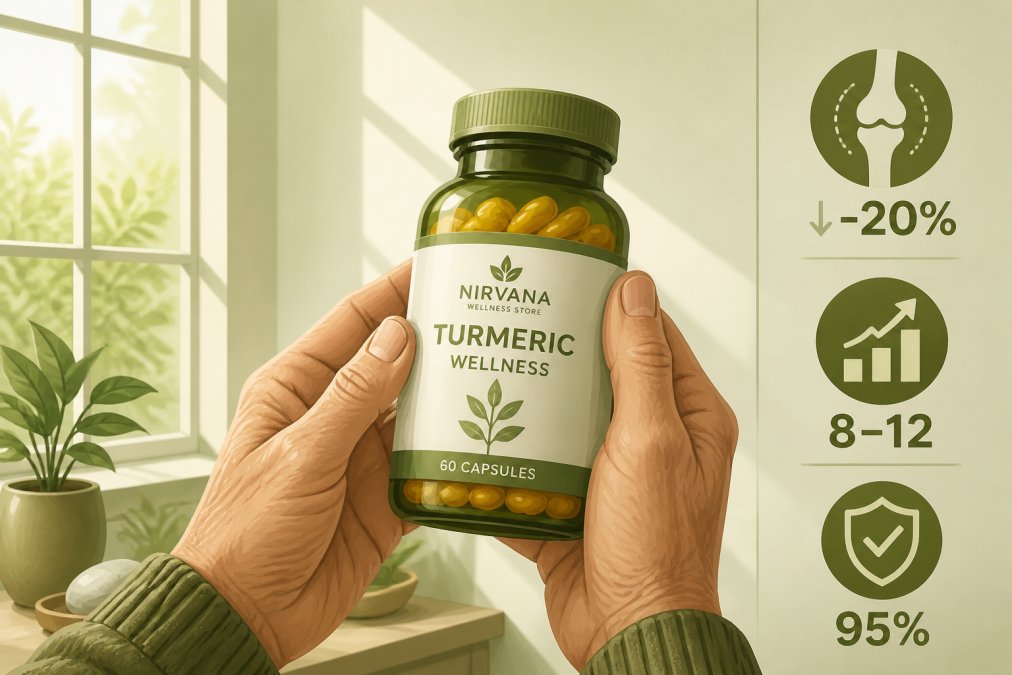
Turmeric shows promise in addressing systemic inflammation, the underlying inflammatory state contributing to joint problems over time. It's not a fast-acting pain reliever like NSAIDs, but rather a supplement that may reduce the inflammatory environment in your joints. Research on curcumin for osteoarthritis shows mixed but encouraging results, with some studies documenting meaningful reductions in joint swelling and morning stiffness, while others show modest improvements barely exceeding placebo.
The evidence doesn't support turmeric as a replacement for medical treatment in severe arthritis or structural joint damage. It may serve as complementary therapy alongside other interventions, but positioning it as a standalone cure misrepresents the clinical data.
How Long Does It Take for Turmeric to Work for Joint Pain?
Unlike NSAIDs, which provide relief within hours, curcumin works on a slower timeline. Most people don't notice benefits until 4-8 weeks of consistent use, though some see improvements within 2-3 weeks while others need 12 weeks or longer. Curcumin addresses inflammation at the cellular level rather than blocking pain signals directly, requiring time to accumulate in tissues.
Consistency matters enormously, sporadic use won't produce results. Many people abandon turmeric after 2-3 weeks expecting rapid relief, a critical mistake. Commit to at least 6-8 weeks of consistent daily use before evaluating effectiveness.
Unlike NSAIDs, curcumin's effects build over time and persist after discontinuation, though benefits gradually diminish. This suggests turmeric is best viewed as a long-term supplement rather than an as-needed pain reliever.
Turmeric Dosage for Arthritis: Finding Your Optimal Intake
Effective curcumin doses range between 500-2,000 mg daily, typically divided into multiple doses. Raw turmeric powder contains only 3-5% curcumin by weight, making standardized curcumin extracts more practical. Look for products stating they contain 95% curcuminoids or similar standardization.
Bioavailability significantly changes the dosage equation. Taking 1,000 mg of curcumin without an absorption enhancer means your body may use only a fraction of that dose. Adding piperine (typically 5-10 mg) can increase curcumin absorption by 2,000% or more, making a lower dose with piperine more effective than a higher dose without it.
Individual factors affect optimal dosing. People with sensitive stomachs may need to start lower and gradually increase. Those taking certain medications need caution about interactions. Your body weight, metabolism, and joint pain severity all influence whether you need lower or higher doses.
Turmeric vs Curcumin for Inflammation: What's the Difference?
Turmeric is the whole plant material containing curcumin plus hundreds of other compounds. Curcumin is the isolated active ingredient responsible for most anti-inflammatory effects. Whole turmeric powder offers other beneficial compounds that may work synergistically, but you can't control curcumin concentration and may need larger quantities to reach therapeutic doses.
Standardized curcumin extracts provide precise dosing and higher concentrations of the active compound. For addressing joint inflammation specifically, standardized curcumin extracts tend to show stronger results in clinical research, likely because doses are higher and more consistent.
For managing joint pain, a standardized curcumin extract with piperine will likely be more effective than whole turmeric powder. You'll need smaller quantities, better absorption, and more predictable results.
Turmeric vs NSAIDs: Comparing Natural and Conventional Relief
NSAIDs like ibuprofen work quickly and effectively for acute pain and inflammation, blocking pain signals within hours. Turmeric doesn't compete on speed but offers a different risk-benefit profile suited for long-term use.

NSAIDs carry documented risks with chronic use, particularly for gastrointestinal health and cardiovascular function. Turmeric at appropriate doses has a much gentler safety profile for long-term use. For acute flare-ups and severe pain, NSAIDs are more appropriate. For chronic joint discomfort and inflammation management, turmeric may complement or potentially replace regular NSAID use.
Turmeric has a broader therapeutic range than NSAIDs, offering more flexibility in dosing without moving into dangerous territory. Many people find the most effective approach combines both: using NSAIDs strategically for acute flare-ups while building turmeric supplementation for ongoing inflammation management.
Safety, Side Effects, and Drug Interactions
Turmeric and curcumin are generally well-tolerated at appropriate doses. Common side effects include digestive upset, nausea, and stomach discomfort, particularly at high doses or on an empty stomach. Starting with lower doses and taking supplements with food significantly reduces GI distress.
Rare serious side effects include allergic reactions and liver stress at extremely high doses. People with existing liver conditions should consult healthcare providers before using turmeric supplements. Those with gallbladder disease should be cautious, as curcumin may stimulate bile production.
Drug interactions are the primary safety concern. Curcumin can interact with blood thinners like warfarin, potentially increasing bleeding risk. It may also interact with diabetes medications, blood pressure medications, and NSAIDs. If you're taking prescription medications, discussing turmeric supplementation with your healthcare provider is essential.
Avoid turmeric supplementation during pregnancy and breastfeeding without medical supervision. While turmeric in food is generally safe during pregnancy, concentrated supplements may pose risks. The same caution applies to children.
The Verdict: Is Turmeric Worth It for Your Joint Pain?
Whether turmeric is worth it depends on your situation, expectations, and what you're comparing it against. For people with mild to moderate joint discomfort willing to commit to consistent use for 6-8 weeks with no contraindications, turmeric supplementation is worth trying. The cost is modest, the safety profile is generally favorable, and potential benefits, reduced inflammation and improved joint mobility, are meaningful.
Turmeric is worth it for long-term inflammation management rather than acute pain relief, and for reducing NSAID reliance. It's probably not worth it if you need fast pain relief, have significant liver or gallbladder issues, take blood thinners, or have other contraindications without medical clearance.
Turmeric is a legitimate complementary tool for joint pain management, not a miracle cure. It works best as part of a broader approach including appropriate exercise, weight management, and potentially conventional medical treatment. For many people over 40 managing chronic joint discomfort, adding a quality curcumin supplement with piperine produces noticeable improvements in inflammation and mobility.
At Nirvana Wellness Store, we understand that joint pain management requires practical solutions. Our curated selection includes topical options like Nirvana Magic Cream at $24.99, complementing oral supplements for comprehensive pain management. Look for standardized curcumin extracts containing at least 95% curcuminoids with added piperine for optimal absorption. Start conservatively with dosing, be patient with the timeline, and combine supplementation with other evidence-based approaches to joint health.

The question isn't whether turmeric is a cure, it isn't. The question is whether it's a worthwhile addition to your pain management strategy, and for most people with chronic joint discomfort, the answer is yes, provided you approach it with realistic expectations and proper medical guidance.
For individuals managing chronic joint pain, the journey toward relief rarely involves a single solution. Turmeric offers a natural, evidence-supported option with a favorable safety profile when used appropriately. Combining supplementation with topical relief options and professional medical guidance creates a comprehensive approach to joint health. Explore Nirvana Wellness Store's full range of wellness products designed to support your journey toward lasting comfort and mobility.
| Factor | Turmeric Supplementation | NSAIDs | Best For |
|---|---|---|---|
| Speed of Relief | 4-8 weeks | Hours to days | NSAIDs for acute pain; turmeric for chronic management |
| Long-Term Safety | Excellent | Moderate risk with chronic use | Turmeric for ongoing supplementation |
| Cost | Low | Low to moderate | Both are affordable options |
| Absorption Enhancement | Requires piperine | Not applicable | Quality curcumin with black pepper extract |
| Drug Interactions | Moderate risk | Moderate risk | Requires healthcare provider consultation for both |
| Best Use Case | Systemic inflammation, joint mobility | Acute flare-ups, severe pain | Combination approach for most people |
National Institutes of Health curcumin research database
Arthritis Foundation guidance on supplements
Mayo Clinic information on turmeric and curcumin
Frequently Asked Questions
Does turmeric actually work for joint pain?
Clinical trials show mixed but promising results. Curcumin, turmeric's active compound, has demonstrated anti-inflammatory and pain-reducing effects in placebo-controlled studies for osteoarthritis. However, effectiveness varies by individual, dosage, and bioavailability. Most research suggests turmeric works best as a complementary therapy alongside other joint health strategies, not as a standalone cure. Realistic expectations: modest pain reduction and improved joint mobility over weeks, not immediate relief.
How long does it take for turmeric to work for joint pain?
Most users report noticeable effects between 2-8 weeks with consistent daily use. This timeline depends on dosage, bioavailability (whether your body absorbs it effectively), and the severity of your joint discomfort. Taking turmeric with black pepper (piperine) and healthy fats significantly speeds absorption. Some people experience faster relief; others need 12 weeks or longer. Starting with a lower dose and gradually increasing helps your body adjust and lets you identify your optimal intake level.
What is the difference between turmeric and curcumin?
Turmeric is the whole root powder containing curcuminoids (the active compounds), while curcumin is the isolated primary curcuminoid extracted from turmeric. Curcumin represents about 2-5% of raw turmeric by weight. Standardized curcumin supplements deliver consistent, higher concentrations and better bioavailability than whole turmeric powder alone. For joint inflammation, curcumin supplements typically provide faster, more predictable therapeutic effects, though whole turmeric offers additional beneficial compounds.
What is the recommended turmeric dosage for arthritis?
Clinical studies typically use 500-2,000 mg of standardized curcumin daily, often split into two or three doses. Whole turmeric powder dosages range from 1-3 grams daily. Start at the lower end and increase gradually over 2-4 weeks as tolerated. Always pair turmeric with black pepper (piperine) and a fat source like coconut oil or olive oil to maximize absorption. Individual tolerance varies, especially for those with sensitive stomachs. Consult your healthcare provider before starting, particularly if you take blood thinners or other medications.
Are there side effects to taking turmeric supplements?
Turmeric is generally well-tolerated at recommended doses. Common mild side effects include digestive upset, nausea, or headache, especially in people with sensitive stomachs. High doses may thin blood or interact with anticoagulants like warfarin. Turmeric can also interfere with certain diabetes medications and iron absorption. Pregnant women should avoid therapeutic doses. If you experience persistent digestive issues, stop use and consult your doctor. Quality matters: choose standardized extracts from reputable suppliers to minimize contaminants and ensure consistent curcuminoid content.
This article was written using GrandRanker