


Table of Contents
- Understanding Knee Pain and When Home Remedies Work
- RICE Method for Knee Injuries: Step-by-Step
- Heat and Cold Therapy for Knee Pain Relief
- Gentle Knee Strengthening Exercises for Pain Management
- Anti-Inflammatory Foods and Supplements for Joint Health
- Topical Pain Relief and Massage Techniques
- Weight Management and Ergonomic Home Modifications
- When to See a Doctor for Knee Pain
Last Updated: August 9, 2026
Understanding Knee Pain and When Home Remedies Work
Knee pain affects millions of adults, particularly those over 40 managing chronic joint discomfort or recovering from injury. Home remedies work best for mild to moderate acute injuries and early-stage chronic pain, while severe injuries, structural damage, or persistent inflammation require medical evaluation. Most knee pain falls into two categories: acute injuries from a specific incident, and chronic pain from arthritis, overuse, or biomechanical imbalances.
Starting treatment immediately after an acute injury, within the first 24-48 hours, dramatically improves outcomes. For chronic conditions, establishing a routine combining multiple approaches works better than relying on any single remedy. Nirvana Wellness Store recognizes this reality, focusing on accessible, multi-faceted solutions that support your body's natural healing process rather than promising overnight fixes.
Home remedies address inflammation, swelling, stiffness, and pain through proven mechanisms: reducing fluid buildup, improving circulation, strengthening supporting muscles, and managing weight-bearing stress on the joint. The key is matching the remedy to your specific situation, what works for post-workout soreness differs from what helps arthritis flares or ligament sprains.
RICE Method for Knee Injuries: Step-by-Step
The RICE method (Rest, Ice, Compression, Elevation) remains the gold standard for acute knee injuries because it addresses the immediate physiological response to trauma: swelling and inflammation. This method works by limiting fluid accumulation around the joint, reducing pain signals, and protecting the injury from further damage during the critical first 48-72 hours.
Rest
Stop the activity that caused the injury immediately. Continuing to stress the knee forces your body to increase inflammation as a protective response. Rest doesn't mean complete immobilization, it means avoiding weight-bearing activities and movements that trigger pain.
For acute injuries, limit walking and standing for the first 24-48 hours and use crutches if walking causes pain. Light, pain-free movement like gentle range-of-motion exercises can support healing, but anything that increases swelling should stop immediately.
Ice
Cold therapy reduces swelling by constricting blood vessels and slowing the inflammatory response. Ice works best in the first 48-72 hours after injury; after 72 hours, heat often becomes more beneficial for stiffness and chronic pain.
Apply ice for 15-20 minutes every 2-3 hours during the first 48 hours. Wrap ice in a thin cloth, never apply directly to skin, which can cause frostbite. Gel ice packs work well because they conform to the knee's shape. If you notice numbness or skin color changes, remove the ice immediately.
Compression
A compression bandage limits swelling by providing external pressure that prevents fluid from accumulating around the joint. Compression also provides proprioceptive feedback, which can reduce pain and improve stability. Choose a bandage that's snug but not so tight it cuts off circulation.
Wrap the knee with an elastic compression bandage, starting just below the kneecap and extending to mid-calf. The wrap should feel supportive without causing numbness, tingling, or color changes in your lower leg. Most people wear compression for 48-72 hours during acute injury, then transition to wearing it only during activity.
Elevation
Elevation uses gravity to reduce fluid buildup in the knee. Lying with your leg elevated above heart level allows excess fluid to drain back into your circulatory system rather than pooling around the injured joint.
Elevate your leg on pillows so your knee is at or above heart level for 15-30 minutes several times daily, especially after activity or when swelling increases. At night, place a pillow under your calf (not directly under the knee). Most people notice reduced swelling within 24-48 hours of consistent elevation combined with ice and compression.
Heat and Cold Therapy for Knee Pain Relief
After the acute phase (72 hours post-injury), heat becomes valuable for managing stiffness, improving circulation, and supporting muscle relaxation. Cold reduces acute inflammation and swelling, while heat improves flexibility and reduces chronic pain. Many people benefit from alternating both, especially when managing arthritis or chronic knee pain.
Heat therapy increases blood flow to the area, delivering oxygen and nutrients needed for healing and reducing muscle tension around the joint. Apply heat for 15-20 minutes before stretching or exercise to prepare tissues and reduce stiffness.
Cold therapy continues to help even after the acute phase when swelling flares up during activity. If your knee swells after activity, ice for 15-20 minutes within a few hours. If your knee is stiff in the morning or before activity, apply heat first.
Contrast therapy, alternating between heat and cold, can be particularly effective for chronic pain. Start with 3 minutes of heat, switch to 1 minute of cold, and repeat this cycle 3-4 times, ending with cold. Many people find contrast therapy reduces pain more effectively than either heat or cold alone.
Gentle Knee Strengthening Exercises for Pain Management
Weak muscles around the knee, particularly the quadriceps and hamstrings, force the joint to absorb more stress, increasing pain and injury risk. Gentle strengthening exercises build muscular support without aggravating inflammation. These exercises should never cause sharp pain; mild discomfort is acceptable, but stop immediately if pain increases during or after exercise.
Perform exercises 3-4 times weekly with at least one rest day between sessions. Start conservatively and progress gradually, many people trigger inflammation and setbacks by doing too much too soon.
Quadriceps Sets
The quadriceps muscle on the front of your thigh is the primary stabilizer of the knee joint. Quadriceps sets are the gentlest strengthening exercise and can be done even during acute pain phases.
Sit with your leg straight and a small rolled towel under your knee. Tighten the quadriceps muscle by straightening your knee fully. Hold for 5 seconds, then relax. Perform 3 sets of 15 repetitions daily. This exercise requires no movement and minimal stress on the joint while building strength effectively.
Straight Leg Raises
Once quadriceps sets feel easy, progress to straight leg raises, which add resistance through your leg's weight.
Lie on your back with one leg bent and one leg straight. Tighten the quadriceps of the straight leg and lift it 12 inches off the ground, keeping the knee locked straight. Hold for 2-3 seconds, then lower slowly. Perform 3 sets of 12 repetitions on each leg. Progress to holding a light ankle weight once bodyweight feels easy.
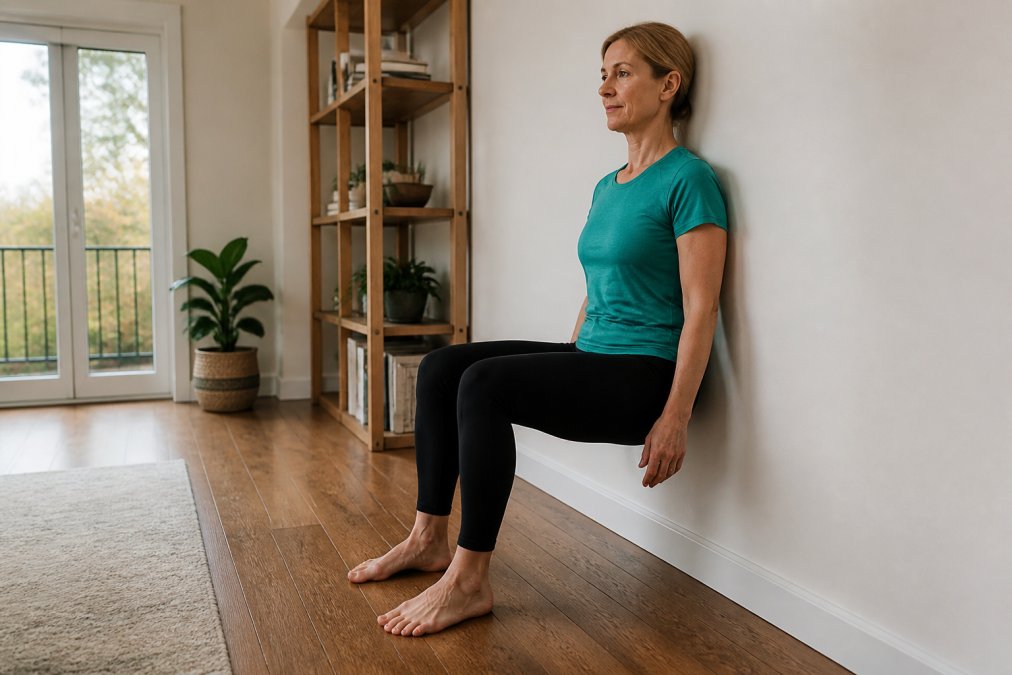
Wall Squats
Wall squats build strength in the quadriceps, hamstrings, and glutes while minimizing stress on the knee joint because your back is supported.
Stand with your back against a wall, feet shoulder-width apart and 12 inches from the wall. Slide down until your knees bend to approximately 45-60 degrees, keeping your back flat against the wall. Hold for 20-30 seconds, then slide back up. Perform 3 sets of 8-10 repetitions. If your knees hurt, reduce the depth of the squat.
Anti-Inflammatory Foods and Supplements for Joint Health
What you eat directly influences inflammation levels and joint healing. An anti-inflammatory diet rich in specific nutrients supports your body's natural healing processes and reduces chronic pain. Many people find dietary changes produce noticeable improvement within 2-3 weeks.
Prioritize whole foods first, then add targeted supplements for additional support. Consistency matters more than perfection, regular consumption of anti-inflammatory foods outperforms occasional use of expensive supplements.
Turmeric and Ginger
Turmeric contains curcumin, a compound with well-documented anti-inflammatory properties. Ginger works through similar mechanisms, reducing inflammation and supporting pain management. Both have been used in traditional medicine for centuries and modern research supports their effectiveness for joint pain.
Add fresh turmeric and ginger to cooking, or brew them into tea. A typical effective dose is 1-2 teaspoons of turmeric powder daily; absorption improves significantly when combined with black pepper (which contains piperine) and a fat source like coconut oil.
Omega-3 Foods
Omega-3 fatty acids reduce inflammatory markers in your bloodstream and support cartilage health. Fatty fish like salmon, sardines, and mackerel contain high concentrations of EPA and DHA. Plant-based sources like flaxseeds and walnuts provide ALA, which your body converts to EPA and DHA, though conversion efficiency is lower.
Consume fatty fish 2-3 times weekly, or add plant-based omega-3 sources daily. If you don't eat fish, consider an algae-based omega-3 supplement. A typical effective dose is 1,000-2,000 mg of combined EPA and DHA daily.
Topical Pain Relief and Massage Techniques
Topical pain relief creams and massage address pain and stiffness through direct application to the affected area. Topical analgesics reduce pain signals, while massage improves circulation and reduces muscle tension around the knee. Many people find combining both approaches more effective than either alone.
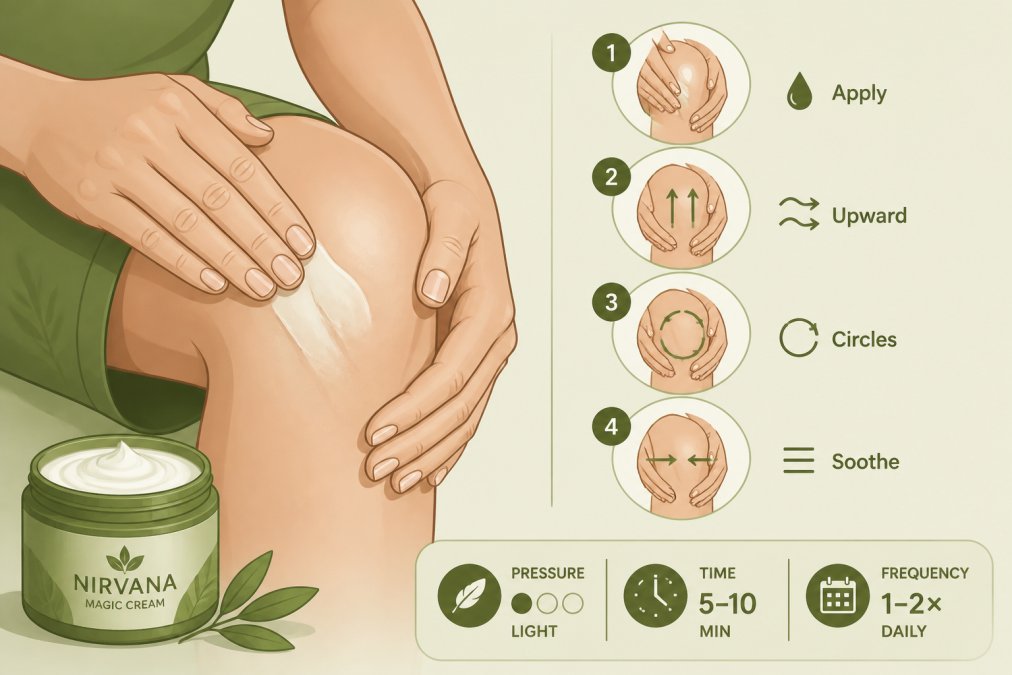
Topical pain relief products work best when applied consistently before activity or when pain flares. Massage should be gentle, aggressive massage can increase inflammation. The goal is improving circulation and reducing muscle tension, not forcing the joint through painful movements.
Nirvana Magic Cream offers natural pain relief designed specifically for joint discomfort. This topical solution combines herbal ingredients that support pain management and reduce inflammation when applied directly to the affected area. Many people find topical relief most effective when combined with gentle massage and stretching.

Use gentle circular motions around the knee rather than directly on the joint. Focus on the muscles above the knee (quadriceps) and below the knee (calf muscles), where tension often contributes to knee pain. Perform 5-10 minutes of gentle massage daily, ideally after applying heat. Essential oils like eucalyptus and peppermint can enhance massage effectiveness when mixed with a carrier oil like coconut oil.
Weight Management and Ergonomic Home Modifications
Excess weight increases stress on weight-bearing joints like the knee. Each pound of body weight adds approximately 3-4 pounds of stress to the knee during walking. Even a 5-10 pound reduction can produce noticeable improvement in pain and mobility.
Ergonomic modifications to your home environment reduce stress on your knee throughout the day. Adjust your chair height so your knees bend at approximately 90 degrees when seated, with your feet flat on the floor. Desk height should allow your elbows to bend at 90 degrees when typing.
When standing for extended periods, shift your weight between legs every few minutes rather than standing still. Wear supportive shoes with cushioning rather than flat shoes or high heels, which alter biomechanics and increase knee stress.
When managing stairs, lead with your affected leg going down and your unaffected leg going up. Take stairs one at a time rather than alternating legs. Using a railing for support reduces the load on your legs substantially.
When to See a Doctor for Knee Pain
Seek medical evaluation if pain persists beyond 2-3 weeks despite consistent home treatment, if swelling increases rather than decreases, or if you experience instability where your knee feels like it might give way.
Acute injuries involving significant trauma, falls, twisting injuries, or direct impacts warrant medical evaluation even if pain seems manageable. Your doctor can assess whether structural damage like ligament tears or cartilage damage has occurred.
Chronic pain that worsens despite consistent home remedies suggests underlying conditions requiring professional diagnosis. Arthritis, patellar tracking problems, or other structural issues may require physical therapy, injections, or other interventions beyond home care.
Red flags requiring immediate medical attention include severe swelling that develops over hours, inability to bear weight on the leg, signs of infection (warmth, redness, fever), or pain accompanied by chest pain or difficulty breathing.
Managing knee pain at home requires combining multiple approaches rather than relying on any single remedy. The RICE method addresses acute injuries effectively, while gentle strengthening exercises, anti-inflammatory nutrition, and topical relief support long-term pain management. Consistency and patience matter more than intensity, sustainable routines produce better results than aggressive short-term efforts.
When home remedies aren't producing results after 2-3 weeks, or when pain worsens despite treatment, professional evaluation guides appropriate next steps. Nirvana Wellness Store's curated wellness products support your home care routine with high-quality topical relief and supplements designed to work alongside the strategies outlined here. Start with the approaches that match your specific situation, maintain consistency, and adjust based on your body's response. Most people find that combining rest, gentle exercise, anti-inflammatory nutrition, and targeted topical support creates meaningful improvement in knee pain and mobility.
Frequently Asked Questions
What is the fastest home remedy for knee pain?
The RICE method (Rest, Ice, Compression, Elevation) provides the fastest initial relief for acute knee pain. Applying ice for 15-20 minutes every 2-3 hours reduces swelling and numbs pain within hours. For chronic pain, topical creams like Nirvana Magic Cream ($24.99) offer fast-acting relief when applied directly to the affected area. Most users report noticeable improvement within 30 minutes of application.
How can I reduce knee inflammation naturally at home?
Combine multiple approaches for best results: apply ice for 15-20 minutes several times daily, take anti-inflammatory supplements like turmeric and ginger, eat omega-3 rich foods such as salmon and walnuts, and use compression bandages to limit swelling. Gentle stretching and low-impact exercises improve circulation and reduce stiffness. These methods work together to address inflammation from multiple angles over several days.
Are there specific gentle exercises for knee pain that won't make it worse?
Yes. Quadriceps sets, straight leg raises, and wall squats are low-impact exercises that strengthen supporting muscles without stressing the joint. Start with 10-15 repetitions and rest between sets. These gentle knee strengthening exercises improve flexibility and range of motion while reducing pain over time. Stop immediately if you feel sharp pain, and consult a physical therapist if discomfort persists.
When should I see a doctor for knee pain?
Seek medical attention immediately if you experience severe swelling, inability to bear weight, visible deformity, signs of infection (warmth, redness), or pain lasting more than two weeks despite home treatment. Also see a doctor if pain worsens, limits your daily activities significantly, or is accompanied by other symptoms. A healthcare provider can rule out serious injuries and recommend appropriate treatment.
This article was written using GrandRanker