


Table of Contents
- Why Postpartum Hair Loss Happens
- Postpartum Hair Loss Timeline: When It Starts and Stops
- Does Hair Regrowth Serum Actually Work
- Best Ingredients for Postpartum Hair Regrowth
- Nirvana Hair Growth Oil: A Practical Option for Postpartum Recovery
- How to Use Hair Serum Effectively for Postpartum Thinning
- When to See a Dermatologist
- The Real Cost-Benefit: Is It Worth Your Money
Last Updated: August 28, 2026
Why Postpartum Hair Loss Happens
Postpartum hair loss results from hormonal fluctuations after delivery. During pregnancy, elevated estrogen extends the anagen phase (active growth) of hair follicles, keeping more hair on your head longer. When estrogen drops sharply after birth, those hairs shift into the telogen phase (resting and shedding) simultaneously. This synchronized shedding, called telogen effluvium, is entirely normal, though the volume can feel alarming.
Shedding typically peaks around three to four months postpartum, when hormonal transition is most dramatic (peer-reviewed research). Several factors influence severity: nutritional deficiencies in iron, zinc, or B vitamins make follicles more vulnerable; breastfeeding demands significant nutritional resources; stress and sleep deprivation intensify telogen effluvium. The good news is this hair loss is temporary. Once hormones restabilize and your body recovers, the hair follicle cycle normalizes and regrowth follows.
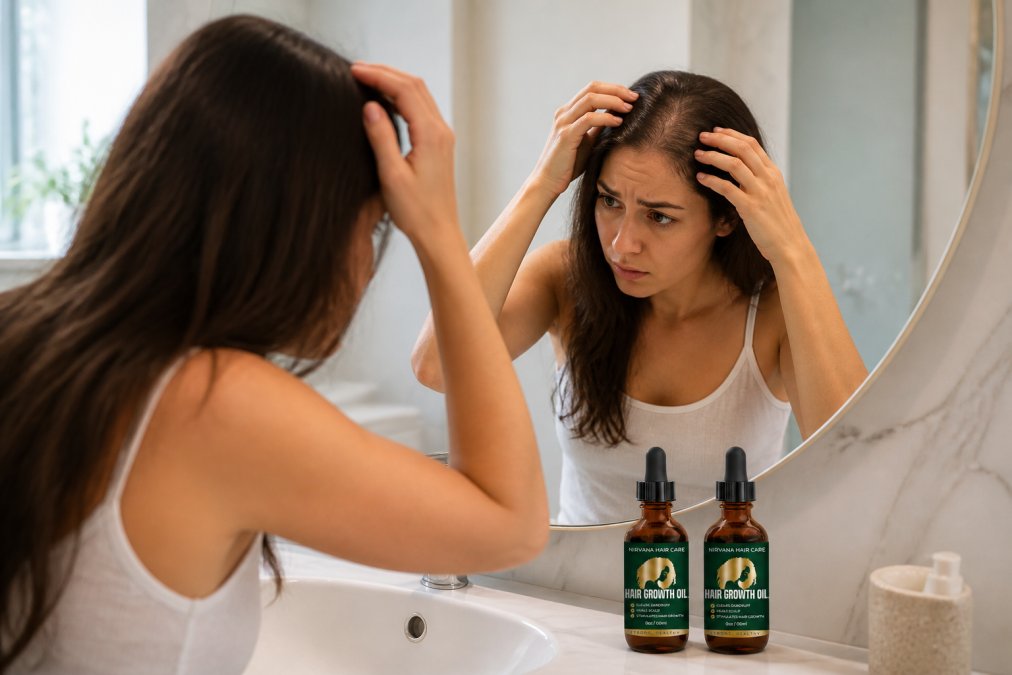
Understanding this mechanism is crucial when evaluating hair regrowth serum. Many products promise to stop shedding or accelerate regrowth, but they cannot prevent a biologically driven process. The real question is whether a serum can support scalp health and follicle nourishment during recovery.
Postpartum Hair Loss Timeline: When It Starts and Stops
Shedding typically begins around two to three months after delivery, peaks around month four, and gradually subsides over the following months. Most women see significant improvement by month six to nine postpartum, though some experience shedding for up to 12 months.
This timeline matters because it sets realistic expectations for any intervention. If you start using a serum at month two, you won't prevent shedding, but you may support scalp and follicle health during recovery. Regrowth typically begins around month three to four, visible as baby hairs along your hairline. New hairs grow roughly half an inch per month, so noticeable thickening takes several months. By month nine to twelve postpartum, most women see substantial improvement with or without additional support.
Factors that may extend the timeline include ongoing nutritional deficiencies, continued stress, inadequate sleep, and thyroid dysfunction. If postpartum hair loss persists beyond 12 months or worsens, consult a dermatologist to rule out other causes.
Does Hair Regrowth Serum Actually Work
Hair regrowth serums have limited evidence for stopping postpartum shedding, but some ingredients show promise for supporting scalp health and follicle nourishment during recovery.
Most serums rely on biotin, peptides, plant extracts, and essential oils. Biotin, a B vitamin involved in keratin production, only helps if you're deficient (peer-reviewed research). For women with adequate biotin intake, additional biotin provides no measurable benefit. Topical treatments face a fundamental limitation: hair follicles sit beneath multiple skin layers, making it difficult for ingredients to penetrate deeply enough to meaningfully affect the follicle itself. This is why oral supplements and systemic nutritional support are generally more effective than topical products alone.

That said, some ingredients offer localized benefits. Scalp massage stimulation, which many serums encourage through application, improves blood flow to the scalp, potentially supporting nutrient delivery to follicles. Plant-based oils like argan, jojoba, and coconut oil provide moisture and reduce breakage, particularly valuable if postpartum hair becomes brittle or dry.
Clinical evidence for specific hair regrowth serums in postpartum contexts is sparse. Most studies focus on androgenetic alopecia or other hair loss types, not postpartum telogen effluvium. Maintaining scalp health, reducing inflammation, preventing dryness, and supporting follicle nourishment creates conditions favorable for regrowth, but whether a serum is necessary or simply helpful depends on your cost-benefit analysis.
Best Ingredients for Postpartum Hair Regrowth
Biotin plays a role in keratin synthesis. Studies show biotin supplementation improves hair thickness in people with biotin deficiency, but for women with adequate intake, the benefit is unclear.
Plant-based oils like argan, jojoba, coconut, and rosehip provide moisture, reduce breakage, and contain antioxidants supporting scalp health. Argan oil is rich in vitamin E and fatty acids; jojoba oil closely mimics the scalp's natural sebum.
Peptides and amino acids are building blocks of protein that may support hair shaft strength and elasticity. Evidence is emerging but not yet definitive for postpartum use.
Caffeine stimulates blood flow to the scalp and may prolong the anagen phase, though the effect is modest and topical application may not deliver enough to the follicle.
Niacinamide (vitamin B3) supports scalp barrier function and reduces inflammation, particularly useful if postpartum scalp is sensitive or irritated.
Saw palmetto and pygeum are herbal extracts traditionally used to support hair health, though strong clinical evidence in postpartum contexts is limited.
Ingredients to Avoid While Breastfeeding
Retinoids and retinol should be avoided while breastfeeding. Although topical retinoids have low absorption, they can accumulate in breast milk, and safety for nursing infants isn't well established.
Essential oils require caution. While many are safe when topically diluted, tea tree oil, peppermint oil, and eucalyptus can be potent and should be used sparingly. Avoid applying concentrated essential oils directly to the scalp.
Salicylic acid and other chemical exfoliants are generally considered safe in small amounts topically, but excessive use could increase systemic absorption. Use conservatively if breastfeeding.
Minoxidil (Rogaine) is FDA-approved for hair loss but not recommended while breastfeeding due to insufficient safety data in nursing populations (the FDA).
Most gentle, botanical-based hair serums are safe while breastfeeding, particularly those free of retinoids, high-concentration essential oils, and chemical actives. The Nirvana Hair Growth Oil uses nutrient-rich botanical oils and scalp-supportive ingredients without harsh chemicals, making it a breastfeeding-friendly option for postpartum hair support.

Nirvana Hair Growth Oil: A Practical Option for Postpartum Recovery
The Nirvana Hair Growth Oil is a botanical blend designed to nourish the scalp and support healthier-looking hair during recovery phases like postpartum. The formula includes nutrient-rich oils and scalp-supportive ingredients that moisturize dry scalp areas, reduce the appearance of breakage, and support natural hair growth. For postpartum women, it's free of harsh chemicals and retinoids, making it safe while breastfeeding.
The single 2oz bottle is priced at $34.99. For women serious about consistency, the Nirvana Hair Growth Oil Double Pack ($64.99) provides two bottles, reducing friction in maintaining a routine during the demanding postpartum period.

Application is simple: apply a small amount directly to the scalp and massage gently for two to five minutes, three to four times weekly. The massage component stimulates blood flow to the scalp, potentially supporting nutrient delivery to follicles. This tactile self-care moment also serves a psychological purpose, giving postpartum women dedicated time to focus on their own recovery.
The Nirvana Hair Growth Oil addresses specific postpartum challenges: dry, irritated scalp, brittle hair prone to breakage, and the need for a safe product compatible with breastfeeding. It's not a miracle cure for postpartum shedding, but it provides practical support for scalp health and follicle nourishment during recovery and regrowth.
How to Use Hair Serum Effectively for Postpartum Thinning
Start with a clean, damp scalp. Apply serum to a freshly washed or water-dampened scalp. Moisture helps the product penetrate and distribute evenly.
Use the right amount. Most serums require only a dime to quarter-sized portion for the entire scalp. More product doesn't improve results; excess serum makes hair greasy.
Focus on areas of concern. Concentrate application on the scalp rather than hair strands. For postpartum thinning, apply to the hairline and crown with gentle fingertip massage.
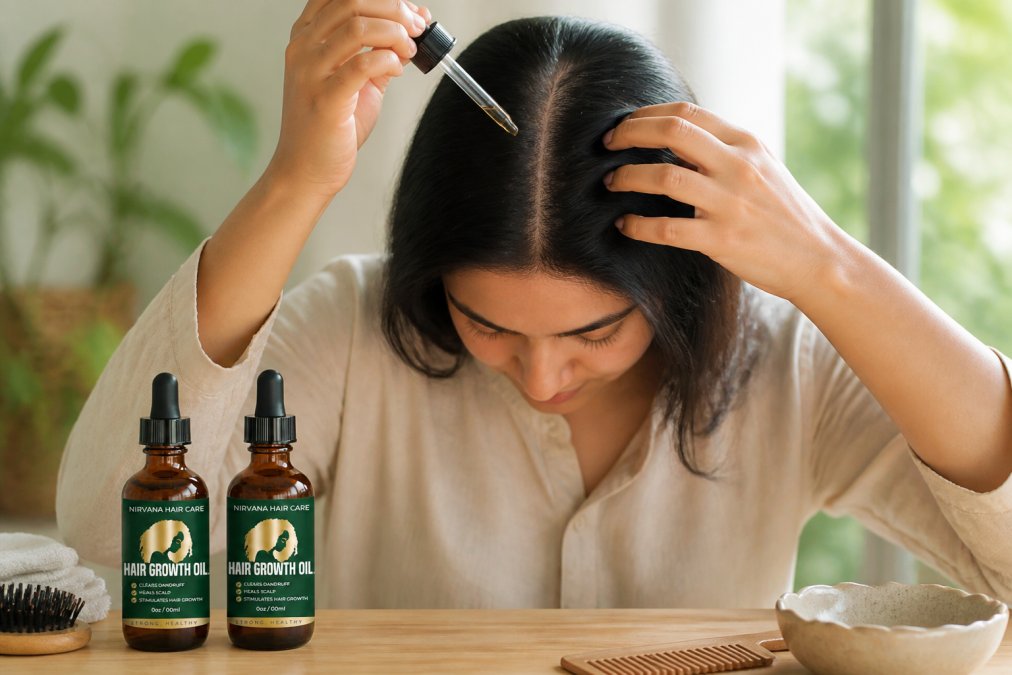
Massage for two to five minutes. Scalp massage increases blood flow and distributes product evenly. Use gentle, circular motions with your fingertips across the entire scalp.
Establish consistency. Hair serums work through consistent use. Most products show best results with three to four applications weekly. Set specific days to build the habit.
Give it time. Don't expect visible results in two weeks. Hair growth is slow, roughly half an inch per month. Meaningful changes typically take two to three months of consistent use.
Combine with oral support. A serum alone isn't sufficient if you're nutritionally depleted. Ensure adequate protein, iron, zinc, and B vitamins through diet or supplementation. Pairing topical support with systemic nutrition creates a more comprehensive approach.
Avoid overuse. More frequent application won't speed results and can lead to scalp buildup, irritation, or greasy hair.
When to See a Dermatologist
Most postpartum hair loss resolves within 12 months without intervention. However, see a dermatologist if hair loss persists beyond 12 months or worsens over time, as this may indicate thyroid dysfunction, iron deficiency, or other hormonal imbalances.
Seek professional evaluation if shedding is accompanied by scalp pain, redness, or signs of infection, suggesting a scalp condition like dermatitis. If you're experiencing patchy hair loss or uneven hairline recession, this may indicate alopecia areata or pattern baldness rather than typical postpartum telogen effluvium.
If considering prescription treatments like minoxidil, a dermatologist can assess appropriateness and discuss safety if still breastfeeding. Finally, if struggling emotionally with hair loss, experiencing anxiety, depression, or significant distress about appearance, discuss this with your healthcare provider. Professional support is appropriate and valuable.
The Real Cost-Benefit: Is It Worth Your Money
Whether hair regrowth serum is worth it postpartum depends on your specific situation, budget, and expectations.
The case for using a serum: If experiencing postpartum hair loss and wanting to actively support scalp and follicles during recovery, a quality serum provides tangible benefits. It moisturizes dry scalp, reduces breakage, and creates a self-care ritual many postpartum women desperately need. The Nirvana Hair Growth Oil at $34.99 for a single bottle or $64.99 for the double pack is reasonably priced. Used three to four times weekly, a 2oz bottle lasts roughly two months, bringing monthly cost to around $17-$32.
The case against: Postpartum hair loss will resolve on its own. Hormones will restabilize, follicles will restart, and hair will regrow without any serum. If financially or emotionally stretched during postpartum, spending money on a serum isn't necessary. Prioritizing sleep, nutrition, and stress management likely has greater impact than any topical product.
The middle ground: Many women benefit from a hybrid approach. Use a serum if it fits your budget and makes you feel proactive about recovery. Pair it with foundational support: ensure adequate nutrition through diet or supplementation, prioritize sleep, and manage stress where possible. Together, these create a more complete approach than either alone.
The psychological factor: Postpartum hair loss is temporary but visible and distressing. If using a serum helps you feel like you're taking control of recovery and supports your mental health during an already challenging period, that psychological benefit has real value.
The final verdict: for most women, hair regrowth serum is a worthwhile but non-essential addition to postpartum recovery. It won't prevent shedding or guarantee faster regrowth, but it can support scalp health and provide meaningful self-care during a transformative time. If your budget allows and you're looking for a practical way to actively support hair recovery, a quality serum like the Nirvana Hair Growth Oil is reasonable. If finances are tight or you prefer to focus on foundational nutrition and lifestyle factors, skip the serum and invest in sleep, nutrition, and stress management instead. Either way, your hair will recover.
Frequently Asked Questions
Can postpartum hair loss grow back on its own?
Yes. Postpartum hair loss caused by telogen effluvium is temporary and reversible. Hair typically regrows naturally within 6 to 12 months as hormone levels stabilize. Serums and oils can support scalp health and hair follicle nourishment during this recovery period, but the regrowth process happens primarily through the body's natural hormonal rebalancing. Most women see significant improvement without intervention.
What are the best ingredients for postpartum hair regrowth?
Look for botanical oils like argan, coconut, and jojoba oil, which nourish the scalp and moisturize hair follicles. Biotin supports hair strength and structure. Niacinamide improves scalp circulation. Avoid harsh chemicals while breastfeeding. Nirvana Hair Growth Oil combines nutrient-rich botanicals designed to support scalp wellness without synthetic additives. Consistency matters more than any single ingredient, daily or weekly application supports better results than sporadic use.
How long does postpartum hair loss typically last?
Postpartum hair loss usually begins 2 to 3 months after delivery and peaks around 4 to 5 months postpartum. Most women experience significant improvement by 6 to 12 months as hormone levels normalize. Some may notice continued shedding into month 12 or beyond, particularly if breastfeeding. Hair regrowth happens gradually, you may not see visible density improvement for 3 to 6 months of consistent scalp care and serum use.
Is hair regrowth serum worth buying if hair will regrow anyway?
Hair regrowth serums are worth considering if you want to actively support scalp health during recovery rather than wait passively. Serums with botanical oils reduce breakage, improve scalp hydration, and nourish hair follicles, which speeds perceived recovery and improves hair texture during regrowth. At $34.99 for Nirvana Hair Growth Oil or $64.99 for the double pack, the cost is modest relative to other beauty investments. The real value is consistency and peace of mind, not miraculous regrowth.
Are there ingredients to avoid in hair serums while breastfeeding?
Avoid serums with high concentrations of synthetic retinoids, salicylic acid, or unproven herbal extracts that may absorb systemically. Most topical oils are safe when applied to the scalp, but check ingredient lists for anything marketed as a systemic treatment. Nirvana Hair Growth Oil uses botanical ingredients without harsh chemicals, making it a breastfeeding-safe option. Always consult your healthcare provider if you have concerns about specific ingredients.
Postpartum hair loss is temporary, but the emotional toll can linger. Taking active steps toward recovery, whether through topical support like the Nirvana Hair Growth Oil, nutritional foundation with Nirvana Daily Women's Vitamin, or simply prioritizing self-care, helps you feel more in control during a vulnerable time. Explore our full range of wellness products at Nirvana Wellness Store and discover solutions designed to support your postpartum recovery journey.
This article was written using GrandRanker