


Table of Contents
- Foam Rolling vs Massage for Recovery: The Core Trade-Off
- What Each Method Actually Does to Muscle Tissue
- How Long to Foam Roll for Recovery: Timing and Protocols
- Best Tools for Post-Workout Muscle Soreness: A Comparison
- When to Use Professional Massage Therapy
- Safety, Contraindications, and Common Mistakes
- Building a Recovery Protocol That Fits Your Routine
- Conclusion
- Frequently Asked Questions
Last Updated: September 6, 2026
Foam Rolling vs Massage for Recovery: The Core Trade-Off
Choosing between foam rolling vs massage for recovery often comes down to a simple question: do you want convenience or depth? Foam rolling is a form of self-myofascial release that uses mechanical pressure to target muscle tension, while professional massage delivers localized massage through trained hands. Nirvana Wellness Store offers a curated selection of wellness products designed to support your journey toward balance and vitality. Our collection is thoughtfully chosen to provide high-quality solutions for your daily self-care routine.
The core trade-off is clear. Foam rolling costs nothing after your initial purchase, works anytime, and lets you control the pressure. Massage therapy requires scheduling, travel, and a recurring fee, but it offers therapeutic massage that reaches tissue layers a roller simply cannot. Most active adults find they need both, but for different reasons and at different times.
What Each Method Actually Does to Muscle Tissue
To choose between foam rolling and massage, it helps to understand the distinct physiological pathways each one activates. They are not interchangeable; they trigger different responses in the muscle, fascia, and nervous system.
Foam Rolling: The Case for Mechanical and Neurological Effects
Foam rolling applies broad, compressive force to a large surface area of muscle. The primary benefit is neurological, not structural. The pressure stimulates mechanoreceptors in the muscle and fascia, reducing the sensitivity of the muscle spindle and Golgi tendon organ, which lowers the baseline neural drive to the muscle. In practical terms, the muscle's 'fight or flight' tension signal is turned down, allowing it to relax.
This neural down-regulation is why you often see an immediate, albeit temporary, increase in range of motion (ROM) after rolling. A 2019 meta-analysis in the Journal of Strength and Conditioning Research found that foam rolling can produce acute improvements in flexibility without a subsequent decrease in muscle performance (PubMed). This makes it an excellent tool for a pre-workout warm-up, as it can 'prime' the tissue for movement without inducing the fatigue that static stretching can cause.
However, structural change to the fascia itself is likely minimal. Fascia is dense, tough connective tissue that requires high, sustained, and specific load to remodel. A foam roller provides general, diffuse pressure, so it is more accurate to say it improves tissue compliance rather than permanently altering structure. It is a tool for acute management and nervous system reset, not deep-tissue restructuring.
Massage: Depth, Specificity, and the Relaxation Response
Professional massage, particularly deep tissue or sports massage, operates on a different plane. A therapist can isolate a specific muscle fiber or taut band within a trigger point and apply sustained, focused pressure, often creating a local 'twitch response' or using friction to break up adhesions. This level of specificity is impossible with a foam roller, which distributes force over a wider area.
Beyond the mechanical, massage profoundly affects the autonomic nervous system. Deliberate, rhythmic strokes and human touch activate the parasympathetic nervous system, the 'rest and digest' branch, slowing heart rate, dropping blood pressure, and decreasing cortisol (peer-reviewed research). This systemic relaxation response is a key differentiator; foam rolling does not replicate the psychological and physiological shift a skilled therapist can induce.
Massage therapists also use techniques like myofascial release and proprioceptive neuromuscular facilitation (PNF) stretching, combining pressure with active movement to retrain movement patterns. This is a therapeutic intervention, not just a recovery tool. A therapist can assess your gait, posture, and movement compensations to identify the root cause of tension, not just treat the symptom.
The Verdict on Tissue
In short, foam rolling is a broad-spectrum tool for neural reset and acute flexibility. Massage is a targeted tool for mechanical tissue change, chronic adhesion, and systemic relaxation. If a stubborn knot has persisted for weeks, a foam roller will likely provide only temporary relief, while a therapist can work on that specific tissue for 10-15 minutes to create lasting structural change.
How Long to Foam Roll for Recovery: Timing and Protocols
The question of how long to foam roll for recovery has a practical answer: keep sessions short and purposeful. For most muscle groups, two to three minutes total is sufficient. Spending more time does not produce better results and can actually increase muscle soreness.
A sensible protocol looks like this:
- Dynamic warm-up: 30 to 45 seconds per muscle group before activity to increase blood flow
- Post-workout: 60 to 90 seconds per muscle group to reduce delayed onset muscle soreness
- Problem areas: up to 2 minutes on specific muscle knots, stopping if pain feels sharp
Rolling too aggressively or too long is a common mistake. The goal is to reduce muscle tension, not to bruise the tissue. If you are new to self-myofascial release, start with lighter pressure and shorter durations to gauge your pain threshold.
Best Tools for Post-Workout Muscle Soreness: A Comparison
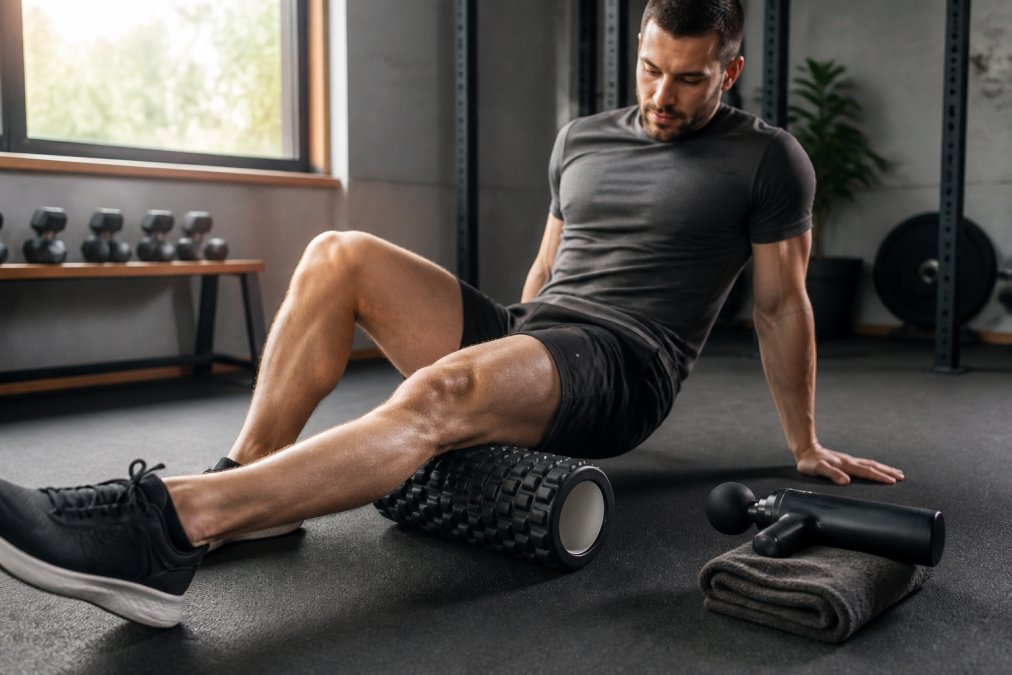
When evaluating best tools for post-workout muscle soreness, the choice usually narrows to a foam roller, a massage gun, or a combination of both. Massage guns deliver percussive therapy that targets a smaller area with rapid, concentrated pulses, which many athletes find effective for acute performance recovery.
| Tool | Best For | Pressure Control | Cost Over Time | Portability |
|---|---|---|---|---|
| Foam roller | Full-body recovery, large muscle groups | Moderate | One-time purchase | Low |
| Massage gun | Trigger points, localized massage | High | One-time purchase | High |
| Professional massage | Deep tissue, chronic muscle knots | Therapist-controlled | Recurring fee per session | N/A |
For daily management of muscle soreness, a foam roller is the most accessible starting point. A massage gun adds precision for stubborn areas. Both support tissue recovery, but neither replaces the value of a professional session when muscle tension has become chronic.
When to Use Professional Massage Therapy
Professional massage therapy earns its place when self-care tools stop producing progress. If a muscle group remains tight for more than a week despite consistent foam rolling, or if recurring muscle knots limit range of motion, a therapist can apply deep tissue techniques that break the cycle.
Consider booking a session when you need:
- Targeted work on chronic trigger points that you cannot reach or apply enough pressure to yourself
- Guidance on recovery protocols from someone who can assess your movement patterns
- Full-body recovery after an intense training block, rather than spot-treating individual muscles
Massage also offers a psychological benefit tools cannot: the deliberate, hands-on nature of therapeutic massage promotes relaxation and reduces the mental fatigue accompanying persistent muscle soreness. That distinction is worth factoring into your decision.
Safety, Contraindications, and Common Mistakes
Both foam rolling and massage are safe for most people, but specific injury contraindications exist. Avoid direct pressure over acute injuries, inflamed joints, varicose veins, or areas with suspected fractures. If you have a condition affecting blood flow or tissue integrity, check with a healthcare provider before using either method. Guidance from the American College of Sports Medicine emphasizes that recovery tools should complement, not replace, proper medical care for injuries.
Common mistakes include rolling directly over the lower back with full body weight, applying a massage gun to bony areas, and treating sharp pain as a sign to push harder. Soreness after a session should feel like mild fatigue, not injury. Stop if you feel numbness, tingling, or bruising.
Building a Recovery Protocol That Fits Your Routine
Most content pits these tools against each other, but the most effective approach is synergistic. The goal is not to choose a 'winner' but to build an integrated protocol that leverages each method's unique strengths at the right time. Here is a practical, evidence-informed framework for combining them into a single recovery session.
The 3-Phase Integrated Session Protocol
This protocol is designed for a post-workout or rest-day session. It moves from general preparation to specific intervention, and finally to systemic relaxation.
Phase 1: The Neural Reset (Foam Rolling) - 5-7 Minutes
Start with your foam roller. The goal is not deep tissue work but to 'wake up' the nervous system and increase blood flow to the target area.
- Target: Focus on the large muscle groups you trained (e.g., quads, hamstrings, lats).
- Technique: Use slow, broad strokes. Spend 30-45 seconds per muscle group, moving the roller at a pace of about 1 inch per second.
- Intensity: Keep the pressure at a 4-5 out of 10. You are looking for a 'good' discomfort, not pain. This phase is about preparing the tissue for the more specific work to come.
- Why: This phase down-regulates the neural drive to the muscle, making it more receptive to the deeper pressure of the next phase. It also increases local circulation, bringing oxygen and nutrients to the area.
Phase 2: The Targeted Intervention (Massage Gun or Therapist) - 5-10 Minutes
Now that the tissue is 'warm' and the nervous system is primed, move to a more specific tool. If using a massage gun, isolate the trigger points or knots you identified in Phase 1.
- Target: Identify the specific 'hot spots' or areas of dense tissue that felt particularly tight during Phase 1.
- Technique (Massage Gun): Use a ball or fork attachment. Hold the gun over the trigger point for 30-60 seconds without moving it. The goal is to create a sustained vibration that helps to release the specific taut band. Do not drag the gun along the muscle; hold it still.
- Technique (Therapist): If you are seeing a professional, this is the time for them to perform deep tissue work or trigger point therapy on the specific areas you've flagged.
- Why: This phase provides the high-frequency, targeted mechanical stimulus that a foam roller cannot. It is the most effective way to address a specific adhesion or a chronic knot that is limiting your range of motion.
Phase 3: The Systemic Cool-Down (Professional Massage or Self-Massage) - 10-15 Minutes
This final phase shifts from a 'fix-it' mindset to a 'recovery' mindset, where the psychological and parasympathetic benefits come into play.
- Target: The entire muscle group or the whole body.
- Technique: Use long, effleurage-style strokes (if self-administering, use your hands or a massage tool with a flat head) to soothe the tissue. The pressure should be light and relaxing, not intense.
- Why: This phase flushes out the metabolic byproducts from the previous phases and signals to your body that the 'work' is done. It is the critical step that most people miss. They finish Phase 2 and stop, leaving their nervous system in a state of high alert. This phase is what turns a recovery session into a true rest-and-digest experience.
A Weekly Schedule Template
Here is how you might integrate this into a weekly routine:
- Daily (Post-Workout): 5-7 minutes of Phase 1 (foam rolling) on the muscles you trained.
- 3-4 Times Per Week (As Needed): Add Phase 2 (massage gun) for 5 minutes on any specific problem areas.
- 1-2 Times Per Week (Rest Day): Perform the full 3-Phase Protocol, or book a professional massage session that covers Phases 2 and 3.
Why This Works
This protocol works because it respects each tool's different physiological mechanisms: the foam roller for neurological benefits, the massage gun for targeted mechanical effects, and professional massage (or a dedicated cool-down) for systemic and psychological benefits. It is more sophisticated than simply choosing one tool over the other.
Conclusion
Foam rolling vs massage for recovery has no single winner. Foam rolling offers daily, cost-effective maintenance that improves blood flow and reduces stiffness. Professional massage provides targeted, deep tissue work for chronic tension and full-body recovery. For most people, the smartest approach combines both: a roller for daily upkeep and a therapist for periodic intervention.
Support your recovery routine with tools that fit your lifestyle. Nirvana Wellness Store carries the Nirvana Magic Cream for natural pain relief at $24.99, plus Nirvana Omega-3 Capsules to support whole-body wellness from the inside. Continue shopping at Nirvana Wellness Store to discover products that integrate seamlessly into a healthy lifestyle.


Frequently Asked Questions
Is foam rolling as effective as massage for muscle recovery?
For general muscle soreness and improving range of motion, foam rolling is comparable to a light or medium-pressure massage. Research shows both methods reduce delayed onset muscle soreness and improve flexibility in the short term. However, professional massage excels at addressing specific trigger points and deep tissue tension that a foam roller cannot reach. If you have a specific injury or chronic tightness, a therapist can apply targeted pressure more precisely than you can self-administer.
How often should I foam roll for optimal results?
You can foam roll daily, but the session length matters more than frequency. A typical protocol is 30 to 60 seconds per muscle group, repeated two to three times, totaling about 10 to 15 minutes per full-body session. Rolling the same area for longer than two minutes at a time can increase muscle tension rather than reduce it. For daily use, keep sessions brief and focus on areas that feel tight rather than rolling your entire body every day.
Can foam rolling replace the need for a sports massage?
Foam rolling can replace a maintenance massage for general recovery, but not a therapeutic one. If you are managing an injury, recovering from a strain, or dealing with a specific knot that limits movement, a professional therapist provides assessment and targeted treatment you cannot replicate at home. As a cost-saving measure, use foam rolling for daily maintenance and book professional massage therapy when you have a specific problem or every few weeks for deep tissue work.
Which method is better for deep tissue tension: foam rolling or massage?
Professional massage is more effective for deep tissue tension because a therapist can apply sustained, localized pressure with their hands, elbows, or forearms. Foam rolling relies on your body weight and positioning, which limits how much pressure you can apply to specific spots. For large muscle groups like the back or quadriceps, a foam roller works well. For the glutes, rotator cuff, or plantar fascia, a therapist's precision usually wins.