


Table of Contents
- How Mindfulness Meditation May Help Manage Chronic Pain
- Guided Meditation for Chronic Pain: Getting Started
- Body Scan Meditation for Chronic Pain: A Structured Practice
- Mindful Breathing for Pain Relief: Techniques That Work
- How Long to Meditate for Pain Relief
- Common Mistakes to Avoid When Starting Your Practice
- Combining Mindfulness with Other Pain Management Approaches
- Frequently Asked Questions
Last Updated: October 10, 2026
How Mindfulness Meditation May Help Manage Chronic Pain
Mindfulness meditation techniques for chronic pain work by shifting how your brain processes pain signals. Instead of fighting discomfort, you learn to observe it without judgment. This changes your relationship with pain rather than eliminating it entirely.
Stress and anxiety about pain tighten your nervous system, contract muscles, increase inflammation, and amplify pain perception. Mindfulness interrupts this cycle by calming your nervous system and reducing the emotional response to physical discomfort.
Research shows that people who practice mindfulness meditation chronic pain management report meaningful improvements in their daily functioning. They sleep better. They move more freely. They need fewer pain medications. The benefits build over weeks and months of consistent practice.
Mindfulness meditation for chronic pain isn't a quick fix, it's a skill that rewires your brain to handle pain differently with consistent practice.
Guided Meditation for Chronic Pain: Getting Started
Guided meditation for chronic pain provides a structured framework with a voice walking you through each step, removing the barrier that stops most beginners.
The best guided meditations for pain management last between 10 and 20 minutes. They focus on body awareness and acceptance. They teach you to notice sensations without trying to change them immediately.
Here's how to start:
- Find a quiet space where you won't be interrupted
- Sit or lie down in a comfortable position
- Choose a guided meditation recording designed for pain management
- Listen without judgment on your first attempt
- Practice the same recording for at least three days before switching
Guided meditation for chronic pain often works better than unguided practice initially because the external voice prevents mind-wandering and gives permission to relax.
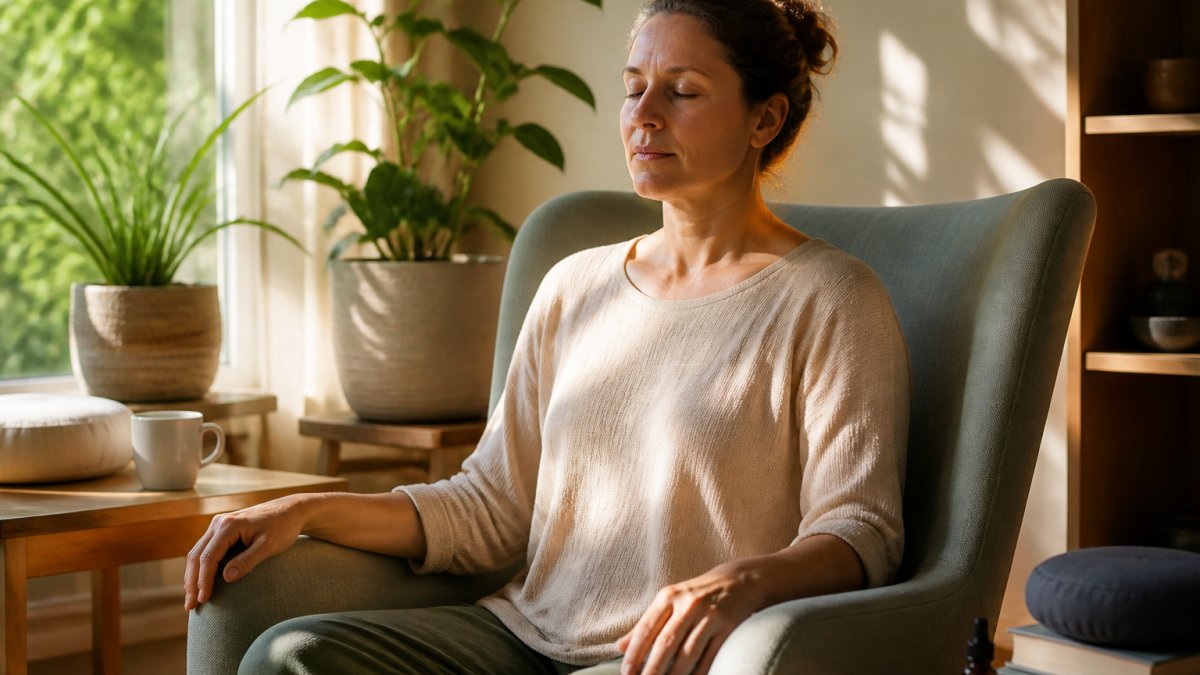
Body Scan Meditation for Chronic Pain: A Structured Practice
Body scan meditation for chronic pain systematically moves attention through your body, noticing sensations without judgment to build body awareness and reduce pain interference. However, it doesn't work for everyone, and forcing it can backfire.
The Standard Body Scan (When It Works)
A traditional body scan meditation for chronic pain typically takes 15 to 30 minutes and follows this pattern:
- Lie on your back or sit comfortably
- Close your eyes and take three deep breaths
- Direct attention to your toes
- Notice any sensations without trying to change them
- Slowly move attention up through your feet, legs, torso, arms, and head
- Spend 30 to 60 seconds on each body region
- End by noticing your whole body as a unified system
You're learning to observe pain, not relax it away. When you stop fighting pain, your nervous system calms down, acceptance often reduces suffering more than resistance.
Common tension areas during body scan meditation for chronic pain include the jaw, shoulders, lower back, and hips. Notice if you're clenching and breathe into the tension without forcing release.
When Body Scan Doesn't Work: Trauma-Informed Alternatives
Body scans can trigger distress in people with trauma histories, dissociation, or severe anxiety. If inward focus feels unsafe or overwhelming, try these alternatives:
External Focus Body Scan Keep your eyes open and scan your body from the outside, notice your hands on your lap, feet on the floor, chair supporting you. This maintains external safety while building body awareness.
Movement-Based Body Awareness Tai chi, gentle yoga, or slow walking meditation build body awareness without the intensity of a stationary scan.
Guided Body Scan with Grounding Cues Use guided recordings that include grounding techniques, reminders to notice the chair, floor, and sounds. These external anchors help you stay present without becoming overwhelmed.
Partial Body Scan Start with just your hands or feet, then gradually expand. There's no rule requiring a full-body scan in one session.
Breath-Centered Alternative If body focus triggers distress, shift to breath-centered meditation, which builds nervous system regulation without body awareness.
Adaptations for Physical Limitations
If you can't lie down: Sit in a chair with your back supported. Scan from the top of your head downward. You can even practice a body scan while standing or walking.
If certain body regions are too painful to focus on: Skip those regions. Scan your left side, your right side, your head, your arms, whatever feels manageable. You don't need to include every body part. The goal is practice, not perfection.
If you have limited attention span: Do a two-minute express body scan. Touch each major body region (head, shoulders, chest, belly, legs) and notice one sensation in each. This counts as practice and builds consistency.
Recognizing When to Pause or Seek Support
If a body scan causes increased anxiety, flashbacks, dissociation, or increased pain, stop and try an alternative. Work with a trauma-informed therapist if body-focused practices consistently trigger distress.
Mindful Breathing for Pain Relief: Techniques That Work
Mindful breathing for pain relief activates your parasympathetic nervous system, your body's natural calming response that slows heart rate, drops blood pressure, decreases inflammation, and reduces pain perception.
Box breathing, inhale for four counts, hold four, exhale four, hold four, reduces acute pain flare-ups within minutes.
Slow breathing to six times per minute (inhale five counts, exhale five counts) activates your relaxation response more effectively than normal breathing.
Week 1: Box breathing daily. Week 2: Add slow breathing. Week 3: Use during flares. Week 4: Combine with body scan. Three minutes of box breathing often reduces acute pain spikes.
How Long to Meditate for Pain Relief
How long to meditate for pain relief depends on your starting point, but beginners need a structured progression plan to build consistency.
A 12-Week Beginner Practice Plan
Here's a realistic progression that works for most people starting from zero meditation experience:
Weeks 1-2: Foundation Building (10 minutes daily) Start with guided meditation or box breathing at the same time daily. Track completion, not feelings. After two weeks, you're building neural pathways.
Weeks 3-4: Adding Body Awareness (10-15 minutes daily) Alternate guided meditation and body scan days. You may notice improved sleep or reduced anxiety about pain, document these wins.
Weeks 5-8: Deepening Practice (15-20 minutes daily) Commit to your strongest technique. By week 6, many notice pain bothers them less. By week 8, improved sleep and reduced muscle tension often appear.
Weeks 9-12: Integration and Flexibility (20-30 minutes daily) Extend to 20-30 minutes and combine techniques. By week 12, most report meaningful improvements in daily function and less pain interference.
Measuring Progress Beyond Pain Intensity
Don't judge success only by pain level, it's often the last thing to shift. Track sleep quality, function, mood/anxiety, medication use, and practice consistency instead. Keep a simple log noting date, technique, duration, pain level, and one word about how you felt. Patterns emerge after four weeks.
Quality Over Duration
Fifteen minutes of focused practice beats 45 minutes of scattered attention. Prioritize consistency and focus over length. When attention drifts, noticing and returning to your breath is the practice.
Common Mistakes to Avoid When Starting Your Practice
Don't expect immediate results from mindfulness meditation chronic pain practice. Stick with it for at least 30 days before deciding it doesn't work.
Another common error is practicing while distracted. Your phone buzzes. The TV plays in the background. Your mind stays half-engaged. This doesn't work. Turn off notifications. Find a quiet space. Give the practice your full attention.
Many beginners also try too many techniques at once. They do body scan meditation one day, breathing exercises the next, guided meditation the third. This scattered approach prevents the nervous system from developing consistent responses. Pick one technique. Master it for two weeks.
People also quit too soon when pain flares up. A flare doesn't mean the meditation isn't working. It means your nervous system is still learning. Continue your practice during flares.
Avoid judging yourself during meditation. Your mind will wander. You'll feel frustrated. Thoughts will intrude. This is normal. Every experienced meditator experiences this. The practice isn't about achieving a blank mind. It's about noticing when your mind wanders and gently returning to the present moment.
Combining Mindfulness with Other Pain Management Approaches
Mindfulness meditation chronic pain management works best alongside other strategies. Think of it as one tool in a larger toolkit.
Combine with physical activity. Gentle movement like walking or stretching amplifies the benefits of mindfulness meditation. Movement reduces stiffness. Meditation reduces the emotional burden of pain.
Pair with Nirvana Magic Cream. When you combine mindfulness meditation techniques for chronic pain with targeted topical relief, you address pain from multiple angles. Apply Nirvana Magic Cream to areas of discomfort before your meditation session.

Integrate with sleep hygiene. Pain often disrupts sleep. Sleep deprivation amplifies pain perception. Evening meditation sessions improve sleep quality. Better sleep reduces pain the next day.
Work with healthcare providers. Mindfulness meditation chronic pain management isn't a replacement for medical care. It's a complement.
Practice acceptance alongside action. Mindfulness teaches acceptance. But acceptance doesn't mean giving up. You can accept your current pain while taking steps to improve your condition.
Many people find that after eight to twelve weeks of consistent mindfulness meditation chronic pain practice combined with other approaches, their overall pain management improves significantly.
Managing chronic pain requires patience and a willingness to try new approaches. Mindfulness meditation techniques for chronic pain offer a proven path forward.
At Nirvana Wellness Store, we understand that effective pain management combines multiple strategies. Our Nirvana Magic Cream provides targeted physical relief.
Frequently Asked Questions
Can mindfulness meditation help with chronic pain?
Mindfulness meditation may help manage chronic pain by changing how your brain perceives and responds to pain signals. Rather than eliminating pain entirely, mindfulness teaches you to observe pain without judgment and reduce emotional reactions to it. This can lower stress, decrease muscle tension, and improve your ability to function despite discomfort. Many people find that combined with other pain management strategies, mindfulness meditation supports better quality of life and resilience.
How long should I meditate for chronic pain relief?
Most beginners benefit from starting with 5-10 minutes daily and gradually increasing to 15-20 minutes as their practice deepens. Research suggests that consistency matters more than duration, daily practice, even for short periods, often produces better results than occasional longer sessions. If you're managing chronic pain, aim for at least 10 minutes daily to experience meaningful benefits. Some people find that two shorter sessions work better than one longer one.
What is a body scan meditation for pain?
Body scan meditation is a technique where you systematically focus attention on different parts of your body, noticing sensations without trying to change them. You start at your toes and slowly move attention upward through your legs, torso, arms, and head. For chronic pain, this practice helps you develop nonjudgmental awareness of pain and tension, identify areas of tightness, and learn to relax muscles you didn't realize were tense. It typically takes 15-30 minutes and is often guided by recordings.
How do I know if mindfulness meditation is working for my pain?
Progress with mindfulness meditation is subtle and personal. Track changes over weeks, not days: notice if pain flares feel less intense, if you recover faster, if you're using pain medication less frequently, or if daily activities feel easier. You might also observe reduced anxiety about pain, better sleep quality, or improved mood. Some people find that pain remains but bothers them less emotionally. Keep a simple log of your practice and how you feel to spot patterns over time.