


Table of Contents
- Does Lavender Essential Oil Actually Help You Sleep?
- Benefits of Lavender Oil for Sleep and Relaxation
- How to Use Lavender Oil for Sleep: 4 Proven Methods
- Lavender Oil Safety and Dilution: What to Know First
- Choosing a Quality Lavender Oil That Actually Works
- Common Mistakes to Avoid for Better Sleep Results
- Final Thoughts: Making Lavender Oil Part of Your Bedtime Ritual
- Frequently Asked Questions
Last Updated: September 7, 2026
Does Lavender Essential Oil Actually Help You Sleep?
Lavender essential oil for sleep is one of the most widely recommended natural remedies for restless nights, and the interest is justified by how the oil interacts with the body. When you inhale lavender, the aroma travels through the olfactory system and stimulates the limbic system, the brain region that influences emotions and the nervous system. This guide from Nirvana Wellness Store explains what the evidence suggests, how to use it safely, and where most people go wrong.
The calming effect isn't just subjective. Research on aromatherapy indicates that lavender inhalation can reduce sleep latency, meaning you fall asleep faster, and may improve overall sleep quality for many adults (PubMed). While results vary from person to person, lavender is considered a gentle, non-pharmacological option worth trying before stronger interventions.
Below, we'll walk through four proven methods for using lavender essential oil for sleep, the safety rules you need before you start, and how to spot a quality oil that will actually deliver results.
Benefits of Lavender Oil for Sleep and Relaxation
The primary benefit of lavender essential oil for sleep comes down to its sedative properties and its ability to trigger a relaxation response in the body. The primary active compounds in Lavandula angustifolia (true lavender) interact with the nervous system to lower heart rate and reduce feelings of tension, which prepares your body for rest.
Beyond helping you drift off, consistent use supports better sleep hygiene by creating a strong bedtime ritual. When you pair the scent with the same routine each night, your brain starts associating that aroma with winding down, which makes the transition into deep sleep smoother over time.
For those dealing with occasional anxiety that keeps them awake, lavender's anxiety reduction effects can be the missing piece. Many people find that diffusing lavender while reading or stretching signals to a racing mind that the day is over. It is not a cure for chronic insomnia, but it is a reliable tool for stress management at the end of the day.
How to Use Lavender Oil for Sleep: 4 Proven Methods
There is no single "correct" way to use lavender essential oil for sleep, but four methods stand out for their ease and effectiveness. Choose the one that fits your routine best, or combine two for a stronger effect.
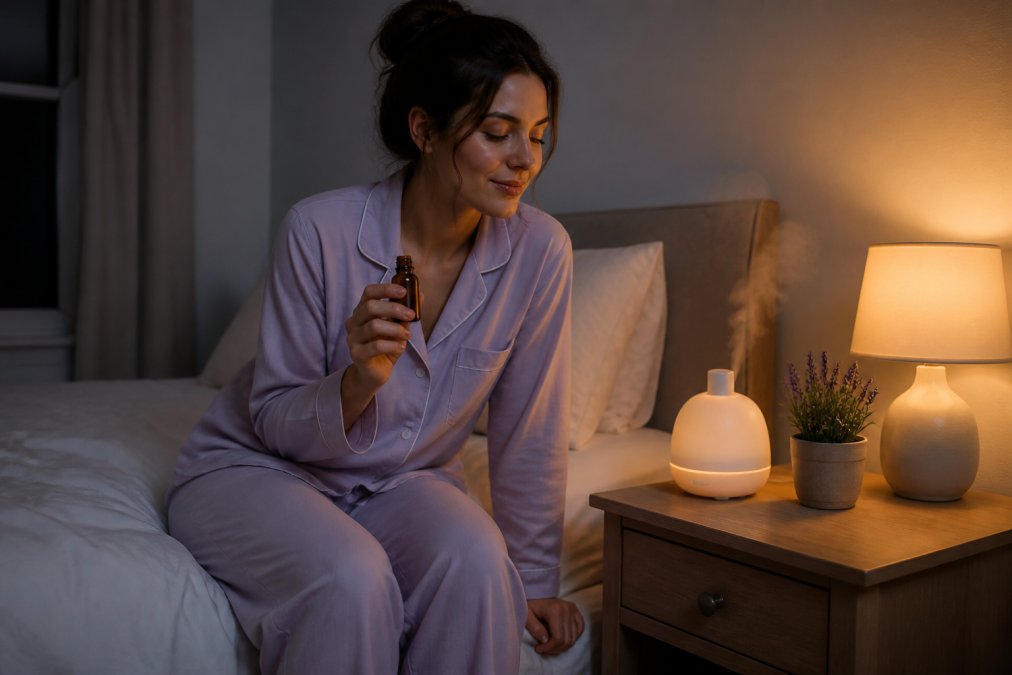
Method 1: Diffusing Before Bed
Diffusing is the most direct route because it delivers the aroma straight to your olfactory system. Add 3 to 5 drops of oil to your diffuser with water about 30 minutes before you plan to sleep, and let it run until you are ready to turn out the light.
Keep the diffuser on a timer if you have one, as running it all night can over-saturate the room and cause a headache. Place the unit across the room, not directly on the nightstand, so the mist disperses evenly rather than concentrating near your face.
Synergistic Blend for the Diffuser: While lavender works well alone, a 2020 review in the Journal of Alternative and Complementary Medicine noted that blends often outperform single oils for sleep onset. A well-regarded combination is 3 drops of lavender with 2 drops of sweet orange or 2 drops of bergamot. The citrus notes help to lift the heaviness of lavender, preventing the groggy feeling some people report the next morning. For a deeper, more sedative blend, swap the citrus for 2 drops of Roman chamomile, which contains the compound bisabolol, known for its anti-inflammatory and calming properties.
Method 2: Topical Application with a Carrier Oil
For a longer-lasting effect, topical application lets the oil absorb through the skin while you breathe it in. Always dilute lavender essential oil with a carrier oil such as jojoba, coconut, or sweet almond oil before applying it to your skin.
A safe dilution ratio for adults is 1 to 2 drops of essential oil per teaspoon of carrier oil. Rub the mixture into your wrists, the soles of your feet, or the back of your neck about 15 minutes before bed to give it time to settle.
The Synergy of Touch: Topical application offers a unique advantage over diffusion: the physical act of massage. A 2018 study in Frontiers in Psychology found that a 15-minute foot massage with lavender oil significantly reduced heart rate and blood pressure compared to massage alone (peer-reviewed research). The tactile stimulation activates pressure receptors that trigger the parasympathetic nervous system, while the lavender works on the limbic system. This dual pathway is why topical application often feels more effective for people with racing thoughts than diffusion alone.
Method 3: A Calming Evening Bath
A warm bath with lavender combines the benefits of heat therapy with aromatherapy. Mix 5 to 8 drops of lavender oil with a tablespoon of carrier oil or a dispersant like milk before adding it to the water, since essential oils do not dissolve in water on their own.
Soak for 15 to 20 minutes before your bedtime routine. The warm water raises your body temperature, and the subsequent cool-down mimics the natural drop your body needs to initiate sleep, a pattern that supports your circadian rhythm.
Enhancing the Bath Blend: To amplify the muscle-relaxing effects of the warm water, add 3 drops of lavender and 2 drops of marjoram. Marjoram is a lesser-known but powerful muscle relaxant that pairs well with lavender for people who carry tension in their shoulders or lower back. If you are prone to cold feet at night, add 1 drop of black pepper oil to the mix; it promotes circulation, which helps distribute body heat evenly as you fall asleep.
Method 4: A Simple Pillow Spray
If you prefer not to put oil directly on your skin, a pillow spray is the easiest option. Combine 10 to 15 drops of lavender oil with 2 ounces of water and a teaspoon of witch hazel in a small glass spray bottle.
Shake well before each use and mist lightly over your pillow and sheets about 10 minutes before bed. A light mist is enough; soaking the fabric can leave a strong scent that interferes with sleep rather than helping it.
A Note on Spray Longevity: The scent from a pillow spray typically fades within 30 to 45 minutes, which is often not long enough to help you fall back asleep if you wake in the middle of the night. To extend the effect, add 5 drops of vetiver oil to the spray. Vetiver is a heavy, earthy oil that evaporates slowly, acting as a natural fixative that keeps the lavender aroma present for up to 2 hours. This combination is particularly useful for people who wake at 2 or 3 a.m. and struggle to get back to sleep.
Lavender Oil Safety and Dilution: What to Know First
Lavender essential oil safety starts with understanding that "natural" does not automatically mean "harmless." Pure essential oils are highly concentrated botanical extracts, and using them improperly can cause skin irritation, headaches, or allergic reactions. While generally recognized as safe for most adults, specific populations require more detailed guidance than a simple 'consult your doctor' warning.
Specific Safety Considerations for Key Groups
Pregnancy and Nursing: The general medical consensus advises caution with essential oils during pregnancy, especially in the first trimester. Most healthcare providers recommend avoiding topical application and diffusing only in a well-ventilated room for short periods. The concern is not about proven harm, but the lack of robust clinical data on how concentrated plant compounds affect fetal development. A common pattern is to recommend a maximum of 1 drop of lavender in 2 teaspoons of carrier oil for a full-body massage, and to stop use entirely if any nausea or dizziness occurs.
Infants and Young Children: Lavender is one of the few essential oils with published safety data for children, but the rules are strict. For infants under 3 months, the American Association of Naturopathic Physicians advises against any topical use due to skin sensitivity and immature liver function. For toddlers and young children, the safe dilution ratio drops to 1 drop of lavender per 2 tablespoons of carrier oil (a 0.25% dilution), applied only to the soles of the feet. Diffusing is generally considered safe for children over 2 years old, but the diffuser should run for no more than 30 minutes in a room with the door open. Never use a warm mist diffuser around children, as the heating element poses a burn risk.
People on Prescription Medications: Lavender is known to interact with a class of drugs called CNS depressants, which include common sleep aids like zolpidem (Ambien) and anti-anxiety medications like alprazolam (Xanax). Because lavender itself has a mild sedative effect, combining it with these drugs can amplify drowsiness and impair motor function more than either alone. If you take any medication for sleep, anxiety, or depression, a conservative approach is to use lavender only for its aroma in a diffuser and avoid topical application until you have discussed it with your prescribing physician.
The Full Dilution and Patch Test Protocol
Before using lavender topically for the first time, perform a patch test. Apply a small amount of your diluted mixture to the inside of your forearm and wait 24 hours to check for redness or itching. If irritation appears, avoid topical use and stick to inhalation methods instead.
A final safety note that most articles miss: lavender can be a mild allergen for a small percentage of people, and sensitivity can develop over time with repeated use. If you find that you need to increase the amount of oil to get the same effect, or if you develop a headache after diffusing, take a break for a week. This prevents olfactory fatigue and reduces the risk of sensitization, which is an allergic reaction that can develop after repeated exposure to a substance.
Choosing a Quality Lavender Oil That Actually Works
The difference between a relaxing night and a wasted purchase often comes down to the quality of the oil in the bottle. Many products labeled "lavender" are actually synthetic fragrance oils or heavily diluted blends that offer little of the calming effect you are looking for.
Look for bottles that specify the botanical name Lavandula angustifolia rather than just "lavender fragrance" or "lavender perfume." True lavender essential oil should list its purity, and the label should indicate whether it is a pure essential oil or a blend. A reputable brand will often share sourcing details, which speaks to sustainability and sourcing transparency.
The oil should come in a dark glass bottle, usually amber or cobalt blue, to protect it from light degradation. If it comes in clear plastic, the quality is likely compromised. Nirvana Wellness Store offers a curated selection of wellness products designed to support your journey toward balance and vitality. Our collection is thoughtfully chosen to provide high-quality solutions for your daily self-care routine.
Common Mistakes to Avoid for Better Sleep Results
Most people who say lavender "doesn't work" are making one of a few fixable errors. The most common is using too much oil, which overstimulates the senses and causes a headache instead of relaxation. More is not better with essential oils.
Another frequent misstep is expecting instant results. Lavender works best as part of a consistent bedtime ritual, not as a one-off fix on a stressful night. Pair it with good sleep hygiene: keep your room cool and dark, put your phone away an hour before bed, and stick to a regular sleep schedule.
Final Thoughts: Making Lavender Oil Part of Your Bedtime Ritual
Lavender essential oil for sleep is a simple, accessible tool, but it works best when it supports a broader wind-down routine. The evidence for its calming effect is strong enough to make it worth trying, and the safety profile is gentle when you follow basic dilution and testing rules.
The key is consistency. Use the same method at the same time each night, choose a high-quality oil from a source you trust, and give your body a few weeks to build the association between the scent and sleep. Nirvana Wellness Store offers a curated range of wellness products designed to support your daily self-care routine, making it easy to find a lavender oil that meets genuine quality standards.
Continue shopping with Nirvana Wellness Store to explore options that support restful nights and a balanced approach to natural wellness.
Frequently Asked Questions
How long does it take for lavender oil to help with sleep?
Most people notice a calming effect within 15 to 30 minutes of inhalation, whether from a diffuser or a pillow spray. The scent travels through the olfactory system and influences the nervous system quickly. For best results, start your bedtime ritual about 30 minutes before you plan to sleep. Consistency matters more than timing: using lavender oil nightly helps your brain associate the scent with winding down, which strengthens the relaxation response over time.
Where should I put lavender essential oil for sleep?
For inhalation, add 3 to 5 drops to a diffuser near your bed, or spray a diluted mist on your pillowcase. For topical use, dilute lavender oil to a 1% to 2% concentration with a carrier oil like jojoba or coconut, then apply to your temples, wrists, or the soles of your feet. Avoid the eye area and broken skin. Always do a patch test on your inner arm 24 hours before applying more widely.
What is the right lavender oil dilution ratio for topical use?
For most adults, a 1% to 2% dilution is safe: that means 3 to 6 drops of lavender essential oil per 1 tablespoon (15 ml) of carrier oil. Start at the lower end if you have sensitive skin. Children, older adults, and anyone with skin conditions should use a 0.5% dilution, or 1 to 2 drops per tablespoon. Never apply undiluted lavender oil directly to skin, as it can cause irritation or sensitization.
Which type of lavender essential oil is best for sleep?
Look for oils made from Lavandula angustifolia, commonly called true lavender or English lavender. It has the gentlest scent profile and the most research behind its sedative properties. Avoid products labeled only as "lavender fragrance" or "lavender perfume," since these are synthetic and do not offer the same calming effects. Choose a pure essential oil in a dark glass bottle with the botanical name listed on the label.