


Table of Contents
- Understanding Postpartum Hair Loss: Causes and Timeline
- Why Natural Oils Work for Postpartum Hair Regrowth
-
Top 9 Natural Oils for Postpartum Hair Regrowth
- 1. Rosemary Oil: The Gold Standard for Hair Growth
- 2. Peppermint Oil: Stimulating Scalp Circulation
- 3. Jojoba Oil: Balancing Scalp Health
- 4. Castor Oil: Deep Nourishment and Strength
- 5. Lavender Oil: Stress Relief and Shedding Support
- 6. Argan Oil: Antioxidant Protection
- 7. Coconut Oil: Protein Retention
- 8. Pumpkin Seed Oil: DHT-Blocking Support
- 9. Nirvana Hair Growth Oil: A Comprehensive Botanical Blend
- How to Use Essential and Carrier Oils for Hair Growth
- Vitamins and Supplements to Support Oil Treatments
- How to Stop Postpartum Hair Shedding: Integrated Oil Routines
- What to Avoid: Harmful Ingredients and Unsafe Practices
- DIY Oil Blends with Proven Ratios
Best Natural Oils for Postpartum Hair Regrowth: 9 Oils That Work
Last Updated: July 25, 2026
Postpartum hair loss affects millions of new mothers. At Nirvana Wellness Store, we understand how distressing this phase can be. Natural oils offer proven support for scalp health, follicle strength, and hair resilience during this vulnerable transition. Below, we'll walk you through nine oils backed by botanical science, how to use them safely while breastfeeding, and how to build a sustainable routine that addresses the root causes of postpartum shedding.
Understanding Postpartum Hair Loss: Causes and Timeline
Postpartum hair loss, medically known as telogen effluvium, is a temporary condition triggered by dramatic hormonal shifts after pregnancy. During pregnancy, elevated estrogen extends the growth phase of hair follicles. After delivery, estrogen plummets, pushing a large percentage of hair follicles into the shedding phase simultaneously.
Shedding typically begins 2-3 months postpartum and peaks around month 4-5. The good news: telogen effluvium is reversible. Hair does not permanently fall out; follicles are simply cycling faster than normal. Once hormones stabilize, which generally occurs within 6-12 months postpartum, shedding slows and new growth returns.
Breastfeeding, stress, poor nutrition, iron deficiency, and inadequate sleep all amplify shedding. Natural oils work best when combined with stress management, proper nutrition, and scalp care.
Why Natural Oils Work for Postpartum Hair Regrowth
Natural oils support postpartum hair recovery by improving blood circulation to the scalp, reducing inflammation, and providing nutrients hair follicles need during regrowth. Blood circulation is foundational, the follicle papilla requires consistent oxygen and nutrient flow to produce strong hair. Many postpartum oils contain menthol or camphor that stimulate vasodilation, widening blood vessels and increasing scalp perfusion.
Inflammation suppresses hair growth and accelerates shedding. Oils rich in polyphenols and fatty acids possess anti-inflammatory properties that calm the scalp environment and create conditions favorable for growth. Finally, oils provide structural support to existing hair and reduce breakage during the vulnerable regrowth window by coating the hair shaft and sealing the cuticle.
Top 9 Natural Oils for Postpartum Hair Regrowth
1. Rosemary Oil: The Gold Standard for Hair Growth
Rosemary oil is one of the most researched botanicals for supporting hair growth and reducing shedding. Its active compounds, carnosic acid, rosmarinic acid, and 1,8-cineole, improve scalp circulation and stimulate follicle activity. Rosemary oil increases blood flow to the scalp when applied topically and massaged in, delivering oxygen and nutrients directly to dormant follicles.
For postpartum use, dilute rosemary essential oil in a carrier oil at a ratio of 3-5 drops per tablespoon of carrier oil. Apply to the scalp, massage gently for 5-10 minutes, and leave on for at least 30 minutes before shampooing. Many women find that twice-weekly rosemary treatments produce visible results within 8-12 weeks.
2. Peppermint Oil: Stimulating Scalp Circulation
Peppermint oil delivers a cooling sensation that signals increased blood flow to the scalp. The menthol content creates vasodilation, boosting nutrient delivery to hair follicles. For postpartum mothers dealing with stress-related shedding, peppermint's dual action of improving circulation while calming the nervous system makes it valuable.
Mix 2-3 drops of peppermint essential oil with one tablespoon of jojoba or coconut oil. Apply to the scalp, focusing on areas of heaviest shedding. Combine peppermint with rosemary for a synergistic scalp stimulation blend.
3. Jojoba Oil: Balancing Scalp Health
Jojoba oil is a carrier oil, not an essential oil, making it safe for direct scalp application without dilution. Its chemical composition closely mirrors the scalp's natural sebum, so it absorbs easily without leaving heavy residue. Jojoba contains vitamin E, B vitamins, copper, and zinc, all essential for hair strength and follicle health. Its anti-inflammatory properties calm scalp irritation and regulate sebum production.
Apply jojoba oil directly to the scalp using your fingertips to massage in gentle circular motions. Leave it on for 30 minutes to several hours, or overnight for a deep treatment. Because jojoba is lightweight, many women use it as a daily scalp serum.
4. Castor Oil: Deep Nourishment and Strength
Castor oil is thick, nutrient-dense, and deeply penetrating, making it ideal for postpartum mothers with dry, damaged, or fragile hair. Its ricinoleic acid content provides anti-inflammatory benefits, while its high fatty acid profile nourishes both scalp and hair shaft.
Mix castor oil 1:1 with a lighter oil like jojoba or coconut oil to improve spreadability. Apply to the scalp and hair lengths, focusing on roots and mid-lengths where new growth is most fragile. Leave on for 1-2 hours or overnight, then shampoo thoroughly. Use as a weekly or bi-weekly treatment. Many women report improved shine and visible new growth within 4-6 weeks.
5. Lavender Oil: Stress Relief and Shedding Support
Lavender oil addresses one of the most overlooked causes of postpartum hair loss: stress. The hormone cortisol, elevated during physical or emotional stress, suppresses hair growth and accelerates shedding. Lavender oil's calming properties help reduce cortisol levels, supporting the hormonal balance necessary for hair recovery. The oil also possesses antimicrobial and anti-inflammatory properties that benefit scalp health.
Combine 3-4 drops of lavender essential oil with one tablespoon of jojoba or sweet almond oil. Apply to the scalp and massage gently. Alternatively, add lavender to a diffuser to inhale the aroma during evening relaxation.
6. Argan Oil: Antioxidant Protection
Argan oil is rich in vitamin E, phenolic compounds, and antioxidants that protect hair from oxidative stress, a factor that suppresses follicle function. For postpartum mothers, oxidative stress is particularly relevant because hormonal chaos increases free radical production. Argan oil's antioxidant shield protects emerging new growth from damage.
The oil is lightweight and absorbs quickly, making it suitable for daily use. Apply a few drops to damp hair, focusing on roots and scalp. Argan oil can also be used as a finishing serum on dry hair to reduce frizz and add shine.
7. Coconut Oil: Protein Retention
Coconut oil's unique ability to penetrate the hair shaft and reduce protein loss makes it invaluable during postpartum hair recovery. Its lauric acid has a molecular structure that allows it to bind to hair proteins, sealing the cuticle and preventing moisture loss. For postpartum mothers dealing with fragile new growth and breakage-prone shedding hair, this protein-retention mechanism directly reduces hair loss.
The oil also possesses antimicrobial and antifungal properties that support scalp health. However, coconut oil can be comedogenic for some individuals; if you experience scalp congestion or increased shedding, switch to a lighter alternative like jojoba.
Apply coconut oil as a pre-wash treatment: massage it into the scalp and hair, leave for 30 minutes to 2 hours, then shampoo thoroughly.
8. Pumpkin Seed Oil: DHT-Blocking Support
Pumpkin seed oil contains compounds that may help block DHT (dihydrotestosterone), a hormone implicated in hair loss. While DHT is more commonly associated with male pattern baldness, postpartum hormonal shifts can increase DHT sensitivity in some women. Pumpkin seed oil's phytosterols and lignans provide natural DHT-blocking support.
The oil is also rich in magnesium, zinc, and antioxidants that support scalp health and follicle function. Mix pumpkin seed oil with jojoba (1:1 ratio) to improve spreadability. Apply to the scalp 2-3 times weekly. Many women combine pumpkin seed oil with rosemary for a synergistic blend. Results typically appear within 8-12 weeks.
9. Nirvana Hair Growth Oil: A Comprehensive Botanical Blend
Nirvana Hair Growth Oil combines multiple botanical extracts into a single, convenient treatment, bringing together the circulation-stimulating benefits of rosemary, the stress-relief properties of lavender, and the scalp-balancing action of carrier oils. At $34.99 for a 2oz bottle, it offers a practical entry point for mothers seeking professional-grade support without the complexity of building a multi-oil routine.
The formulation targets the mechanisms that drive telogen effluvium: poor scalp circulation, inflammation, and stress-related cortisol elevation. Apply to a clean scalp, massage gently for 5-10 minutes, and leave on for at least 30 minutes before shampooing. The Nirvana Hair Growth Oil Double Pack ($64.99) offers better value for women committed to consistent treatment over 3-6 months.
| Oil | Primary Benefit | Application Frequency | Best For |
|---|---|---|---|
| Rosemary | Stimulates follicles | 2x weekly | Sluggish growth, hormonal shedding |
| Peppermint | Boosts circulation | 1-2x weekly | Stress-related shedding, scalp stimulation |
| Jojoba | Balances scalp | Daily or 3x weekly | Sensitive, inflamed, or imbalanced scalps |
| Castor | Deep nourishment | 1x weekly | Dry hair, breakage, fragile new growth |
| Lavender | Reduces stress | Daily (aroma) or 2x weekly (topical) | Anxiety, sleep issues, stress-driven shedding |
| Argan | Antioxidant protection | Daily (light application) | Oxidative stress, frizz, finishing |
| Coconut | Protein retention | 1-2x weekly | Breakage-prone hair, dry scalp |
| Pumpkin Seed | DHT support | 2-3x weekly | Hormonally sensitive shedding |
| Nirvana Hair Growth Oil | Comprehensive botanical blend | 1-2x weekly | Convenient, multi-action postpartum support |
How to Use Essential and Carrier Oils for Hair Growth
Dilution Ratios and Safe Application
Essential oils must always be diluted before applying to the scalp. The standard dilution ratio for scalp treatments is 3-5 drops of essential oil per tablespoon (15ml) of carrier oil. For sensitive scalps or first-time users, start with 2-3 drops per tablespoon and gradually increase as tolerance builds.
Carrier oils like jojoba, coconut, castor, and argan can be applied directly to the scalp without dilution. Thicker oils like castor benefit from mixing with lighter oils to improve spreadability. A 1:1 blend of castor and jojoba provides nourishing benefits with lightweight absorption.
Always perform a patch test before using a new oil on your scalp. Apply a small amount to the inner elbow or behind the ear and wait 24 hours to check for allergic reaction or irritation. If you experience redness, itching, burning, or rash, discontinue use immediately and rinse thoroughly.
Pre-Wash Treatments and Scalp Massage Routines
The most effective oil application involves a pre-wash treatment combined with scalp massage. The massage stimulates blood flow while the oil nourishes the follicle, creating a synergistic effect that amplifies results.
Weekly Scalp Oil Treatment (45 minutes):
Prepare your oil blend: Mix 3-4 drops of rosemary essential oil with one tablespoon of jojoba oil, or use Nirvana Hair Growth Oil directly.
Apply the oil: Section your hair into 4-6 parts using clips. Starting at the hairline, apply oil directly to the scalp using your fingertips or an applicator bottle. Work systematically across the entire scalp.
Massage technique: Using your fingertips, massage the scalp in slow, firm circular motions. Begin at the hairline and work backward toward the crown, then massage the sides and back. Spend 1-2 minutes on each area, focusing on spots where shedding is heaviest.
Rest period: Leave the oil on for 30 minutes to 2 hours. Some women wrap their hair in a warm towel to enhance absorption.
Shampoo: Rinse thoroughly with warm water and a gentle sulfate-free shampoo. It may take 2-3 rinses to remove the oil completely.
Frequency: Perform this treatment 1-2 times weekly. Consistency matters more than intensity; weekly treatments over 12 weeks produce better results than sporadic intensive treatments.
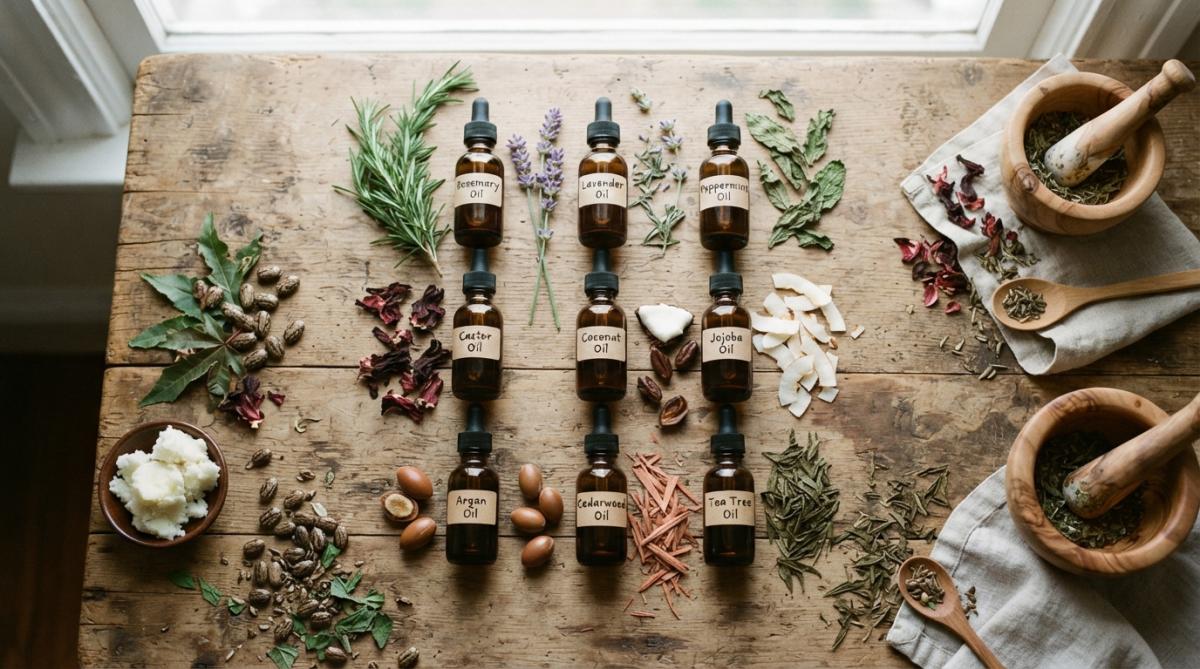
Vitamins and Supplements to Support Oil Treatments
Natural oils work most effectively when combined with internal support, vitamins and minerals that address nutritional deficiencies common in postpartum mothers. Hair growth depends on adequate protein, iron, zinc, biotin, and omega-3 fatty acids.
Biotin supports keratin production, the primary structural protein of hair. A biotin supplement of 2.5-5mg daily can support hair strength and reduce breakage within 3-4 months.
Iron deficiency is one of the most common causes of postpartum hair loss. Check your iron levels with a healthcare provider. Iron supplementation can significantly reduce shedding within 2-3 months.
Zinc is essential for hair growth and immune function. A daily zinc supplement of 15-30mg supports hair follicle function and reduces stress-related shedding. Pair zinc with copper (at a 15:1 ratio) to prevent copper deficiency.
Omega-3 fatty acids reduce inflammation and support scalp health. A daily omega-3 supplement of 1000-2000mg can reduce scalp inflammation and support the transition from telogen back to anagen phase.
Combine topical oil treatments with these nutritional supports for comprehensive postpartum hair recovery. Most women see visible improvements within 8-12 weeks when using both approaches together.
How to Stop Postpartum Hair Shedding: Integrated Oil Routines
Building a Long-Term Hair Care Routine
Stopping postpartum hair shedding requires a multi-layered approach that addresses scalp health, follicle function, hormonal balance, and stress simultaneously. A sustainable routine integrates oil treatments into existing self-care practices.
Daily practices (5 minutes):
- Apply 2-3 drops of a lightweight oil (jojoba or argan) to damp hair roots.
- Use a wide-tooth comb on wet hair to minimize breakage of fragile new growth.
- Avoid tight ponytails, excessive brushing, or heat styling during the active shedding phase.
Weekly practices (45 minutes):
- Perform a scalp oil treatment with rosemary, peppermint, or Nirvana Hair Growth Oil, combined with a 10-minute massage.
- This weekly ritual becomes a stress-reduction practice; many women find that dedicating time to their hair recovery improves overall postpartum mental health.
Monthly practices (assessment):
- Track shedding patterns: note the amount of hair loss, areas of heaviest shedding, and any changes in scalp condition.
- Adjust your routine based on results. If shedding is decreasing, continue current practices. If shedding is stable or increasing after 8 weeks, consider adding a different oil or increasing treatment frequency.
- Reassess nutritional status: ensure you're taking biotin, iron, zinc, and omega-3 supplements consistently.
Quarterly practices (professional support):
- If shedding continues beyond 12 months postpartum or is severe, consult a dermatologist or trichologist. Persistent postpartum hair loss may indicate thyroid dysfunction, nutrient deficiency, or other medical conditions requiring professional evaluation.
The key to success is consistency over intensity. Build your routine around activities you already enjoy.
Personalized Oil Blends for Your Hair Type
Customize your approach based on your specific needs:
For oily scalp with dry ends: Combine peppermint (3 drops) with jojoba (1 tablespoon). Apply primarily to the scalp, avoiding the ends.
For dry scalp and fragile new growth: Mix rosemary (3 drops) with castor oil (½ tablespoon) and jojoba (½ tablespoon). This blend provides deep nourishment while rosemary stimulates follicles.
For sensitive, inflamed scalp: Use lavender (2 drops) with jojoba (1 tablespoon). Skip stimulating oils initially. Focus on calming inflammation and reducing irritation.
For stress-related shedding: Combine lavender (3 drops) with argan oil (1 tablespoon). This blend addresses both stress and antioxidant protection.
For hormonally sensitive shedding: Mix pumpkin seed oil (½ tablespoon) with rosemary (3 drops) and jojoba (½ tablespoon). This blend targets both DHT sensitivity and follicle stimulation.
For maximum convenience: Use Nirvana Hair Growth Oil as formulated. The blend is designed to address multiple postpartum hair loss mechanisms simultaneously.
Document which blends work best for your scalp. Most women find their optimal blend becomes clear within 4-6 weeks of experimentation.
What to Avoid: Harmful Ingredients and Unsafe Practices
Breastfeeding Safety and Oil Selection
Most essential oils applied to the scalp do not enter the bloodstream in significant quantities, making them safe for breastfeeding mothers. However, some oils carry higher risks.
Safe oils for breastfeeding mothers: Rosemary, peppermint (in diluted form), lavender, jojoba, coconut, argan, castor, and pumpkin seed oil are all safe for topical scalp use during breastfeeding.
Oils to avoid during breastfeeding: Sage oil, oregano oil, and thyme oil can reduce milk supply. Wintergreen oil contains methyl salicylate, which poses risks to nursing infants. Tea tree oil is not recommended during breastfeeding due to limited safety data.
Application safety: Always apply oils to the scalp only, not to areas your baby might contact. Wash your hands thoroughly after oil application. If you use a diffuser for aromatherapy, ensure the room is well-ventilated and your baby is not in the immediate vicinity.
DIY Oil Blends with Proven Ratios
Scalp Stimulation Blend Recipe
This blend targets sluggish follicles and poor circulation, the primary drivers of postpartum hair loss.
Ingredients:
- Rosemary essential oil: 3 drops
- Peppermint essential oil: 2 drops
- Jojoba carrier oil: 1 tablespoon (15ml)
Preparation: Pour jojoba oil into a small glass bottle. Add rosemary and peppermint essential oils. Close the cap and shake vigorously for 30 seconds. Label the bottle with the date and contents.
Application: Divide your hair into 4-6 sections using clips. Starting at the hairline, apply the blend directly to the scalp using your fingertips or a small applicator bottle. Massage gently in circular motions for 10 minutes, focusing on areas of heaviest shedding. Leave the oil on for 30 minutes to 2 hours, then shampoo thoroughly.
Frequency: Use 2-3 times weekly. If you experience tingling, burning, or irritation, reduce the peppermint to 1 drop or discontinue it entirely.
Storage: Store in a cool, dark place away from direct sunlight. The blend remains stable for 3-4 months.
Expected results: Most women report reduced shedding within 4-6 weeks of consistent use. By week 8-12, new growth becomes visible as shorter hairs emerging from the scalp. Full results typically appear by month 4-6.
Stress-Relief and Hormone-Balancing Blend
This blend addresses the stress and hormonal components of postpartum hair loss.
Ingredients:
- Lavender essential oil: 3 drops
- Argan carrier oil: ½ tablespoon (7.5ml)
- Jojoba carrier oil: ½ tablespoon (7.5ml)
Preparation: Combine argan and jojoba oils in a small glass bottle. Add lavender essential oil. Shake well to blend. This formula is lighter than the stimulation blend and absorbs quickly, making it suitable for daily use.
Application: Apply 3-4 drops to damp hair roots, focusing on the scalp. Massage gently for 2-3 minutes. This blend can be used daily without buildup. Alternatively, use as a weekly deep treatment by applying to the entire scalp and leaving on for 1-2 hours before shampooing.
Frequency: Daily light application (3-4 drops) or weekly intensive treatment. Many women use this blend in the morning for antioxidant protection and stress relief, then use the scalp stimulation blend in the evening.
Storage: Store in a cool, dark place. This blend remains stable for 4-5 months due to argan oil's antioxidant properties.
Expected results: Stress reduction and improved sleep quality typically appear within 1-2 weeks. Scalp inflammation and itching decrease within 3-4 weeks. Visible hair regrowth improvements appear by week 8-12, often in combination with the scalp stimulation blend.
Postpartum hair loss is temporary, but the emotional impact is real. Addressing shedding requires patience, consistency, and a multi-faceted approach combining topical oils, nutritional support, stress management, and time. The nine natural oils outlined in this guide provide scientifically-supported options for every scalp type and postpartum circumstance. Most women see meaningful improvements within 8-12 weeks of consistent treatment. If you're seeking a convenient, professionally-formulated option, Nirvana Hair Growth Oil delivers a comprehensive botanical blend specifically designed for postpartum hair recovery at $34.99, with a Double Pack option available for committed long-term support. Begin with one oil that matches your scalp type, establish a weekly treatment routine, and give your hair the time and nourishment it needs to recover.
Frequently Asked Questions
What are the best natural oils for postpartum hair loss?
The most effective natural oils for postpartum hair regrowth include rosemary oil (proven to stimulate hair follicles), peppermint oil (improves scalp circulation), jojoba oil (balances scalp health), castor oil (deeply nourishes), and lavender oil (reduces stress-related shedding). Carrier oils like argan and coconut oil provide protein retention and antioxidant protection. Nirvana Hair Growth Oil combines multiple botanical ingredients specifically formulated for postpartum hair recovery. Always dilute essential oils with carrier oils before application to avoid scalp irritation.
How long does postpartum hair loss last, and when should oils help?
Postpartum hair loss typically begins 2-4 months after delivery and peaks around 4-6 months, lasting up to 12 months in most cases. This shedding is caused by telogen effluvium, a temporary shift in the hair growth cycle triggered by hormonal changes. Natural oils can help during this timeline by supporting scalp health, improving blood circulation to hair follicles, and reducing breakage of existing strands. Results are usually visible after 8-12 weeks of consistent use. If shedding persists beyond 12 months postpartum, consult a dermatologist.
Can I use essential oils safely while breastfeeding?
Most essential oils are safe to use topically on the scalp while breastfeeding, since they are not ingested and have minimal systemic absorption. However, avoid applying oils directly to the breast area or anywhere baby might contact during nursing. Always dilute essential oils with carrier oils, never apply undiluted oils to the scalp. Lavender, rosemary, and peppermint oils are considered safe when diluted. If you have concerns about specific oils, consult your OB/GYN or lactation consultant before use.
What vitamins help with postpartum hair loss alongside oils?
Biotin, iron, vitamin D, and omega-3 fatty acids are critical for supporting hair regrowth during postpartum recovery. Biotin strengthens hair structure and supports the anagen (growth) phase. Iron deficiency is common postpartum and directly causes shedding. Omega-3s (DHA) reduce inflammation and support scalp health. Vitamin D regulates the hair growth cycle. Combining topical oil treatments with targeted supplementation, through diet or supplements, accelerates results. Many postpartum-specific supplements address these nutrient gaps while being safe for breastfeeding mothers.
How do I perform scalp massage for hair growth postpartum?
Scalp massage stimulates blood circulation to hair follicles, supporting the anagen phase and reducing shedding. Warm your chosen oil blend (2-3 teaspoons) between your palms, then apply to your scalp in sections. Using your fingertips (not nails), massage in slow, circular motions for 5-10 minutes, working from the front hairline toward the crown, then sides to the back. Massage 2-3 times weekly for best results. This practice also reduces cortisol (stress hormone), which contributes to postpartum shedding. Leave the oil in for 20-30 minutes before shampooing.
This article was written using GrandRanker