


Table of Contents
- What Is Red Light Therapy and How Does It Work?
- Red Light Therapy for Muscle Soreness and DOMS
- How Long to Use Red Light Therapy for Recovery Results
- Red Light Therapy Safety and Side Effects
- Real-World ROI: Is It Worth the Investment?
- Red Light Therapy vs. Other Recovery Methods
- Conclusion
Last Updated: August 29, 2026
What Is Red Light Therapy and How Does It Work?
Red light therapy, also known as photobiomodulation, is a non-invasive treatment that uses specific wavelengths of red and near-infrared light to stimulate cellular repair and reduce inflammation. The mechanism works at the mitochondrial level: when light at these wavelengths penetrates skin tissue, it interacts with an enzyme called cytochrome c oxidase in the mitochondria, which enhances ATP (adenosine triphosphate) production. This increased cellular energy output triggers a cascade of biological responses that support muscle recovery, tissue regeneration, and reduced inflammation.
At Nirvana Wellness Store, we've observed growing interest in red light therapy as a complementary recovery tool, particularly among athletes and individuals managing chronic discomfort. Unlike passive recovery methods, red light therapy actively stimulates your cells to work more efficiently during the healing process.

The Science Behind Photobiomodulation
Photobiomodulation operates through a well-documented biological pathway. When red and near-infrared light wavelengths (typically 600-1000 nanometers) reach your cells, they're absorbed by chromophores, light-sensitive molecules, within the mitochondria (peer-reviewed research). This absorption accelerates electron transport chain activity, which directly increases ATP production. More ATP means your cells have more energy to perform repair functions, synthesize collagen, and reduce oxidative stress.
The systemic effects extend beyond the immediate treatment area. Enhanced circulation from localized red light therapy can support whole-body recovery, while the reduction in oxidative stress benefits tissues throughout your body. This is why some practitioners use red light therapy not just for targeted muscle soreness but for general recovery optimization.
The biological response isn't instantaneous, it builds over time with consistent exposure. Your cells require repeated stimulation to establish meaningful ATP increases and sustained anti-inflammatory effects. This is a critical distinction: red light therapy is a cumulative intervention, not an acute one.
Wavelengths and Their Recovery Role
Not all red light is equally effective for recovery. The wavelength you choose determines which tissues the light penetrates and how effectively it stimulates ATP production.
Red light wavelengths (600-700 nanometers) penetrate skin and superficial tissues effectively, making them ideal for surface-level muscle soreness, joint inflammation near the skin, and skin health concerns. Near-infrared wavelengths (700-1000 nanometers) penetrate deeper, reaching muscle tissue, tendons, and bone, making them better suited for deeper muscle soreness, DOMS (delayed onset muscle soreness), and joint recovery below the surface.
Many clinical applications use a combination of both. Red light addresses surface inflammation and skin-level concerns, while near-infrared reaches the deeper musculature where most post-workout soreness originates. Understanding this distinction helps you select the right device for your specific recovery needs.
Red Light Therapy for Muscle Soreness and DOMS
Delayed onset muscle soreness peaks 24-72 hours after intense exercise and results from microscopic muscle fiber damage and inflammatory response (peer-reviewed research). Red light therapy addresses both components: it reduces inflammation directly while supporting the cellular repair processes that resolve DOMS more quickly.
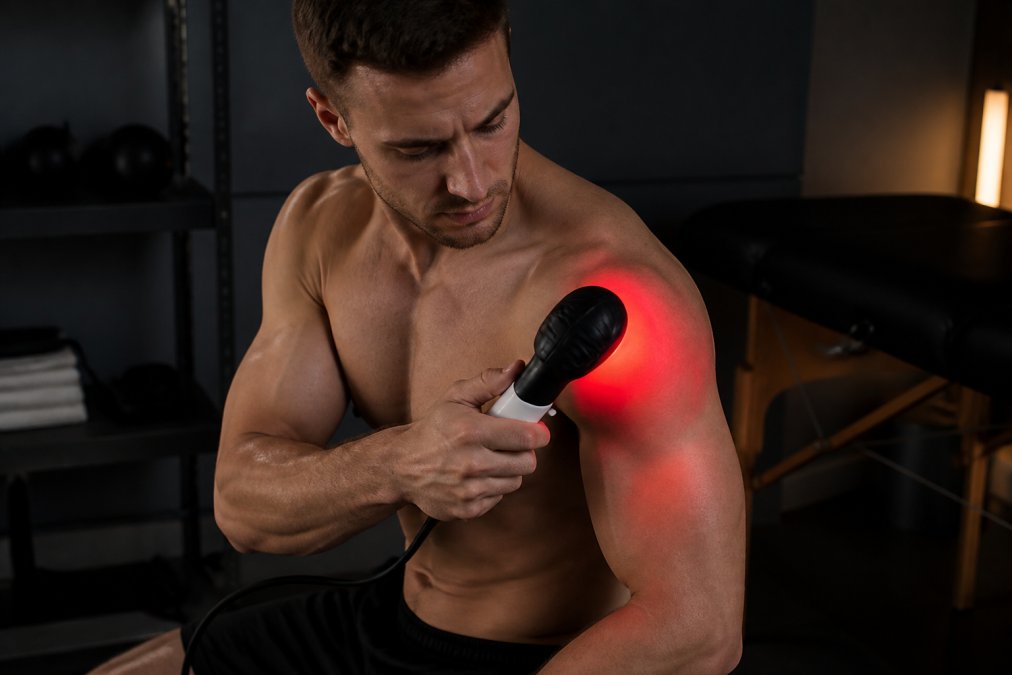
The mechanism is straightforward, increased ATP production accelerates muscle fiber repair and reduces the inflammatory markers that cause soreness. Athletes using red light therapy for post-workout recovery often report reduced soreness within 24-48 hours, though individual responses vary based on treatment consistency and dosage.
The advantage of red light therapy over passive rest is that it actively stimulates recovery rather than simply waiting for inflammation to subside naturally. Combined with other recovery strategies, like the omega-3 supplementation offered through Nirvana Wellness Store's Omega-3 Capsules ($29.97), which support joint wellness and circulation, red light therapy becomes part of a comprehensive recovery protocol.
Treatment frequency matters significantly. Most effective protocols involve daily or near-daily sessions during the acute recovery window (first 72 hours after intense exercise). Skipping days reduces cumulative ATP production and slows the anti-inflammatory response.
How Long to Use Red Light Therapy for Recovery Results
The timeline for results depends on your specific condition and treatment consistency. For acute DOMS, many users report noticeable improvement within 3-7 days of daily treatment. For chronic muscle soreness or joint discomfort, meaningful results typically emerge after 2-4 weeks of consistent use.
This delayed timeline is important to understand upfront. Red light therapy is not a same-day pain reliever like topical creams such as Nirvana Magic Cream ($24.99), which provides immediate cooling relief. Instead, red light therapy works through cumulative cellular stimulation, building effectiveness over successive treatments.
Consistency and Dosage Protocols
Therapeutic dose matters more than you might expect. The term "irradiance" (measured in milliwatts per square centimeter) describes light intensity, while "fluence" (measured in joules per square centimeter) describes total energy delivered. Most clinical protocols recommend fluence levels between 4-40 joules per square centimeter, with typical sessions lasting 10-20 minutes at moderate distances from the device (peer-reviewed research).
A practical dosage protocol for muscle recovery looks like this:
- Acute DOMS phase (days 1-3 post-exercise): Daily sessions, 15-20 minutes per affected area
- Recovery phase (days 4-7): 4-5 sessions per week, 12-15 minutes per area
- Maintenance phase (ongoing): 2-3 sessions per week to support tissue health and reduce future soreness
Distance from the device affects both irradiance and penetration depth. Closer placement (2-4 inches) delivers higher intensity but less penetration; farther placement (6-12 inches) reduces intensity but allows deeper tissue penetration. Most home devices provide guidance on optimal distance for your specific model.
Consistency outweighs intensity. A person doing 12-minute sessions five days per week will see better results than someone doing 30-minute sessions once weekly. Your cells respond to regular, predictable stimulation more effectively than sporadic high-dose exposure.
Red Light Therapy Safety and Side Effects
Red light therapy has a favorable safety profile when used as directed. The wavelengths employed (600-1000 nanometers) don't cause the DNA damage associated with UV light, and the energy levels used in therapeutic applications are well below levels that cause thermal damage to tissue.
Most users experience no side effects. Some report mild temporary effects like slight skin warmth during or immediately after treatment, or occasional headaches during the first few sessions (which typically resolve with continued use). These are not dangerous, they reflect your body's initial adjustment to increased cellular activity.
Eye safety deserves specific attention. While red and near-infrared light don't damage the retina the way blue light or UV does, direct eye exposure to high-intensity devices should be avoided. Most manufacturers recommend not staring directly into the device during operation, though incidental exposure to lower-intensity light is generally considered safe.
Who Should Avoid Red Light Therapy
Certain conditions warrant caution or avoidance. Individuals taking photosensitizing medications (some antibiotics, NSAIDs, and certain psychiatric medications) should consult their healthcare provider before starting red light therapy, as these drugs can increase skin sensitivity to light.
Pregnancy is not an absolute contraindication, but pregnant individuals should consult their healthcare provider before beginning treatment, particularly for abdominal or pelvic applications. The research on safety during pregnancy is limited, so conservative caution is appropriate.
Those with a history of skin cancer or suspicious skin lesions should avoid directing red light therapy at affected areas and should consult a dermatologist first. While red light itself doesn't cause cancer, the increased cellular activity it stimulates could theoretically affect existing lesions.
Individuals with thyroid conditions should avoid direct thyroid area exposure without medical guidance, as the increased cellular activity could theoretically affect thyroid function. This is a precautionary measure based on the thyroid's sensitivity to stimulation, not proven harm.
Real-World ROI: Is It Worth the Investment?
Whether red light therapy justifies its cost depends on your recovery needs, current spending on recovery methods, and how effectively it works for your specific situation.

Cost Comparison and Recovery Timeline
Entry-level red light therapy devices range from $100-300 for smaller, targeted units suitable for specific areas (shoulder, knee, elbow). Mid-range devices (larger panels for full-body use) typically cost $400-800. High-end clinical-grade devices exceed $1,000.
Compare this to your current recovery spending. If you're already purchasing topical pain creams like Nirvana Magic Cream ($24.99 per application), omega-3 supplements like Nirvana Omega-3 Capsules ($29.97), and potentially physical therapy sessions or massage, a red light therapy device becomes cost-competitive within 3-6 months of use.
The ROI calculation shifts based on your situation:
- For athletes with frequent DOMS: A $300-400 device pays for itself in 4-6 months if it reduces recovery time by even one day per week, allowing more frequent training without excessive soreness.
- For individuals with chronic joint pain: The comparison is less about acute soreness and more about whether red light therapy reduces your reliance on other pain management tools. If it meaningfully reduces your need for topical creams or supplements, the cost becomes justified.
- For general wellness: Red light therapy's value is lower unless you're actively managing recovery from regular intense exercise or chronic discomfort.
Recovery timeline is the practical ROI metric. If red light therapy reduces your DOMS recovery from 5 days to 3 days, you gain two additional training days per week. For serious athletes, this compounds into significant performance gains over months.
Red Light Therapy vs. Other Recovery Methods
Red light therapy occupies a specific niche in the recovery toolkit. It's not a replacement for other methods, it's a complement.
Compared to passive rest, red light therapy actively stimulates recovery rather than waiting for inflammation to resolve naturally. You'll see results faster with red light therapy, but rest remains foundational.
Versus topical pain creams, red light therapy addresses the underlying cellular damage causing soreness, while creams like Nirvana Magic Cream provide immediate symptomatic relief. They work through different mechanisms: creams create a cooling sensation and reduce localized inflammation quickly, while red light therapy builds cumulative cellular repair over days. Many athletes use both, immediate relief from topical creams during acute soreness, combined with daily red light therapy to accelerate underlying healing.
Compared to ice baths or contrast therapy, red light therapy is less intense and more comfortable, but also slower-acting. Ice baths create acute inflammatory reduction through cold exposure; red light therapy supports cellular repair. Ice works immediately; red light works cumulatively.
Versus oral supplements like Nirvana Omega-3 Capsules ($29.97), which support joint health and circulation systemically, red light therapy is localized and faster-acting for acute muscle soreness. Supplements support long-term joint health; red light therapy accelerates short-term recovery from specific muscle damage.
The most effective recovery approach combines multiple methods: red light therapy for cellular repair, topical creams for immediate relief, quality supplementation for systemic support, and adequate rest for foundational recovery. Red light therapy isn't a standalone solution, it's a force multiplier for other recovery strategies.
| Recovery Method | Speed | Cost | Best For | Mechanism |
|---|---|---|---|---|
| Red Light Therapy | 3-7 days | $100-800 initial | Muscle soreness, DOMS | Cellular ATP production |
| Topical Creams | Immediate | $20-30 per application | Acute pain relief | Surface inflammation reduction |
| Oral Supplements | 2-4 weeks | $25-35/month | Joint health, circulation | Systemic nutritional support |
| Ice Baths | Immediate | Minimal | Acute inflammation | Cold-induced vasoconstriction |
| Rest | 5-10 days | Free | Foundational recovery | Natural healing process |
Red light therapy is worth the investment if you're managing regular muscle soreness, training frequently, or dealing with chronic joint discomfort that other methods haven't fully resolved. The ROI timeline is 3-6 months for most users, and the cumulative benefits compound over time as your cells adapt to regular photobiomodulation stimulation.
The practical approach: start with topical relief using Nirvana Magic Cream for immediate comfort, add consistent red light therapy sessions to address underlying cellular damage, and consider Nirvana Omega-3 Capsules to support joint health and circulation systemically. This layered recovery strategy addresses immediate pain, accelerates healing, and builds long-term resilience. Get started with red light therapy combined with Nirvana Wellness Store's recovery products and experience meaningful improvements in how quickly you bounce back from intense training or manage chronic discomfort.
Frequently Asked Questions
Does red light therapy actually help with muscle recovery?
Red light therapy works through photobiomodulation, a process where specific wavelengths (typically 600-1000 nanometers) penetrate tissue and stimulate mitochondrial ATP production. This enhances cellular repair and reduces oxidative stress, which supports faster recovery from muscle soreness and delayed onset muscle soreness (DOMS). Clinical trials show measurable improvements in recovery time when used consistently, though individual results vary based on wavelength, dosage, and frequency of use.
How long should you use red light therapy for recovery before seeing results?
Most users report initial improvements in muscle soreness within 3-7 days of consistent use, though full recovery benefits typically emerge after 2-4 weeks of regular sessions. A standardized protocol involves 10-20 minute sessions at therapeutic irradiance levels, repeated 3-5 times per week. Consistency matters more than session length; sporadic use delivers minimal results. The cumulative effect builds as cellular repair accelerates with repeated exposure.
What are the potential downsides or safety concerns with red light therapy?
Red light therapy has a strong safety profile for most users when used as directed. Rare side effects include temporary eye strain or mild skin irritation if devices are used incorrectly or at excessive irradiance. Certain medications (photosensitizing drugs) and conditions like untreated melanoma require medical clearance before use. Pregnant women should consult their healthcare provider. The non-invasive nature and lack of systemic effects make it a low-risk recovery option compared to oral supplements or topical treatments.
Is red light therapy FDA-cleared for muscle recovery?
The FDA has cleared certain red light and near-infrared devices for specific therapeutic uses, including wound healing and circulation improvement. However, claims about muscle recovery and DOMS reduction fall outside current FDA clearance for most consumer devices. This doesn't mean red light therapy doesn't work, clinical trials support its effectiveness, but rather that manufacturers cannot make explicit recovery claims on packaging. Always verify device specifications and irradiance levels when selecting a therapy option.
Should I use red light therapy alongside other recovery methods like Nirvana Magic Cream?
Yes, red light therapy and topical pain relief products like Nirvana Magic Cream complement each other. Red light therapy addresses inflammation and cellular repair at the tissue level, while a targeted cream like Nirvana Magic Cream ($24.99) provides immediate comfort and supports mobility. Many athletes combine both for faster recovery: use the cream for quick relief, then follow with red light therapy sessions to enhance tissue regeneration. This layered approach maximizes recovery time and addresses both immediate discomfort and underlying cellular repair.
This article was written using GrandRanker