


Table of Contents
- What Are Epsom Salts and How They Work for Muscle Pain
- How Long to Soak in Epsom Salt for Muscle Pain
- How to Prepare an Epsom Salt Bath for Recovery
- Benefits of Epsom Salt Baths for Athletes
- Water Temperature and Post-Soak Skincare Routine
- Safety Precautions and When to Avoid Epsom Salt Baths
- Combining Epsom Salt Baths with Other Recovery Methods
- Frequently Asked Questions
Last Updated: September 3, 2026
What Are Epsom Salts and How They Work for Muscle Pain
Epsom salt is magnesium sulfate, a naturally occurring mineral compound that dissolves in warm water to create a therapeutic bath. When you soak, magnesium and sulfate ions contact your skin, though scientific evidence for meaningful transdermal magnesium absorption through intact skin remains limited.
The primary relief mechanism comes from the warm water itself. Heat increases blood circulation to affected muscles, reduces stiffness, promotes relaxation, and lowers pain perception through the gate control theory of pain, warmth signals override pain signals traveling to the brain. Magnesium regulates neurotransmitters that control muscle contraction and relaxation, and serves as a cofactor in ATP production, the energy currency of muscle cells. The osmotic effect of salt in water may also trigger localized anti-inflammatory responses.
Athletes and individuals managing delayed onset muscle soreness (DOMS), which develops 24 to 72 hours after intense exercise, report consistent subjective improvements in pain and stiffness following Epsom salt baths (peer-reviewed research). The most likely explanation is that the combination of heat, relaxation, and dedicated recovery time work synergistically to reduce perceived pain and muscle tension.
How Long to Soak in Epsom Salt for Muscle Pain
The recommended soak duration typically ranges from 12 to 20 minutes, with 15 minutes being the optimal balance for most people. Soaking less than 10 minutes may not provide sufficient time for muscle relaxation, while extending beyond 20 minutes offers diminishing returns and can leave skin overly pruned.
Start with 12 minutes to assess your body's response. Those with chronic pain or significant muscle soreness may benefit from the full 20-minute window. Frequency matters as much as duration: most people find that soaking two to three times per week provides noticeable benefits without over-relying on a single recovery method.
Pay attention to how your body responds and adjust accordingly. The key is consistency and finding the duration that fits your recovery protocol without causing skin irritation.
How to Prepare an Epsom Salt Bath for Recovery
Fill your bathtub with warm water at 92 to 100 degrees Fahrenheit, warm enough to feel therapeutic without stressing your skin or cardiovascular system (the CDC).
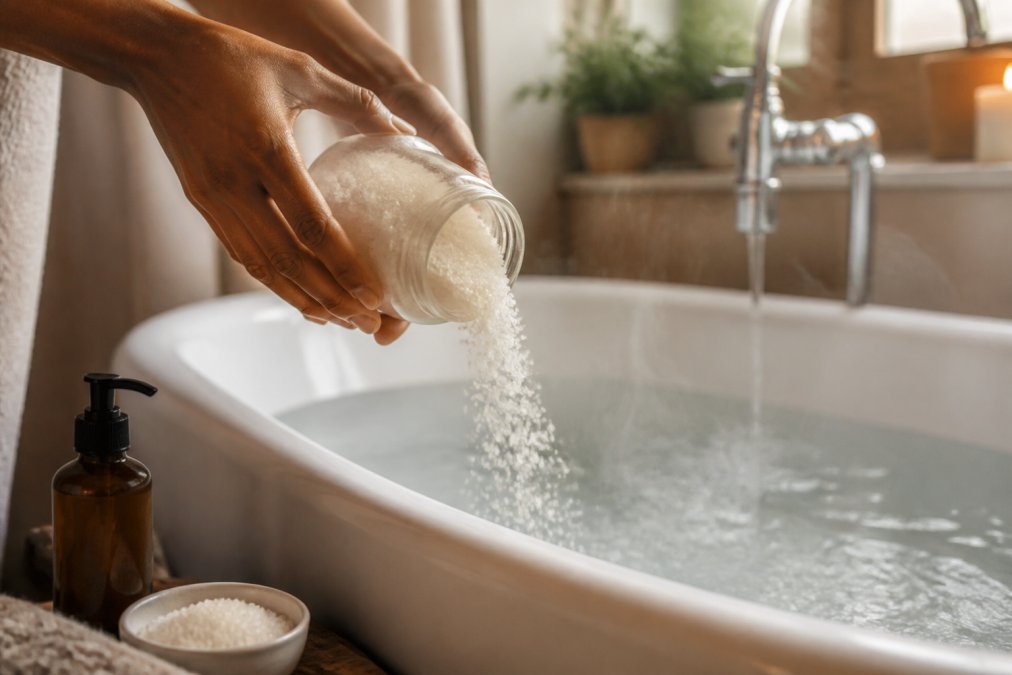
Epsom Salt Bath Recipe for Recovery
Add 1.5 to 2 cups of Epsom salt to a full bathtub of warm water (the NIH). This concentration creates the osmotic environment necessary for therapeutic benefit without oversaturating the water. Stir the salt thoroughly until it dissolves completely. For a smaller soaking tub or foot bath, use roughly 1/2 cup of Epsom salt per gallon of water. Optional additions like lavender or eucalyptus essential oils can enhance relaxation.
Once the salt dissolves, step into the bath slowly and submerge the affected muscle groups. Keep a towel and water nearby to stay hydrated during your soak.
Benefits of Epsom Salt Baths for Athletes
Athletes use Epsom salt baths to address muscle soreness that develops 24 to 72 hours after intense exercise. The magnesium supports muscle relaxation by reducing tension in muscle fibers and potentially lowering inflammation markers. Regular Epsom salt baths can accelerate overall recovery when combined with proper nutrition, hydration, sleep, and active recovery techniques.
The psychological benefit is significant: taking time to soak signals to your nervous system that recovery is a priority, reducing stress hormones and supporting better sleep quality, both critical for effective muscle recovery.
Water Temperature and Post-Soak Skincare Routine
Optimal Water Temperature for Epsom Salt Soaks
Water temperature directly impacts both therapeutic benefit and safety. The ideal range is 92 to 100 degrees Fahrenheit, warm enough to promote vasodilation and increase circulation without triggering adverse responses.
Water at 92-96°F provides therapeutic warmth without stressing your cardiovascular system; this range is appropriate for individuals with hypertension, heart conditions, or those new to heat therapy. Water at 98-100°F produces more pronounced vasodilation and increased metabolic activity in muscle tissue, potentially accelerating recovery for athletes with significant DOMS, but should be limited to 12-15 minutes and avoided if you experience dizziness or elevated heart rate.
Water exceeding 104°F should be avoided. Excessively hot water can irritate sensitive skin, increase inflammation, trigger vasovagal responses, and accelerate skin drying. If you have sensitive skin, cardiovascular concerns, or are pregnant, stay in the 92-96°F range.
Post-Soak Skincare: Addressing Salt's Drying Effect
Salt water has a dehydrating effect on the epidermis. During your soak, the osmotic gradient pulls water from deeper skin layers toward the salt-saturated bath water, leaving your skin prone to moisture loss once you exit the bath.
Immediately after stepping out, rinse your entire body with lukewarm fresh water (around 85-90°F) for 30 seconds to 1 minute, paying special attention to skin folds and areas with existing irritation. Pat your skin dry gently with a soft towel, leaving it slightly damp.
Within 2-3 minutes of exiting the bath, apply a fragrance-free, hypoallergenic moisturizer while your skin is still slightly damp. This timing is critical: damp skin absorbs moisturizer more effectively, and applying while pores are open helps lock in hydration. For very dry skin or frequent soaking, consider using a heavier moisturizer such as a body butter or oil-based product.
If you experience itching, redness, or irritation after soaking, ensure you are rinsing thoroughly and moisturizing promptly. If irritation persists, you may be sensitive to magnesium sulfate and should discontinue use and consult a dermatologist.
Safety Precautions and When to Avoid Epsom Salt Baths
Avoid Epsom salt baths if you have open wounds, severe skin irritation, or active infections. Individuals with kidney disease, heart conditions, or diabetes should consult a healthcare provider before regular use. Those taking medications affecting electrolyte balance should seek medical guidance.
Pregnant women should avoid prolonged or very hot Epsom salt baths. If you experience dizziness, shortness of breath, chest pain, or unusual skin reactions, discontinue use and seek medical attention. Those with very sensitive skin should test cautiously, starting with shorter soak durations and lower salt concentrations.
Combining Epsom Salt Baths with Other Recovery Methods
Epsom salt baths work best as part of a comprehensive recovery strategy. Pairing soaks with stretching or gentle movement amplifies benefits, many athletes schedule stretching for after their soak, when muscles are warm and more pliable.
Combining Epsom salt baths with targeted pain relief products enhances outcomes. After your post-soak skincare routine, applying Nirvana Magic Cream to areas of significant soreness provides targeted relief while muscle tissue is still warm and receptive.

Nutrition, hydration, and sleep quality deserve equal emphasis. Your muscles need adequate protein, carbohydrates, and micronutrients to repair effectively. The relaxation benefits of an Epsom salt bath, particularly when taken in the evening, can improve sleep quality by reducing tension and stress hormones.
Muscle soreness doesn't have to derail your training or limit your daily activities. Using Epsom salt for muscle pain as part of your recovery toolkit, combined with proper hydration, targeted pain relief, and adequate rest, creates a sustainable approach to managing soreness and staying active. Nirvana Wellness Store offers complementary products like Nirvana Magic Cream to enhance your recovery routine with fast-acting natural pain relief for muscle aches and joint discomfort. Start with a 15-minute soak two to three times per week, adjust based on your body's response, and integrate this method into a broader recovery strategy that supports your long-term wellness goals.
Frequently Asked Questions
Do Epsom salts actually work for muscle pain?
Epsom salt contains magnesium sulfate, which may help reduce inflammation and muscle soreness when absorbed through the skin during a soak. While scientific evidence on transdermal magnesium absorption is mixed, many athletes and people with muscle pain report relief after soaking. The warm water itself also promotes muscle relaxation and improved blood circulation. Results vary by individual, but consistent use as part of a recovery routine shows promise for managing delayed onset muscle soreness (DOMS) and general muscle tension.
How long should I soak in epsom salt for muscle pain relief?
Soak for 12 to 20 minutes in warm epsom salt water for optimal results. This duration allows adequate time for magnesium absorption and muscle relaxation without over-soaking, which can dry out your skin. For acute muscle soreness, a 15-minute soak works well. If you have chronic pain or severe tension, you may extend to 20 minutes. Avoid soaking longer than 20 minutes, as this increases the risk of skin irritation and dehydration.
Do I need to rinse off after an epsom salt bath?
Yes, rinsing off after soaking is recommended. A brief rinse with clean water removes excess salt residue from your skin and helps prevent irritation, especially if you have sensitive skin. After rinsing, pat your skin dry gently and apply a moisturizer or post-soak skincare product to lock in hydration. This step is particularly important if you soak regularly or have dry or irritated skin conditions.
When should you avoid using epsom salt baths?
Avoid epsom salt baths if you have open wounds, severe skin conditions, or are pregnant without consulting your doctor first. Do not use if you have kidney disease, heart conditions, or diabetes without medical approval, as magnesium absorption can affect electrolyte balance. If you take medications that interact with magnesium, check with your healthcare provider. People with sensitive skin should test with a shorter soak duration first and monitor for irritation.
This article was written using GrandRanker