


Table of Contents
- What Hair Density Support Means for Fine Hair
- Nirvana Hair Growth Oil Review: 2 oz vs. 4 oz vs. Double Pack
- Best Thickening Shampoo for Fine Hair: What to Look For
- Hair Density Serum Benefits and How They Compare to Oils
- How to Increase Hair Density Naturally: A Daily Routine
- Long-Term Density Support vs. Cosmetic Fullness
- Conclusion: Choosing the Right Density Support
- Frequently Asked Questions
Last Updated: September 22, 2026
What Hair Density Support Means for Fine Hair
Hair density support means maintaining the number of active hair follicles on your scalp and the thickness of each strand. This guide covers what works for fine hair, which ingredients earn their place, and how to tell density loss from natural texture.
Fine hair and low density are not the same problem. Fine hair refers to strand diameter; low density means fewer strands per square inch of scalp. You can have fine hair at high density, or thick strands at low density, and each calls for a different approach.
Most guides get this wrong by recommending the same volumizing products for both.
Fine Hair vs. Thinning Hair: How to Tell the Difference
Fine hair is a genetic texture trait; thinning hair is a change in how many strands your scalp produces. The clearest test is the ponytail check: gather your hair and measure the circumference. If it has shrunk noticeably over the past year, you're likely dealing with density loss rather than texture.
Ingredients That Support Density and Those That Don't
Ingredients that genuinely support density fall into a few categories: scalp circulation boosters, moisturizing botanical oils, and peptide complexes that support the hair growth cycle. Caffeine-infused formulas and peptide serums are the most studied.

Nirvana Hair Growth Oil Review: 2 oz vs. 4 oz vs. Double Pack
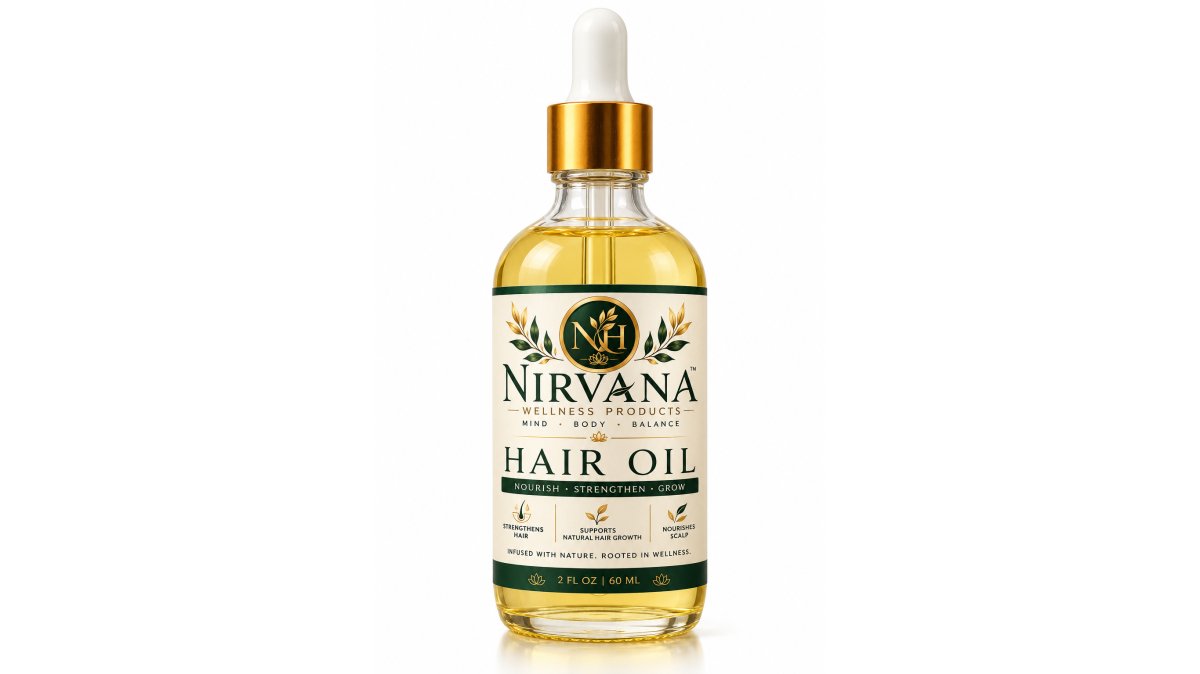
Nirvana Hair Growth Oil is a botanical scalp oil formulated to moisturize dry scalp areas, reduce the appearance of breakage, and improve the look of thinning or damaged hair. It suits daily or weekly use and textured, curly, and protective-style routines.

What the Formula Does for Scalp and Strands
The formula focuses on scalp nourishment rather than chemical-based treatments. It nourishes dry, irritated scalp, moisturizes hair follicles, and supports stronger, healthier-looking hair over time, while working lightly through strands and edges for moisture and shine.
Pricing Breakdown and Which Size Fits Your Routine
| Size | Price | Best For | Cost Per Use |
|---|---|---|---|
| 2 oz | $19.99 | First-time buyers testing the formula | Lowest upfront |
| 4 oz | $29.99 | Established weekly routine | Lower per ounce |
| Double Pack | $39.99 | Consistent long-term use | Best overall value |
The 2 oz bottle at $19.99 is the right starting point if you want to see how your scalp responds before committing. If you'll use it three to four times weekly, the 4 oz at $29.99 stretches further per ounce. The Double Pack at $39.99 suits anyone who has struggled to stay consistent, since a spare bottle removes the excuse to skip a week.
Best Thickening Shampoo for Fine Hair: What to Look For
The best thickening shampoo for fine hair cleans without stripping, avoids heavy silicones that weigh strands down, and includes lightweight moisturizers that add slip without buildup. Clarifying shampoo has a place, but only occasionally.
Look for these on the label:
- Gentle surfactants instead of harsh sulfates
- Panthenol or light proteins that coat the hair shaft for visible fullness
- No heavy silicone load near the top of the ingredient list
- A formula labeled for fine or limp hair specifically
Hair Density Serum Benefits and How They Compare to Oils
Most guides frame this as serum versus oil and pick a winner. That framing is wrong: serums and oils operate on different layers of the scalp, absorb at different speeds, and suit different scalp types. The right question isn't which one, it's which one for your scalp, and in what order.
What each one actually does
Serums are water-based or water-light. They carry water-soluble actives, caffeine, niacinamide, peptide complexes, and absorb into the scalp within a minute or two. They leave no film, making them the only realistic daytime option for fine hair, but they do almost nothing for the hair shaft itself. If your ends are dry or your edges fragile, a serum won't touch that.
The decision framework
Answer one question: is your scalp oily, balanced, or dry?
Nirvana Hair Growth Oil - 4 Oz →
- Fine + oily scalp. Serum only, or a very light oil like jojoba once a week at the hairline and edges. Heavy oils sit on top of sebum, clog the follicle opening, and flatten roots. Caffeine serums fit better because they're water-soluble and add no oil load.
- Fine + balanced scalp. Serum three to four mornings a week, oil one to two evenings a week. This is the most flexible routine and the one most people land on.
- Fine + dry scalp. Oil becomes the primary product: three to four applications a week, massaged in for the full 2 to 5 minutes. A serum can still go on in the morning for caffeine or peptide actives, but the oil does the barrier work.
- Fine + flaky or irritated scalp. Barrier support first. Oil, gentle cleansing, no actives until the irritation settles. Adding caffeine or peptides to an inflamed scalp makes it worse.
Routine structure by hair type
This is the part the top-ranking guides skip entirely, and it's where fine hair diverges most.
Layering order, if you use both
Serum first, oil second, and only if your scalp tolerates both. The serum is water-based and needs to reach the scalp; the oil is occlusive and will block it if applied first. If you alternate days instead of layering, order doesn't matter, just don't apply both in one session on a fine, oily scalp.
How to Increase Hair Density Naturally: A Daily Routine
Learning how to increase hair density naturally comes down to consistency, not intensity. A simple routine you follow four times a week beats an elaborate one you abandon after ten days.
Total Time: 10 minutes per session Difficulty: Beginner
What You'll Need:
- A scalp oil or density serum
- A wide-tooth comb
- A gentle, fine-hair-appropriate shampoo
Routine Building by Hair Type
Fine, straight hair does best with a lightweight serum and a once-weekly oil treatment, since heavy oil flattens this texture fast. Fine, curly hair can handle oil three to four times weekly, focusing on the scalp and edges. In protective styles, apply oil along the part lines and massage the edges, the areas most prone to breakage.
Long-Term Density Support vs. Cosmetic Fullness
Cosmetic fullness is temporary. Thickening sprays, root lifters, and volumizing mousses coat the hair shaft and create lift that washes out by the next day, fine as a styling tool, but not density support.
Conclusion: Choosing the Right Density Support
The hardest part of density support isn't finding products. It's staying consistent long enough to see results, especially when the mirror doesn't change in the first two weeks. That's where most routines quietly fall apart.
Frequently Asked Questions
What is the best hair product for thin, fine hair?
It depends on whether you want cosmetic fullness or long-term scalp support. For scalp care, a lightweight botanical oil like Nirvana Hair Growth Oil ($19.99 for 2 oz, $29.99 for 4 oz) moisturizes follicles and helps reduce the look of breakage. For surface volume, a thickening shampoo with proteins or peptides coats each strand. Most fine-haired users get the best result layering both: oil on the scalp 3-4 times weekly, shampoo on wash days.
Do hair density serums really work for fine hair?
Serums can support hair density, but results depend on the ingredients and consistency. Formulas with peptides, caffeine, or niacinamide target scalp circulation and follicle environment, which supports the hair growth cycle over months, not days. If a serum promises overnight thickness, it is likely cosmetic coating rather than density support. Pair a serum or oil with gentle cleansing and regular scalp massage for the most realistic results.
How can I increase hair density naturally?
Start with scalp health. Massage a nutrient-rich oil into your scalp 3-4 times weekly for 2-5 minutes, keep your scalp clean with a clarifying shampoo once a week, and avoid tight styles that pull on edges and the crown. Diet, stress, and sleep also affect the hair growth cycle. Nirvana Hair Growth Oil is designed for this kind of routine, moisturizing dry scalp areas while supporting stronger-looking strands.
What is the difference between hair growth and hair thickening?
Hair growth refers to new strands emerging from the follicle during the hair growth cycle. Thickening refers to the appearance of each strand, often from coating ingredients that plump the hair shaft or add lift at the root. Density support sits between the two: it focuses on the scalp environment so follicles can produce healthier strands over time. Fine hair usually benefits from both approaches, not just one.
Is the Nirvana Hair Growth Oil Double Pack worth it?
The Double Pack is $39.99 for two bottles, compared to $29.99 for a single 4 oz bottle and $19.99 for 2 oz. If you plan to use the oil 3-4 times weekly, consistency matters more than anything, and two bottles keep you from running out mid-routine. It also works well if you want one bottle at home and one for travel, or if you are targeting both edges and crown areas.