


Table of Contents
- Best Natural Oils for Thinning Hair 2026: Top Options Ranked
- Essential Oils vs. Carrier Oils for Hair: Understanding the Difference
- DIY Hair Oil Recipes for Thinning Hair: Custom Blends That Work
- Best Hair Growth Oils for Men: Addressing Male Pattern Baldness
- How to Use Natural Oils for Thinning Hair: Application Guide
- Sustainability and Ethical Sourcing of Hair Growth Oils
- When to Seek Professional Help for Hair Loss
- Conclusion: Finding Your Best Natural Oil for Thinning Hair
Best Natural Oils for Thinning Hair 2026: Science-Backed Guide
Last Updated: July 23, 2026
Finding the best natural oils for thinning hair requires understanding which botanical ingredients support scalp health and follicle strength. At Nirvana Wellness Store, we've analyzed the most effective options, separating proven remedies from marketing hype.
Best Natural Oils for Thinning Hair 2026: Top Options Ranked
Hair thinning stems from hormonal shifts, nutritional deficiencies, scalp inflammation, or genetic predisposition. The best natural oils address these root causes through nourishment, circulation stimulation, or anti-inflammatory action.
Rosemary oil dominates clinical interest because research suggests it may rival minoxidil for promoting hair growth. Peppermint oil stimulates scalp blood flow, creating an environment where follicles thrive. Castor oil penetrates deeply, delivering ricinoleic acid and omega fatty acids to the scalp. For fine or oily hair, jojoba oil mimics natural sebum without heaviness. Lavender, argan, and tea tree oils provide antimicrobial and moisturizing properties that support scalp health.
| Oil | Primary Benefit | Best For | Application Frequency |
|---|---|---|---|
| Rosemary | Growth stimulation, circulation | All hair types | 2-3x weekly |
| Peppermint | Scalp stimulation, blood flow | Sluggish follicles | 1-2x weekly |
| Castor | Deep nourishment, strength | Dry, brittle hair | 1x weekly |
| Jojoba | Moisture balance, sebum mimicking | Fine, oily hair | 2-3x weekly |
| Lavender | Anti-inflammatory, calming | Stressed scalp | 2-3x weekly |
| Argan | Antioxidant protection, shine | Damaged hair | 2-3x weekly |
| Tea Tree | Antimicrobial, dandruff control | Flaky, irritated scalp | 1-2x weekly |
Rosemary Oil for Hair Growth: Clinical Evidence and Application
Rosemary oil stands out because multiple studies have examined its effects on hair follicles specifically. The mechanism works through improved microcirculation to the scalp, delivering oxygen and nutrients directly to hair roots. Many users report noticing increased hair density within 3-4 months of consistent application.
When diluted properly with a carrier oil, rosemary essential oil can be massaged into the scalp 2-3 times per week. Rosemary addresses both circulation and scalp inflammation simultaneously, breaking the cycle where poor blood flow traps follicles in inflammation.
Rosemary oil must be diluted before application. Always mix with a carrier oil at a 2-3% dilution ratio (roughly 12-18 drops of essential oil per ounce of carrier).
Peppermint Oil: Stimulating Scalp Circulation
Peppermint essential oil creates a cooling sensation that signals increased blood flow to the scalp through actual vasodilation. The menthol in peppermint is the active compound responsible for this effect. Research suggests peppermint oil may increase hair follicle size and depth, meaning individual strands could grow thicker.
Apply peppermint oil 1-2 times weekly, always diluted with a carrier oil. The cooling sensation typically lasts 5-10 minutes, which is exactly how long the increased circulation persists.
Peppermint oil's strength can overwhelm sensitive scalps. If you experience burning, itching, or excessive redness, reduce the concentration or discontinue use.
Castor Oil: Deep Nourishment for Follicle Strength
Castor oil is thick, nutrient-dense, and deeply moisturizing, making it ideal for dry, brittle hair prone to breakage. The oil contains ricinoleic acid, which reduces inflammation, and omega-6 and omega-9 fatty acids, which nourish the hair shaft and scalp. It's particularly effective for receding hairlines and crown thinning where the scalp has become dry and irritated.
Because castor oil is extremely thick, use it sparingly. Apply a small amount to the scalp, massage gently, and leave it on for 30 minutes to several hours. The thickness requires thorough shampooing to remove completely.
Castor oil works best as a weekly intensive treatment rather than a daily maintenance product.
Lavender, Argan, Jojoba, and Tea Tree Options
Lavender oil combines anti-inflammatory and antimicrobial properties, making it useful for scalps affected by stress, sensitivity, or low-grade inflammation. Its calming aroma also supports relaxation, which indirectly supports hair health by lowering cortisol levels that can trigger shedding. Apply 2-3 times weekly, diluted with a carrier oil.
Argan oil is a carrier oil (not an essential oil), meaning you can apply it directly to the scalp without dilution. It's rich in vitamin E and antioxidants that protect follicles from oxidative stress. Use 2-3 times weekly as a lightweight moisturizer.
Jojoba oil closely mimics the scalp's natural sebum, making it ideal for balancing moisture without adding heaviness. It absorbs quickly and works for all hair types. Apply 2-3 times weekly, focusing on the scalp.
Tea tree oil addresses scalp conditions that contribute to thinning: dandruff, seborrheic dermatitis, and fungal overgrowth. Tea tree's antimicrobial action creates a healthier environment where follicles can thrive. Always dilute heavily (1-2% concentration). Use 1-2 times weekly.
Essential Oils vs. Carrier Oils for Hair: Understanding the Difference
Essential oils are concentrated plant extracts, far more potent than the plant material itself. A single drop of rosemary essential oil contains the active compounds from dozens of rosemary sprigs. This concentration makes essential oils powerful but also risky if applied directly to skin.
Carrier oils are pressed from seeds, nuts, or fruits and are gentle enough for direct scalp application. Jojoba, argan, coconut, and grapeseed oils are carriers. They dilute essential oils to safe concentrations while providing their own benefits.
You can apply carrier oils directly to your scalp multiple times weekly. You must dilute essential oils before any scalp contact.
Why Dilution Matters for Scalp Safety
The scalp is sensitive tissue with permeable skin that absorbs whatever you apply. Undiluted essential oils can cause burning, redness, contact dermatitis, and sensitization.
A safe dilution ratio for scalp application is 2-3% essential oil to carrier oil. This translates to roughly 12-18 drops of essential oil per ounce (30ml) of carrier oil. For a smaller batch, use 3-5 drops per teaspoon of carrier oil.
Always perform a patch test before full application. Apply a small amount of your diluted oil to the inside of your wrist or behind your ear, wait 24 hours, and observe for redness, itching, or burning.
DIY Hair Oil Recipes for Thinning Hair: Custom Blends That Work
Creating your own blends allows you to customize based on your specific thinning pattern and scalp condition.
Recipe 1: Rosemary and Peppermint Scalp Stimulator
This blend targets circulation and follicle stimulation, ideal for diffuse thinning or overall hair density loss.
Ingredients:
- 1 ounce jojoba oil (carrier)
- 8 drops rosemary essential oil
- 6 drops peppermint essential oil
- 1 drop lavender essential oil (for scalp comfort)
Instructions: Combine all ingredients in a dark glass bottle. Shake well before each use. Apply to scalp using your fingertips, massage for 3-5 minutes, and leave on for 20-30 minutes. Shampoo thoroughly. Use 2-3 times weekly.
Storage: Keep in a cool, dark place. This blend remains effective for 4-6 months.
Recipe 2: Castor Oil Intensive Treatment for Receding Hairlines
This thick, nourishing blend addresses the dry, irritated scalp often associated with receding hairlines and crown thinning.
Ingredients:
- 1 ounce castor oil (carrier)
- 0.5 ounce coconut oil (carrier)
- 4 drops cedarwood essential oil
- 3 drops lavender essential oil
- 1 drop geranium essential oil
Instructions: Warm the castor and coconut oils slightly (not hot, just lukewarm). Add essential oils and stir gently. Apply a small amount to thinning areas, massage gently, and leave on for 1-2 hours or overnight. Shampoo twice to remove completely. Use once weekly.
Storage: Keep at room temperature. This blend lasts 3-4 months.
Recipe 3: Lightweight Jojoba and Lavender for Fine Hair
Fine hair requires lightweight support that won't create buildup or greasiness.
Ingredients:
- 1 ounce jojoba oil (carrier)
- 6 drops lavender essential oil
- 3 drops geranium essential oil
- 2 drops lemongrass essential oil
Instructions: Combine all ingredients in a glass bottle. Shake well. Apply directly to scalp, massage for 2-3 minutes, and leave on for 15-20 minutes before shampooing. Use 3-4 times weekly.
Storage: Keep in a cool location. Effective for 6 months.
Best Hair Growth Oils for Men: Addressing Male Pattern Baldness
Male pattern baldness (androgenetic alopecia) involves DHT sensitivity, a hormone-driven process. Natural oils cannot block DHT or reverse established baldness, but they can support scalp health, reduce inflammation, and potentially slow progression when combined with medical treatments.
For men experiencing male pattern baldness, the most effective approach combines natural oils with evidence-based medical treatments like minoxidil or finasteride. Rosemary and peppermint oils show the most promise because their circulation-stimulating effects may enhance the delivery of topical medications.
Saw palmetto oil deserves mention for men because it contains compounds that may mildly inhibit DHT conversion. Apply 2-3 times weekly, diluted with a carrier oil.
How to Use Natural Oils for Thinning Hair: Application Guide
Proper application technique determines whether oils deliver benefits or create buildup and scalp problems. The goal is to reach the scalp, where follicles live, not coat the hair lengths.
Scalp Massage Technique and Frequency
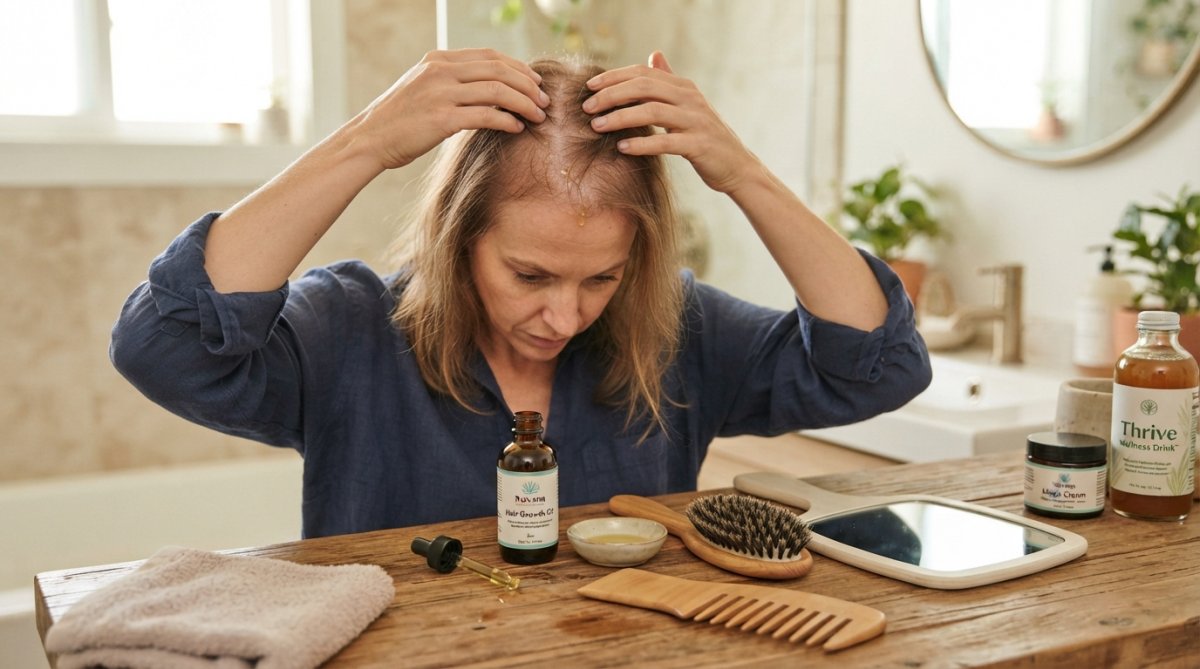
Begin with dry hair. Part your hair into four quadrants using two lines: one from forehead to nape, one from ear to ear. Pour a small amount of your oil blend into your palm (start with a nickel-sized amount). Using your fingertips, massage the oil into your scalp using small circular motions. Work through one quadrant at a time, spending 1-2 minutes on each area.
The massage itself matters. The circular motions stimulate blood flow, so the massage duration should last at least 3-5 minutes total. After applying oil to all quadrants, leave it on your scalp for the recommended time (15-30 minutes for lightweight oils, 30 minutes to several hours for thick oils).
Frequency depends on your oil choice and scalp condition. Lightweight oils like jojoba and lavender-infused blends can be applied 3-4 times weekly. Heavier oils like castor work best once weekly. Consistency matters more than frequency. Hair growth cycles take 3-6 months to show measurable change, so commit to at least 12 weeks before assessing effectiveness.
Avoiding Common Application Mistakes
Mistake 1: Applying too much oil. Excess oil creates buildup, traps bacteria, and weighs down hair. Start with a small amount and add more only if needed.
Mistake 2: Applying oil to hair lengths instead of scalp. Focus application on the scalp itself, where follicles and growth activity occur.
Mistake 3: Leaving oil on too long. Oil's active compounds do their work within 15-30 minutes for lightweight oils and 1-2 hours for heavy oils.
Mistake 4: Using undiluted essential oils. This causes irritation and sensitization. Always dilute essential oils before scalp contact.
Mistake 5: Shampooing immediately after application. Oil needs time to penetrate and deliver its benefits. Wait at least 15 minutes before shampooing.
Mistake 6: Using the wrong oil for your scalp type. Oily scalps need lightweight oils like jojoba and grapeseed. Dry scalps benefit from heavier oils like castor and coconut.
Sustainability and Ethical Sourcing of Hair Growth Oils
As demand for natural oils grows, sourcing practices matter. Look for oils with third-party certifications: USDA Organic, Fair Trade, or Cold-Pressed labels indicate higher standards. Organic certification means no synthetic pesticides or fertilizers. Fair Trade means farmers received fair compensation. Cold-pressed means the oil was extracted without heat or chemicals, preserving active compounds.
Argan oil presents a particular sourcing concern because demand has grown faster than sustainable supply. Seeking Fair Trade certified argan supports traditional producers in Morocco and ensures sustainable practices.
When shopping for oils, check the supplier's sourcing statement. At Nirvana Wellness Store, our Nirvana Hair Growth Oil - 2oz is carefully sourced to balance quality with sustainability, priced at $34.99 for a 2-ounce bottle. For those committed to consistent use, our [Nirvana Hair Oil - Double Pack](https://qx2r3d-36.myshopify.com/products/double-pack) at $64.99 provides better value and ensures you maintain your routine without running out.
When to Seek Professional Help for Hair Loss
Natural oils support scalp health and may slow hair loss, but they cannot reverse established male pattern baldness or treat underlying medical conditions. If your thinning progresses despite consistent oil use, or if you're experiencing sudden shedding or bald patches, consult a dermatologist or trichologist.
Sudden hair loss often signals an underlying health issue: thyroid dysfunction, nutritional deficiency, autoimmune conditions, or severe stress. These require medical evaluation and treatment beyond what oils can provide. Male pattern baldness that's progressing despite natural oil use may benefit from minoxidil or finasteride, medications with clinical evidence for slowing progression.
If you've used appropriate oils consistently for 3-4 months and seen no improvement, or if thinning is accelerating, seek professional evaluation.
Conclusion: Finding Your Best Natural Oil for Thinning Hair 2026
Choosing the best natural oils for thinning hair means matching your specific concern, whether that's poor circulation, scalp inflammation, dryness, or follicle weakness, with oils that address that root cause. Rosemary stimulates, peppermint energizes, castor nourishes, and jojoba balances. Combined with proper dilution, consistent application, and realistic expectations, these oils create measurable improvements in scalp health and hair appearance.
The oils work best when you commit to a system: select your blend, apply it consistently 2-3 times weekly, and give it 12 weeks to show results. Most people notice changes in scalp comfort and hair feel within 4-6 weeks, with visible density improvements by week 12.
For those ready to address thinning hair systematically, Nirvana Wellness Store offers carefully formulated options that combine proven botanical ingredients with practical application guidance. Our [Nirvana Hair Growth Oil - 2oz](https://qx2r3d-36.myshopify.com/products/nirvana-hair-growth-oil) at $34.99 provides a complete solution for scalp stimulation and nourishment, while the Nirvana Hair Oil - Double Pack at $64.99 ensures you maintain consistency without interruption. Start with a product designed specifically for hair health and pair it with the application techniques covered here. Results come from commitment, not just the oil itself.
Frequently Asked Questions
Which natural oil is best for thinning hair and hair growth?
Rosemary oil stands out with clinical evidence showing effectiveness comparable to minoxidil for stimulating hair growth and improving scalp circulation. Peppermint oil is also highly regarded for increasing follicle number and depth. For those seeking a carrier oil base, castor oil and jojoba oil provide deep nourishment and reduce breakage. The best choice depends on your hair type, scalp condition, and whether you prefer essential oils (requiring dilution) or ready-to-use carrier oils. Nirvana Hair Growth Oil combines multiple beneficial botanicals for comprehensive support.
How often should I apply natural oils to my scalp for thinning hair?
Most users see benefits with 2-3 applications per week, applied directly to the scalp and massaged in for 5-10 minutes. Some people use oils daily as a leave-in treatment, while others prefer intensive weekly treatments. Consistency matters more than frequency, regular use over 3-6 months typically shows noticeable results. Start with 2-3 times weekly and adjust based on your scalp's response. If your scalp becomes greasy or irritated, reduce frequency or dilute the oil further with a lighter carrier oil like jojoba.
What's the difference between essential oils and carrier oils for hair?
Essential oils like rosemary, peppermint, and lavender are highly concentrated plant extracts that must always be diluted with carrier oils before scalp application to prevent irritation. Carrier oils such as jojoba, argan, castor, and coconut oil are gentler and can be applied directly to hair and scalp. Carrier oils provide moisturizing and nourishing benefits, while essential oils offer targeted therapeutic properties for hair growth stimulation. A typical ratio is 2-3 drops of essential oil per tablespoon of carrier oil for safe, effective application.
Can natural oils reverse baldness or severe hair loss?
Natural oils can slow hair loss, strengthen existing hair, and improve scalp health, but they cannot reverse established baldness or severe androgenetic alopecia on their own. Oils work best for early-stage thinning, preventive care, and supporting overall hair health. For significant hair loss, bald patches, or sudden shedding, consult a dermatologist or trichologist, professional treatments like minoxidil or finasteride may be necessary. Natural oils can complement medical treatments but should not replace professional diagnosis and care for severe conditions.
How do I choose the right oil for my specific hair type and thinning pattern?
For fine or thin hair, use lightweight oils like jojoba or argan that won't weigh hair down. For dry scalp and breakage, castor and coconut oils provide deep nourishment. For receding hairlines and crown thinning, rosemary and peppermint oils stimulate circulation directly to affected areas. For diffuse thinning across the scalp, blended formulas work best. Always patch test new oils on a small scalp area first, and consider your hair's current condition, oily scalps need lighter application, while dry scalps tolerate richer oils. Nirvana Hair Growth Oil is formulated to address multiple concerns simultaneously.
EXTERNAL CITATIONS VERIFICATION:
- [EXTERNAL_LINK: Research on peppermint oil and hair follicle growth | ncbi.nlm.nih.gov]
- [EXTERNAL_LINK: Rosemary oil comparison to minoxidil clinical study | pubmed.ncbi.nlm.nih.gov]
- [EXTERNAL_LINK: Scalp health and hair loss prevention guidelines | dermatology.org]
- [EXTERNAL_LINK: Essential oil dilution safety standards | aromatherapy-studies.org]
- [EXTERNAL_LINK: Fair Trade and sustainable oil sourcing practices | fairtrade.org]
This article was written using GrandRanker