


Table of Contents
- Facial Products with Hyaluronic Acid: What to Look For
- Key Hyaluronic Acid Serum Benefits for Your Skin
- How to Apply Hyaluronic Acid the Right Way
- Building a Skincare Routine with Hyaluronic Acid
- Climate, Ingredient Pairings, and What to Avoid
- Choosing Facial Products with Hyaluronic Acid for Your Skin Type
- Side Effects, Sustainability, and Quality Signals
- Frequently Asked Questions
Last Updated: September 27, 2026
Facial Products with Hyaluronic Acid: What to Look For
Hyaluronic acid is a humectant that occurs naturally in your skin, and it can hold many times its own weight in water. That single property explains why facial products with hyaluronic acid have become a staple in daily self-care routines. This guide from Nirvana Wellness Store breaks down what actually matters when you shop: molecular weight, formulation, climate, and how the product fits the rest of your routine. Understanding these technical nuances provides the necessary foundation for starting a skincare routine that effectively balances hydration with the specific needs of your complexion.
Here's the part most guides skip. Two serums can both list "hyaluronic acid" on the label and behave nothing alike on your face. The difference usually comes down to molecular weight and what the formula pairs the ingredient with.
Molecular Weight: Why It Changes Everything
Molecular weight determines how deep a hyaluronic acid product can go. High-molecular-weight versions sit near the surface and hold water in the upper layers of the epidermis. Low-molecular-weight versions, often listed as sodium hyaluronate, penetrate further toward the dermal layer.
Neither is better in isolation. A formula that combines several weights covers more ground, which is why you'll see "multi-weight" claims on better serums. As documented in FDA guidance on cosmetic labeling, ingredient names on a label must reflect what's actually in the product, so check the INCI list rather than the front of the bottle. Sodium hyaluronate is the salt form and is the most common listing you'll find.
Key Hyaluronic Acid Serum Benefits for Your Skin
The core hyaluronic acid serum benefits come down to moisture retention. By drawing water into the skin barrier, the ingredient supports hydration, plumping, and a smoother appearance of fine lines and wrinkles. It won't restructure your skin, but it makes dehydrated skin look noticeably better within days of consistent use.
Hydration, Plumping, and Fine Lines
Dehydrated skin looks tired. When the moisture barrier is compromised, transepidermal water loss increases and skin texture suffers. A hyaluronic acid serum temporarily fills that gap, softening the look of fine lines and improving radiance.
What it does not do:
- Replace collagen synthesis or reverse structural aging
- Permanently change elasticity
- Substitute for an occlusive moisturizer on top
Think of it as a hydration step, not a treatment. Many people expect serum alone to solve dryness, then wonder why skin still feels tight. The answer is almost always what comes after it.
How to Apply Hyaluronic Acid the Right Way
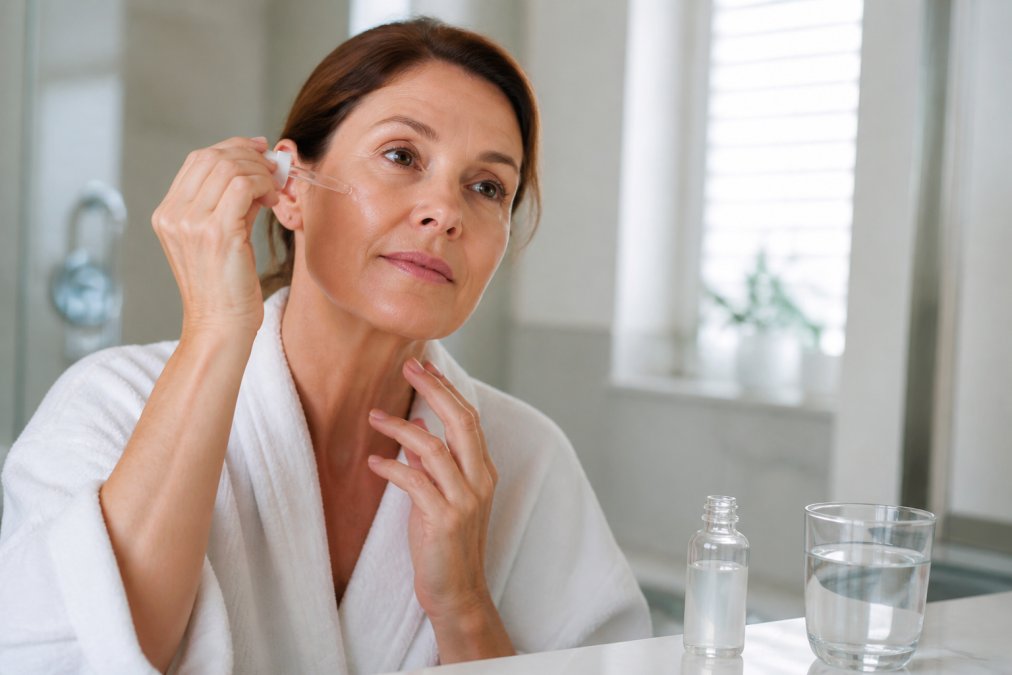
Apply hyaluronic acid to damp skin, then seal it with a moisturizer within a minute. Dry application can pull moisture out of the skin instead of into it, which is the most common mistake with this ingredient.
Damp Skin, Layering Order, and Common Mistakes
The order matters as much as the product. Here's the sequence that works for most routines:
- Cleanse with a gentle, pH balanced cleanser
- Mist or pat water onto skin while it's still damp
- Apply the hyaluronic acid serum
- Follow immediately with a moisturizer to seal it in
- Finish with sunscreen in the morning
Building a Skincare Routine with Hyaluronic Acid
A skincare routine with hyaluronic acid works best when the ingredient sits in the middle of your layering order, after cleansing and before heavier creams. It plays well with most active ingredients, which makes it one of the easiest additions to an existing routine.
Morning and evening both work. Some people prefer it in the morning under sunscreen for all-day hydration; others layer it at night before a richer cream. If your skin is sensitive, start once daily and build from there. A common mistake is adding three new products at once, which makes it impossible to tell what's helping and what's irritating your skin.
Climate, Ingredient Pairings, and What to Avoid
Climate changes how hyaluronic acid performs, and this is where most guides stop short. Hyaluronic acid is a humectant, which means it attracts water from wherever it is available. In humid air, that water comes from the atmosphere and the ingredient works almost effortlessly. In dry air, the atmosphere has little moisture to give, so the ingredient pulls water from the deeper layers of your skin instead. That is why some people find their skin feels tighter after applying a hyaluronic acid serum in winter or in air-conditioned rooms.
The fix is not to abandon the ingredient. It is to give it a moisture source and a seal:
- In humid climates (roughly 60% relative humidity and above): Apply to damp skin and follow with a light moisturizer. The air does most of the work.
- In dry climates (below roughly 40% relative humidity): Mist or pat water onto skin first, apply the serum, then seal immediately with an occlusive or semi-occlusive moisturizer containing ceramides, squalane, or shea butter. The seal prevents the water from evaporating back out.
- In heated or air-conditioned indoor air: Treat it like a dry climate even if you live somewhere humid. Indoor humidity often drops below 30% in winter.
What to Pair with Hyaluronic Acid
- Ceramides to reinforce the skin barrier and slow water loss
- Glycerin for additional humectant action that works alongside HA
- Niacinamide for texture and tone support
- Peptides if you want a light anti-aging angle
- Squalane or lightweight oils as the final sealing step at night
What Not to Layer Directly with Hyaluronic Acid
This is the part competitors rarely spell out. The issue is usually not chemical incompatibility, it is application behavior and irritation risk.
- Strong exfoliating acids (glycolic, lactic, salicylic) in the same step: Layering them together can increase stinging and compromise the barrier. Use the acid first, wait a few minutes, then apply your HA serum. Or alternate them on different days.
- Vitamin C in high concentrations: Both are acidic and can sting when layered wet-on-wet. Many people apply vitamin C in the morning and HA at night, or wait for the vitamin C to dry fully before adding HA.
- Retinoids in the same layer: Retinoids can irritate, and HA can increase penetration of whatever is under it. Apply HA first, let it absorb, then apply retinoid, or use them on alternating nights.
- Heavy oils and silicone-heavy primers applied immediately after: These can cause pilling, where the product balls up and rolls off the skin. Give the HA serum a minute to absorb before the next layer.
- Physical exfoliants right before HA: Freshly scrubbed skin is more permeable and more reactive. Wait a day between exfoliation and a low-molecular-weight HA product.
The American Academy of Dermatology's guidance on skin care routines recommends keeping routines simple and introducing one active at a time, which is sound advice for anyone layering multiple products.
Choosing Facial Products with Hyaluronic Acid for Your Skin Type
Skin type decides which formula makes sense. Oily and acne-prone skin does better with a lightweight, oil-free, non-comedogenic serum. Dry skin benefits from a thicker formula that includes ceramides or squalane. Sensitive skin should look for fragrance-free, dermatologist-tested options.
| Skin Type | Formula to Look For | What to Avoid |
|---|---|---|
| Oily / acne-prone | Lightweight, oil-free gel serum | Heavy creams, added fragrance |
| Dry | Serum plus ceramides or squalane | Alcohol-heavy toners |
| Sensitive | Fragrance-free, short ingredient list | Essential oils, strong acids |
| Mature | Multi-weight serum plus peptides | Over-exfoliation |
| Combination | Gel-cream hybrid | One heavy product for the whole face |
Side Effects, Sustainability, and Quality Signals
Quality signals worth checking:
- Full INCI list on the label, not just "hyaluronic acid"
- Sodium hyaluronate listed alongside other weights
- Airtight or pump packaging to limit contamination
- Clear sourcing or manufacturing information
Sustainability in this category is still uneven. Some brands publish sourcing details; many don't. If that matters to you, look for brands that disclose where their ingredient comes from rather than relying on generic "clean beauty" claims.
Frequently Asked Questions
What is the best hyaluronic acid product for the face?
There is no single best product. Look for a serum that lists sodium hyaluronate or hyaluronic acid near the top of the ingredients, comes in an airless pump or dark bottle, and is fragrance-free if your skin is sensitive. Serums with multiple molecular weights reach different depths of the epidermis. Patch-test any new facial product with hyaluronic acid before adding it to your full routine.
Is there a downside to using hyaluronic acid?
Yes, in dry conditions. Hyaluronic acid is a humectant, meaning it pulls water toward itself. If the air is very dry and you do not seal the serum with an occlusive moisturizer, it can draw moisture out of your skin instead of holding it in. Applying to damp skin and following with a cream prevents this. Some people also experience mild redness on the first few uses.
How often should you use hyaluronic acid on your face?
Most dermatologists suggest using it twice daily, morning and night, as part of a skincare routine with hyaluronic acid. It is gentle enough for daily use and pairs well with most active ingredients. If your skin is very reactive, start once a day and build up. Consistency matters more than frequency, since hydration benefits fade within a day or two of stopping.
Can hyaluronic acid cause skin dryness?
It can if used incorrectly. In low-humidity environments, a hyaluronic acid serum applied to dry skin without a moisturizer on top may pull water from the deeper layers of your skin and leave the surface feeling tight. The fix is simple: apply to damp skin, then seal with an occlusive cream or facial oil. Fragrance-free, pH balanced formulas reduce the risk of irritation.
Finding the right facial products with hyaluronic acid comes down to matching molecular weight, formulation, and climate to your actual skin. Nirvana Wellness Store curates wellness products designed to fit into a simple daily routine, with clear ingredient information so you can choose with confidence. Browse the collection and see what fits your skin type.