


Table of Contents
- Why Sensitive Skin Needs a Different Approach
- Best Natural Ingredients for Sensitive Skin
- How to Soothe Irritated Skin Naturally
- Building a Natural Skincare Routine for Sensitive Skin
- Ingredient Interactions and Environmental Triggers
- Nirvana Wellness Store: A Natural Option for Sensitive Skin Support
- Frequently Asked Questions
Last Updated: September 18, 2026
Why Sensitive Skin Needs a Different Approach
Sensitive skin is a condition where the skin barrier reacts more intensely to products, weather, and stress than it does on most people. Finding effective natural solutions for sensitive skin starts with understanding that the barrier itself is compromised, not just the surface. This guide from Nirvana Wellness Store breaks down what actually calms reactive skin and what makes it worse.
The skin barrier works like a brick wall. When the mortar between those bricks weakens, moisture escapes and irritants get in. That process, called transepidermal water loss, is why sensitive skin often feels tight, itchy, and reactive at the same time.
According to American Academy of Dermatology guidance on sensitive skin, gentle cleansing and consistent moisturizing matter more than the number of products you use. Most people with reactive skin are over-treating, not under-treating.
What Actually Triggers Sensitivity
Triggers usually fall into three groups: what you put on your skin, what your skin touches in the environment, and what happens inside your body. Fragrance, harsh surfactants, and essential oils at high concentrations top the topical list. Weather shifts, dry indoor air, and sun exposure handle the environmental side. Stress and poor sleep make everything worse by raising inflammation.
A common mistake is blaming one product when the real culprit is a stack of them. If you apply four products and react, you cannot tell which one caused it.
Best Natural Ingredients for Sensitive Skin
The best natural ingredients for sensitive skin are ones that calm inflammation, support the barrier, and carry a low allergy risk. Colloidal oatmeal, aloe vera gel, chamomile, and calendula all fit that profile. Each has a long history of topical use for redness and irritation.
Colloidal oatmeal stands out because it forms a protective film that holds moisture in. Aloe vera gel cools on contact and adds lightweight hydration without a heavy residue. Chamomile and calendula bring anti-inflammatory compounds that help settle visible redness.
Oils matter too. Extra virgin olive oil and coconut oil can support hydration, but coconut oil is comedogenic for some people, meaning it can clog pores. Manuka honey has gained attention for its soothing properties, though it costs more than standard honey.
Ingredients to Avoid
- Synthetic fragrance and dyes
- High-concentration essential oils like tea tree oil undiluted
- Sulfate-heavy cleansers
- Alcohol-based toners
- Physical scrubs with rough particles
- Apple cider vinegar applied undiluted
Apple cider vinegar and tea tree oil both appear in home remedy lists, and both cause reactions when used at full strength. Dilution is not optional.
How to Soothe Irritated Skin Naturally
Calming a flare starts with stopping the irritant, not adding a new product. Rinse with lukewarm water, skip everything except a plain moisturizer for a few days, and let the barrier settle. Then reintroduce one product at a time.
Building a Natural Skincare Routine for Sensitive Skin
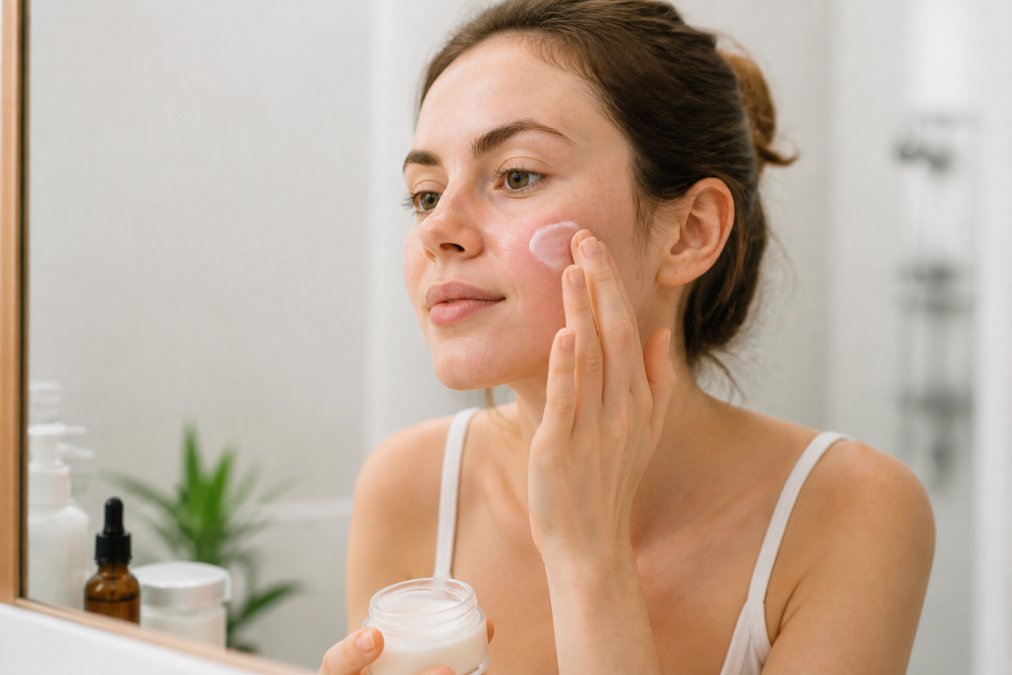
A natural skincare routine for sensitive skin should have four steps and no more: cleanse, treat, moisturize, protect. Every extra step adds another chance for a reaction.
Patch Testing Protocol
Patch testing is the step most people skip, and it is the one that prevents the worst reactions. Here is a protocol you can follow:
- Choose one new product at a time
- Apply a small amount to the inner forearm
- Leave it uncovered for 24 hours
- Check for redness, itching, or bumps
- Repeat on the same spot for 3 to 5 days
- If no reaction appears, test behind the ear
- Wait another 24 hours before using it on your face
Ingredient Interactions and Environmental Triggers
Mixing actives is where even careful routines fall apart. A sensitive barrier has a limited capacity to buffer pH shifts, so combining ingredients that pull it in opposite directions is the fastest route to a flare. The rule is simple: one active at a time, and give each new one a full week before layering anything else.
Natural Ingredients That Should Not Be Mixed
- Acidic exfoliants plus soothing agents. Apple cider vinegar, citrus extracts, and alpha-hydroxy acids lower skin pH. Layering them under colloidal oatmeal or aloe vera does not neutralize the acid, it just irritates the barrier before the soothing agent can help. Space them at least 12 hours apart, or drop the acid entirely if you are mid-flare.
- Vitamin C plus benzoyl peroxide. These two can oxidize each other, which means neither works as intended and the byproducts are more likely to sting. Use vitamin C in the morning and benzoyl peroxide at night, never in the same layer.
- Retinol plus any exfoliating acid. This pairing overwhelms a sensitive barrier faster than almost anything else. If you use both, alternate nights and never apply them within the same routine.
- Undiluted essential oils plus occlusive oils. Tea tree, eucalyptus, and peppermint oils are far more reactive when trapped under a heavy oil or balm. Dilute essential oils to no more than 1 percent in a carrier oil before they touch your face.
- Multiple botanical extracts at once. Chamomile, calendula, and feverfew are all gentle individually, but stacking three or four botanical serums multiplies your allergy exposure without multiplying the benefit.
A useful mental model: soothing ingredients (oatmeal, aloe, calendula) are compatible with each other and with moisturizers. Active ingredients (acids, retinol, vitamin C, benzoyl peroxide) compete with each other and with anything that changes pH. Keep the two categories in separate routines.
Environmental Triggers Beyond Dryness
Most guides stop at "dry air causes dryness." The real picture is more specific, and each factor has a different fix.
- Hard water. Water high in calcium and magnesium leaves a mineral film that raises skin pH and disrupts the acid mantle. That film is why some people feel tight and itchy immediately after washing even with a gentle cleanser. A showerhead filter or a final rinse with filtered or distilled water reduces the residue.
- Indoor humidity. Central heating and air conditioning can drop indoor relative humidity well below the 30 percent mark where a compromised barrier starts losing water faster than it can replace it. A bedroom humidifier set between 40 and 50 percent is the single highest-return change for overnight flares.
- Airborne pollution and particulate matter. Fine particles settle on skin and can carry irritants into a barrier that is already leaky. Rinsing with lukewarm water at the end of the day, before moisturizing, removes the surface load without stripping.
- Seasonal pollen and dust. These raise histamine, which shows up as itching and redness on the face and neck. Washing pillowcases weekly and keeping windows closed on high-pollen days reduces exposure more than any topical product.
- Temperature swings. Moving between cold outdoor air and heated indoor air forces the barrier to adjust repeatedly. Layering a barrier balm before going outside reduces the shock.
Nirvana Wellness Store: A Natural Option for Sensitive Skin Support
Skin health also depends on what you put in your body. Nirvana Wellness Store carries a small, focused range of wellness products, and its sea moss gels are the ones most relevant to skin support.
| Product | Flavor | Price | Best For |
|---|---|---|---|
| Pineapple Nirvana Sea Moss Gel™ | Pineapple | $19.99 | Tropical flavor, daily mineral support |
| Plain Original Nirvana Sea Moss Gel™ | Unflavored | $19.99 | Mixing into any drink or recipe |
| Strawberry Nirvana Sea Moss Gel™ | Strawberry | $19.99 | Milder fruit flavor |
| Papaya Mango Nirvana Sea Moss Gel™ | Papaya Mango | $19.99 | Sweeter fruit blend |
Frequently Asked Questions
How to reduce sensitive skin naturally?
Start with a minimalist routine: a gentle, fragrance-free cleanser, a barrier-supporting moisturizer, and sunscreen. Look for ingredients like colloidal oatmeal, aloe vera gel, and chamomile, which are known for their soothing properties. Avoid harsh exfoliants and hot water. Patch test new products on your inner forearm for 48 hours before applying to your face. Consistency matters more than complexity for sensitive skin.
What are the safest natural ingredients for extremely sensitive skin?
Colloidal oatmeal, aloe vera gel, chamomile, and calendula are generally well-tolerated. Manuka honey and sea moss gel may also support skin hydration and barrier function. Always choose hypoallergenic, non-comedogenic formulas without added fragrance or essential oils. Even natural ingredients can cause reactions, so introduce one new product at a time and stop if you notice redness or irritation.
What natural ingredients should sensitive skin types avoid?
Avoid essential oils like tea tree oil and citrus oils, which can cause irritation. Apple cider vinegar is too acidic for most sensitive skin. Coconut oil can clog pores for some people. Also skip products with added fragrance, alcohol, and physical exfoliants. If you have rosacea or eczema, consult a dermatologist before trying new natural remedies.
Can natural oils help soothe irritated skin?
Yes, some oils can help. Extra virgin olive oil and coconut oil have moisturizing properties, but they do not work for everyone. Jojoba oil and rosehip oil are lighter options. Always patch test first. Oils work best when applied to damp skin after cleansing to lock in hydration. If you have acne-prone skin, use non-comedogenic oils sparingly.
How do I identify triggers for sensitive skin?
Keep a daily log of products used, foods eaten, and environmental exposures alongside any flare-ups. Common triggers include fragrances, preservatives, stress, heat, and certain fabrics. Eliminate one suspected trigger at a time for two weeks to see if symptoms improve. A dermatologist can perform patch testing to identify specific allergens.
Sensitive skin takes patience, and the wrong product can set you back weeks. Nirvana Wellness Store offers a focused range of wellness products built for daily routines, including mineral-rich sea moss gels that support skin, hair, and overall vitality. Browse the collection and find what fits your routine.