


Table of Contents
- How Yoga Addresses Chronic Low Back Pain
- Yoga Poses for Lower Back Pain Relief
- How Long to Practice Yoga for Back Pain Results
- Best Yoga Props for Back Pain Relief
- Safety Tips for Yoga With Chronic Back Pain
- Yoga vs. Physical Therapy for Back Pain Management
- Building a Sustainable Yoga Practice at Home
- Frequently Asked Questions
Last Updated: September 26, 2026
Chronic low back pain affects millions of people, and yoga chronic back pain relief is increasingly recognized as an effective therapeutic approach. Yoga for chronic back pain relief goes far beyond stretching, it addresses physical mechanics, postural habits, and the psychological patterns that reinforce pain.
This guide covers evidence-based therapeutic yoga, effective poses, realistic timelines for improvement, and how to build a sustainable practice.
How Yoga Addresses Chronic Low Back Pain
Yoga for chronic back pain combines flexibility, strengthening, and nervous system regulation in one integrated practice.
Chronic low back pain typically involves restricted flexibility, weak core muscles, and poor posture. Yoga addresses all three: stretching lengthens tight muscles, strengthening poses build spinal stabilizers, and breathing work regulates your nervous system, which directly influences pain perception.
Chronic pain keeps your nervous system activated, elevating cortisol and perpetuating inflammation (Checking your browser). Yoga's controlled breathing and mindfulness downregulate this stress response. A parasympathetic state (calm) promotes healing; sympathetic activation (fight-or-flight) perpetuates pain.
Yoga Poses for Lower Back Pain Relief
The right poses make the difference. Acute flare-ups require different approaches than long-term maintenance.
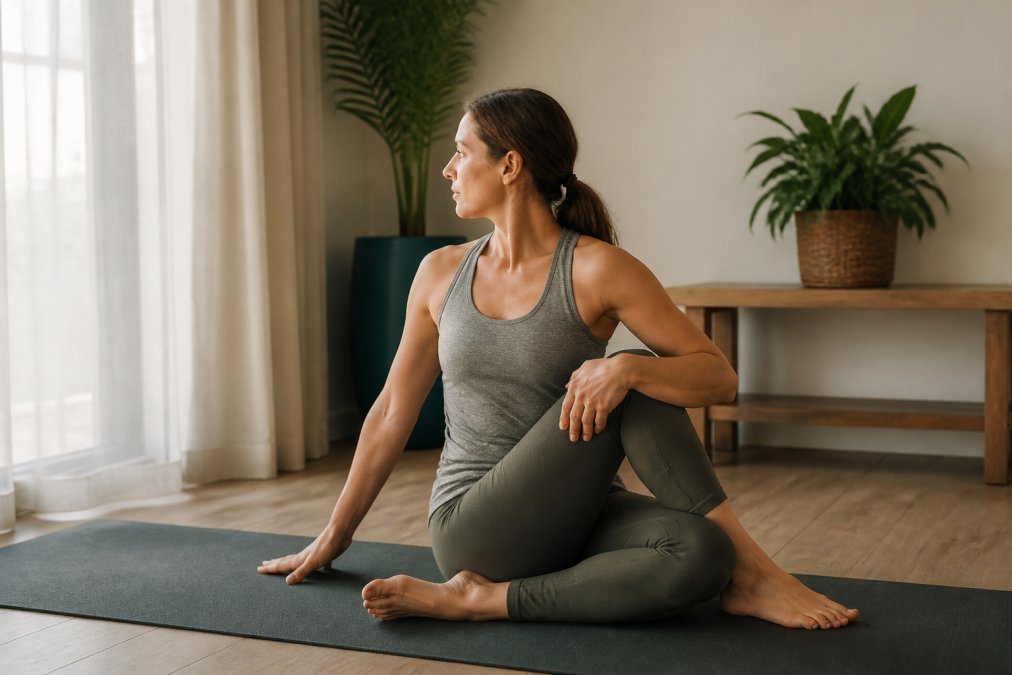
Gentle Poses for Acute Flare-Ups
During acute pain, aggressive stretching aggravates the problem. Gentle poses focus on decompression and nervous system calming.
Child's pose is foundational during flare-ups. Kneel, bring your big toes together, lower your hips to your heels, and extend your arms forward. Hold for 1-2 minutes. This gently lengthens the lumbar spine and signals safety to your nervous system.
Supine figure-four targets the piriformis muscle, which often compresses the sciatic nerve. Lie on your back, cross one ankle over the opposite knee, and gently pull that knee toward your chest. Hold for 30-60 seconds per side. This is highly effective for sciatica-related pain.
Cat-cow mobilizes the entire spine without forcing end-range motion. Start on hands and knees, alternating between arching your back (cow) and rounding it (cat), moving with your breath. Five to ten rounds reset spinal mobility without aggravating inflammation.
Strengthening Poses for Long-Term Support
Once acute pain settles, strengthening becomes your priority. Core stability prevents recurrence.
Bridge pose builds glute and lower back strength. Lie on your back, bend your knees, and lift your hips toward the ceiling, squeezing your glutes. Hold for 3-5 seconds. Repeat for 10-15 repetitions.
Plank variations build core endurance. Start with a modified plank on your forearms and knees. Hold for 20-30 seconds, rest, and repeat. Progress to a full plank as your strength improves.
Locust pose strengthens your posterior chain. Lie face-down and lift your chest and legs slightly off the mat. Hold for 5-10 seconds. This counteracts forward-hunched posture from desk work.
How Long to Practice Yoga for Back Pain Results
Consistency matters more than duration. Most people see meaningful improvement within 4-8 weeks of regular practice, though timelines vary by pain severity and condition.
Expected Timeline by Pain Severity and Condition
Mild chronic pain: Most people notice improvement within 2-3 weeks. By week 4-6, functional improvements become obvious, easier to bend, better posture awareness, fewer flare-ups.
Moderate chronic pain: Expect 4-8 weeks before noticeable improvement. By week 4, most people report better sleep and reduced morning stiffness. By week 8, functional capacity typically improves significantly.
Severe chronic pain: Allow 8-12 weeks before expecting substantial improvement. By week 6-8, many people report better sleep and reduced medication use. By week 12, functional improvements often exceed pain reduction.
Condition-specific timelines:
- Herniated or bulging disc: 6-12 weeks. Inflammation must resolve and the nervous system must desensitize. Most improvement occurs between weeks 8-12.
- Sciatica: 4-10 weeks. Sciatic nerve pain responds well to targeted hip opening, with noticeable improvement by week 4.
- Facet joint pain: 3-6 weeks. This condition responds quickly to movement because pain is often driven by stiffness.
- Stenosis: 8-16 weeks. Yoga manages symptoms and prevents progression through better movement patterns, core stability, and nervous system regulation.
What "Improvement" Actually Means
Track these markers of progress instead of waiting for pain to disappear:
- Functional capacity: Can you sit, stand, or walk longer before discomfort increases? This often improves before pain levels drop.
- Morning stiffness: Does it take less time to feel mobile after waking? Reduced morning stiffness is often the first noticeable change.
- Sleep quality: Are you sleeping better, waking less often due to pain? Improved sleep is a reliable early indicator of nervous system regulation.
- Medication use: Are you taking pain relievers less frequently? Reduced reliance on medication often precedes significant pain reduction.
- Flare-up frequency and severity: Are flare-ups less frequent or less intense? This is more meaningful than average pain level.
- Posture awareness: Do you notice yourself sitting or standing differently? Better postural habits prevent pain recurrence.
- Confidence in movement: Do you feel less fear about moving or trying activities? Reduced kinesiophobia (fear of movement) is a major predictor of long-term improvement.
Optimal Practice Frequency and Duration
A sustainable routine typically involves 20-30 minutes, 3-4 times per week. Shorter, consistent sessions outperform sporadic longer ones.
Daily practice often produces faster results. Fifteen minutes daily works better than 45 minutes twice weekly. If time is limited, even 10-15 minutes of targeted poses maintains progress.
Consistency matters more than intensity.
Tracking Progress and Adjusting Your Practice
Keep a simple log: date, duration, poses practiced, and pain level on a 0-10 scale. After 2-3 weeks, patterns emerge showing which poses help most and which aggravate your pain.
Best Yoga Props for Back Pain Relief
Props make poses accessible and safe, preventing compensation patterns that worsen pain.
A quality mat protects your joints.
Safety Tips for Yoga With Chronic Back Pain
Yoga is generally safe for chronic pain, but choosing the right instructor is critical, not all yoga teachers are equipped to work with chronic pain.
Finding a Trauma-Informed or Pain-Specialized Instructor
A qualified instructor should have specific training beyond a standard 200-hour certification. Look for credentials in:
- Trauma-informed yoga training: Organizations like the International Association of Trauma Recovery (IART) and the Trauma Center offer recognized certifications. Instructors with this background understand how chronic pain creates nervous system sensitization and how to avoid triggering defensive bracing.
- Therapeutic or clinical yoga: Some instructors pursue additional certification in therapeutic applications, often through programs affiliated with physical therapy or rehabilitation centers. These teachers understand specific conditions and contraindications.
- Pain-specific specialization: Ask directly if an instructor has worked with chronic pain clients and what conditions they've supported. Experience with your specific diagnosis (herniated disc, sciatica, stenosis) matters significantly.
Condition-Specific Contraindications
Not all yoga poses suit all back conditions. Understanding your diagnosis helps you make safer choices.
General Safety Principles
Never practice through sharp pain. Dull discomfort is normal; sharp pain is a warning signal. Stop immediately and modify or skip that pose.
Yoga vs. Physical Therapy for Back Pain Management
Yoga and physical therapy both reduce chronic back pain but approach it differently.
Building a Sustainable Yoga Practice at Home
Home practice removes barriers, no commute, no class schedule, no intimidation, but requires self-discipline.
Frequently Asked Questions
How does yoga help chronic back pain compared to other treatments?
Yoga addresses chronic back pain through multiple mechanisms: stretching tight muscles, strengthening core muscles that support the lumbar spine, and activating the parasympathetic nervous system to reduce cortisol levels and pain perception. Unlike medication alone, yoga builds functional mobility and improves spinal alignment over time. Many people use yoga alongside physical therapy or other treatments for complementary benefits. Clinical trials show that therapeutic yoga reduces pain intensity and improves quality of life for people with chronic low back pain.
How long does it take to see results from practicing yoga for back pain?
Most people notice some relief within 2-4 weeks of consistent practice (3-4 sessions per week), though full benefits typically emerge after 8-12 weeks. Initial improvements often include reduced muscle tension and improved flexibility. Longer-term outcomes, better core strength, improved posture, and sustained pain reduction, develop over 3-6 months of regular practice. Acute flare-ups may respond faster than chronic pain. Starting with gentle, modified poses and gradually building intensity helps prevent setbacks.
Is yoga safe if I have severe chronic back pain or a specific condition like a herniated disc?
Yoga can be safe and beneficial for most back conditions, including herniated discs and sciatica, but requires proper modifications and guidance. Work with a trauma-informed or pain-specialized yoga instructor who understands your specific diagnosis. Avoid deep forward folds, high-impact twists, and backbends during acute flare-ups. Props like blocks, bolsters, and straps allow you to practice safely without overstressing the spine. Always communicate with your instructor about your condition and stop immediately if you feel sharp pain, gentle discomfort is normal, but sharp pain signals you need modification.
What props or equipment do I need to start a safe yoga practice for back pain at home?
Essential props include a thick yoga mat for cushioning, a yoga block for support during poses, and a bolster or firm pillow for restorative poses. A yoga strap helps you safely extend your reach without forcing deeper stretches. These props allow you to modify poses to match your current flexibility and strength, reducing injury risk. Many yoga poses for lower back pain relief actually require props to be done safely. You don't need expensive equipment, rolled blankets and household items can substitute, but quality props make practice more comfortable and sustainable for daily use.
Building a sustainable yoga practice for chronic back pain requires patience, consistency, and the willingness to listen to your body. The benefits of yoga for chronic back pain relief compound over months and years, better mobility, less pain, improved sleep, and a sense of control over your health. Start where you are, practice regularly, and adjust based on what your body tells you. With the right approach, yoga becomes not just pain management but a foundation for long-term wellness.