


Table of Contents
- Why Does My Scalp Itch After Workout: Understanding the Root Causes
- Salt Accumulation and Scalp Inflammation: The Sweaty Scalp Problem
- Dandruff After Workout: When Fungal Infection Strikes
- Product Buildup and Clogged Pores: The Dry Shampoo Trap
- Best Shampoo for Sweaty Scalp: Choosing the Right Formula
- Post-Workout Hair Care Routine: A Step-by-Step Prevention Plan
- When to See a Dermatologist: Recognizing Serious Scalp Issues
- How to Stop Scalp Itching After Workout: Practical Solutions
Why Does My Scalp Itch After Workout: 7 Causes & Solutions
Last Updated: July 31, 2026
If you've ever finished a tough workout only to feel your scalp burning and itching, you're not alone. Understanding what's happening beneath your hair follicles makes prevention and relief straightforward.
Below, we'll walk you through the seven most common culprits behind post-workout scalp itch and actionable solutions you can implement today.
Why Does My Scalp Itch After Workout: Understanding the Root Causes
Histamine release during intense exercise is one of the primary drivers of scalp itching. When you push your body hard, your cardiovascular system dilates blood vessels to increase blood flow. This vasodilation triggers mast cells in your scalp to release histamine, a chemical that causes itching, redness, and inflammation. The sensation often peaks 10-20 minutes after you stop exercising.
Your scalp's outermost layer contains natural oils (sebum) that protect against irritants and moisture loss. During exercise, sweat production accelerates dramatically. This moisture, combined with physical friction from your hair and headwear, disrupts the barrier's integrity. When weakened, irritants penetrate more easily and underlying skin becomes hypersensitive.
Sweat composition varies based on your fitness level and hydration status. Dehydrated athletes produce sweat with higher salt concentration, which crystallizes on the scalp and creates mechanical irritation. Pre-workout hydration is as important as post-workout hair care.
Sweat's Impact on Your Scalp Barrier
Sweat contains water, salt, urea, ammonia, and lactic acid, compounds that disrupt your scalp's natural pH balance. A healthy scalp maintains pH between 4.5 and 5.5, which supports beneficial bacteria and suppresses harmful ones. Sweat raises pH temporarily, creating an environment where folliculitis-causing bacteria like Staphylococcus aureus thrive.
While sweat initially hydrates the scalp, it evaporates quickly, leaving salt residue and drawing moisture from deeper skin layers. This creates a paradoxical state: your scalp feels wet but becomes increasingly dry underneath. The scalp microbiome becomes destabilized, with beneficial bacteria declining while opportunistic species proliferate, leading to inflammation and itch.
Salt Accumulation and Scalp Inflammation: The Sweaty Scalp Problem
Salt accumulation is a tangible, mechanical problem many athletes overlook. When you sweat heavily, sodium chloride crystallizes on your scalp and hair shaft. These crystals irritate the epidermis directly, creating localized inflammation and itch. The problem worsens with tight hats, headbands, or ponytails during workouts, as friction grinds salt crystals into your skin.
Salt accumulation also attracts bacteria and fungi. Malassezia, a yeast naturally present on all scalps, thrives in salty, moist environments. Overgrowth of Malassezia causes dandruff and seborrheic dermatitis. If you notice flaking alongside itching, salt accumulation combined with fungal overgrowth is likely the issue.
Dandruff After Workout: When Fungal Infection Strikes
Dandruff isn't simply dry skin, it's an inflammatory response to Malassezia yeast overgrowth. Post-workout conditions are ideal for this fungus: warm, moist, slightly elevated pH, and abundant salt. If you already have a tendency toward dandruff, workouts can trigger or worsen flaking and itching dramatically.
The itch from dandruff is often more intense than simple sweat irritation because it involves active inflammation and immune response. Research from the American Academy of Dermatology indicates that fungal scalp conditions affect a significant portion of the population and are often exacerbated by moisture and heat. Treating post-workout dandruff requires controlling fungal growth and restoring scalp barrier health.
Folliculitis and Bacterial Overgrowth
Folliculitis, infection of the hair follicles, occurs when bacteria breach the follicle wall. Post-workout conditions create the perfect storm: sweat provides moisture, salt provides irritation that damages the follicle wall, and friction from tight hats introduces bacteria into compromised follicles. Early-stage folliculitis presents as small red bumps or pustules, often clustered under hats or tight headbands. Prevention is far simpler than treatment: shower within 30 minutes of finishing your workout, use a gentle cleanser, and avoid tight headwear until your scalp has fully dried.
Product Buildup and Clogged Pores: The Dry Shampoo Trap
Many athletes reach for dry shampoo to absorb post-workout sweat and avoid showering immediately. This is a tactical error. Dry shampoo leaves a residue that accumulates with repeated use. After a few days of dry-shampoo-only cleansing, your scalp becomes clogged with product, sweat, salt, and dead skin cells, creating a perfect environment for bacterial and fungal overgrowth.
Ingredient Sensitivity in Dry Shampoos
Dry shampoos typically contain talc, silica, or starch as absorbent agents, plus fragrance and preservatives. If your scalp is already irritated from sweat and salt, these ingredients can trigger an allergic or irritant reaction. Fragrance is a common culprit, synthetic fragrances are among the most frequent allergens in hair care products. Preservatives like methylisothiazolinone (MIT) and parabens can also cause contact dermatitis, especially on a compromised scalp barrier. If you suspect ingredient sensitivity, switch to fragrance-free, preservative-minimal dry shampoos or skip dry shampoo entirely in favor of post-workout cleansing. Products from Nirvana Wellness Store, like the [Nirvana Hair Growth Oil](https://nirvanawellnessstore.com/products/nirvana-hair-growth-oil), offer botanical-based scalp support without harsh synthetics.

Best Shampoo for Sweaty Scalp: Choosing the Right Formula
The ideal post-workout shampoo should cleanse without stripping and avoid irritating ingredients. Look for shampoos labeled "sulfate-free", sulfates are harsh detergents that strip natural oils and damage the scalp barrier. Zinc pyrithione or ketoconazole shampoos are excellent choices if you're prone to post-workout dandruff or folliculitis, with antimicrobial properties that help restore scalp microbiome balance. Use them 2-3 times per week, alternating with a gentle cleanser on other days.
Salicylic acid shampoos can help dissolve salt buildup and exfoliate dead skin cells, but they're too harsh for daily use. Reserve them for 1-2 weekly applications if you have significant salt accumulation issues.
Water Temperature and Scalp Sensitivity
Hot water opens the hair cuticle and strips oils more aggressively than warm water. After a workout, your scalp is already inflamed and compromised. Cool or lukewarm water is gentler and helps constrict blood vessels, reducing inflammation. The ideal post-workout protocol: rinse with lukewarm water first to remove sweat and salt, then use cool water for the final rinse.
Over-Washing vs. Under-Washing After Workouts
Daily washing, even with gentle shampoo, can disrupt the scalp microbiome and strip protective oils. However, leaving sweat and salt on your scalp for hours or days is worse. The solution is strategic cleansing: rinse with water immediately after your workout to remove sweat and salt, but use shampoo only every other day or every two days. Finding your personal sweet spot, usually 3-4 shampoos per week for active individuals, prevents both extremes.
Post-Workout Hair Care Routine: A Step-by-Step Prevention Plan
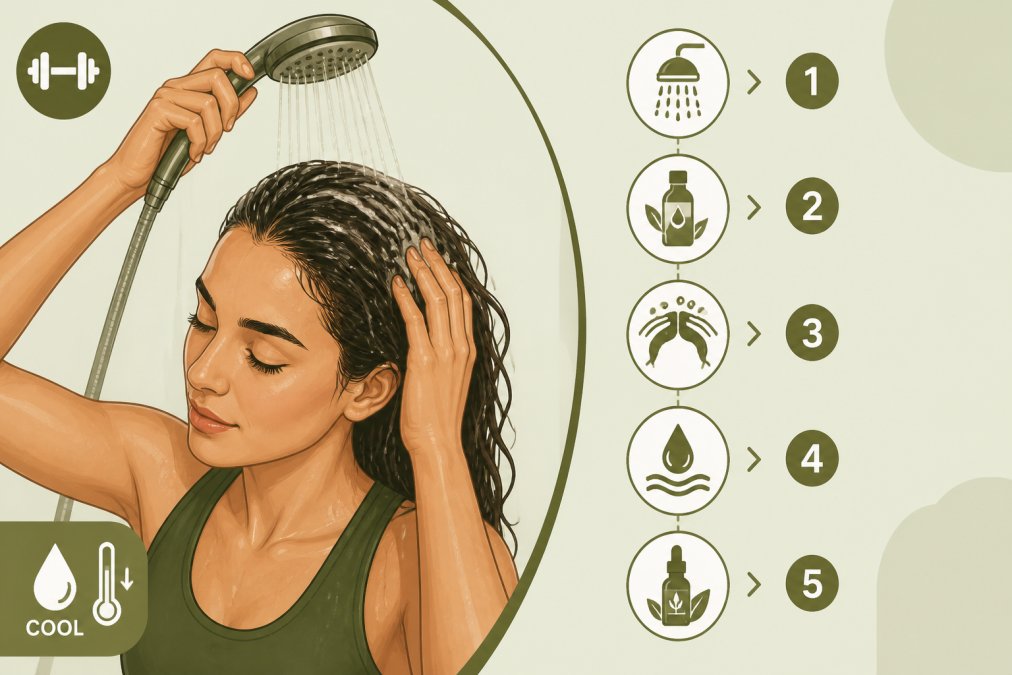
A structured post-workout routine prevents most scalp itch issues before they start. Timing is critical: the sooner you remove sweat and salt, the less damage occurs.
Step 1: Immediate Rinse (within 15 minutes of finishing workout) Rinse your scalp and hair thoroughly with lukewarm water. This removes 80% of sweat and salt. Spend at least 2 minutes rinsing, paying special attention to areas under hats or tight headbands.
Step 2: Gentle Cleansing (if shampooing) Use a sulfate-free, gentle formula. Massage gently with fingertips, never scrub aggressively. Focus on the scalp, not the hair lengths. Rinse thoroughly with lukewarm water.
Step 3: Cool Water Rinse (final step) Finish with a 30-second cool water rinse. This reduces inflammation, seals the hair cuticle, and provides immediate itch relief.
Step 4: Scalp Drying Pat your scalp dry with a clean towel; don't rub vigorously. Leaving your scalp damp creates a moist environment where bacteria and fungi thrive.
Step 5: Optional Scalp Support (non-shampoo days) On days when you rinse with water only, consider a lightweight scalp oil to support barrier health. Products like the Nirvana Hair Growth Oil - 2oz ($34.99) contain botanical ingredients that nourish the scalp without clogging pores.
| Step | Timing | Frequency | Key Point |
|---|---|---|---|
| Immediate rinse | Within 15 min of workout | Every workout | Removes sweat/salt |
| Gentle cleansing | 15-30 min post-workout | Every other day | Sulfate-free only |
| Cool water rinse | Final rinse | Every cleansing | Reduces inflammation |
| Scalp drying | Immediately after | Every cleansing | Prevents microbial overgrowth |
| Scalp oil (optional) | Anytime | 2-3x weekly | Supports barrier health |
This routine takes 10-15 minutes total and prevents 90% of post-workout scalp itch issues.
Hairstyle-Specific Friction and Scalp Irritation
Tight hairstyles during workouts create mechanical friction that damages the scalp barrier and traps sweat and salt against the skin. The fix is simple: wear looser hairstyles during workouts. A loose braid or low ponytail allows airflow and reduces friction. If you must wear a hat, choose one with ventilation holes and avoid elastic bands that compress the scalp.
Restoring Scalp Microbiome Balance
Your scalp's microbiome is a complex ecosystem of bacteria, fungi, and viruses. Disruption through sweat, salt, product buildup, or over-washing leads to inflammation and itch. Restoring balance happens naturally when you follow a consistent post-workout routine: remove irritants promptly, avoid harsh cleansers, and minimize product use.
Within 2-3 weeks of consistent care, most people notice significant improvement in scalp itch. The [Nirvana Hair Growth Oil - Double Pack](https://nirvanawellnessstore.com/products/double-pack) ($64.99) provides consistent scalp support over time, making it a practical investment for athletes who work out regularly.

When to See a Dermatologist: Recognizing Serious Scalp Issues
Most post-workout scalp itch resolves within days of implementing a proper routine. However, some cases indicate underlying conditions requiring professional evaluation.
See a dermatologist if you experience:
- Severe itching that doesn't improve after 2 weeks of consistent care
- Visible pustules, crusting, or oozing from the scalp
- Hair loss or bald patches
- Scalp pain that interferes with daily life
- Signs of infection: warmth, swelling, or pus
- Persistent dandruff despite antifungal treatment
- Rash or hives that spread beyond the scalp
A dermatologist can perform a scalp examination, take cultures if infection is suspected, and prescribe targeted treatments. Conditions like psoriasis, seborrheic dermatitis, or contact dermatitis can mimic post-workout scalp itch but require different treatment approaches.
How to Stop Scalp Itching After Workout: Practical Solutions
Immediate relief strategies work differently than prevention. If your scalp is already itching intensely:
Cool water rinse: Splash your scalp with cool water immediately. This reduces inflammation and provides temporary relief.
Avoid scratching: Scratching worsens inflammation and damages the barrier further. If the urge is intense, gently massage your scalp with fingertips instead.
Remove irritants: Take off hats, headbands, or tight hairstyles. Allow your scalp to breathe and cool down.
Gentle cleansing: Use a sulfate-free shampoo and rinse with cool water. This removes sweat, salt, and irritants that perpetuate itching.
Topical soothing agents: Hydrocortisone cream (1%) applied sparingly to the scalp can reduce inflammation and itch. Use only as directed and discontinue after a few days.
Oral antihistamines: If histamine release is the primary cause, an oral antihistamine like cetirizine or loratadine can help, especially if taken preventively before your workout.
Scalp oils: Lightweight botanical oils can soothe irritation without clogging pores. Products like Nirvana Hair Growth Oil provide botanical support.
Long-term solutions require addressing the underlying cause. If your itch stems from product buildup, switch to sulfate-free shampoo and reduce styling product use. If salt accumulation is the problem, rinse immediately after workouts and use a clarifying shampoo weekly. If fungal overgrowth is involved, use a zinc pyrithione or ketoconazole shampoo 2-3 times weekly. Most athletes see significant improvement within 1-2 weeks of implementing these strategies.
Post-workout scalp itch is frustrating, but it's entirely preventable with the right approach. The key is understanding that sweat, salt, and friction create an environment where inflammation and microbial overgrowth thrive. By rinsing promptly, using gentle cleansers, and supporting your scalp barrier with consistent care, you can eliminate this problem.
For athletes serious about scalp health, Nirvana Wellness Store offers targeted solutions like the Hair Growth Oil, which nourishes the scalp with botanical ingredients while supporting long-term barrier health and microbiome balance. At $34.99 for a 2oz bottle (or $64.99 for the Double Pack), it's an investment in scalp comfort and hair vitality. Continue shopping at Nirvana Wellness Store to explore our full range of wellness products designed for active individuals.
Frequently Asked Questions
What causes an itchy scalp after sweating during a workout?
Post-workout scalp itching stems from multiple factors: histamine release triggers vasodilation and increased blood flow to the scalp, sweat compromises your scalp barrier by disrupting pH balance and moisture retention, salt accumulation from perspiration irritates hair follicles, and product buildup combined with sweat creates an environment for fungal or bacterial growth. Athletes with sensitive scalps or those using certain dry shampoos may experience heightened scalp inflammation and clogged pores, intensifying the itch.
How should I adjust my post-workout hair care routine to prevent scalp itching?
Wait 15-20 minutes after exercise before washing to allow your scalp temperature to normalize. Use lukewarm (not hot) water, as hot water increases moisture loss and scalp sensitivity. Choose a gentle, sulfate-free shampoo that respects your scalp microbiome balance. Rinse thoroughly to remove salt residue and product buildup. Avoid over-washing daily, limit to 2-3 times per week if possible, as excessive washing strips natural sebum production. Apply a nourishing hair oil like Nirvana Hair Growth Oil ($34.99) to soothe irritation and restore hydration.
Is dandruff after workout a sign of a fungal infection or just normal irritation?
Occasional flaking after workouts may simply be moisture loss and scalp dryness, but persistent dandruff after workout sessions often signals dermatitis or mild fungal infection. If flaking is accompanied by redness, burning, or itching that doesn't resolve within a few days of improved scalp hygiene, consult a dermatologist. Fungal conditions thrive in warm, damp environments created by sweat and product buildup. A medicated shampoo or topical treatment may be necessary if standard cleansing doesn't resolve the issue.
What ingredients in dry shampoos cause scalp sensitivity, and which should I avoid?
Common culprits include fragrance, preservatives, and certain silicones that accumulate on the scalp when combined with sweat. Talc-based dry shampoos can clog pores and trap moisture, worsening folliculitis. Look for fragrance-free, preservative-minimal formulas or skip dry shampoo entirely on workout days. If you must use dry shampoo, apply it before exercise rather than after, and ensure thorough rinsing within 24 hours. Individuals with scalp sensitivity should opt for gentle, pH-balanced wet cleansing post-workout instead.
This article was written using GrandRanker