
Table of Contents
- Understanding Simple Natural Routines for Chronic Discomfort
- Gentle Exercises for Chronic Pain: Building a Sustainable Movement Practice
- Mind-Body Practices for Chronic Pain: Nervous System Regulation
- Anti-Inflammatory Diet for Pain: Nutrition as a Pain Relief Strategy
- Sleep Hygiene for Chronic Pain: Establishing Consistent Bedtime Routines
- Tracking Progress: Journaling and Accountability Systems
- Building Social Support: Emotional Wellness and Routine Adherence
- Integrating Natural Products Into Your Simple Routine
Last Updated: July 18, 2026
Understanding Simple Natural Routines for Chronic Discomfort
Living with chronic discomfort requires building consistent, sustainable routines rather than seeking a single solution. Research from [the National Institutes of Health on chronic pain management(https://qx2r3d-36.myshopify.com/blogs/news/natural-alternatives-chronic-pain-management-guide) | nih.gov] shows that multimodal approaches combining physical activity, stress management, and sleep optimization produce better long-term outcomes than single interventions. Chronic discomfort stems from multiple factors, inflammation, nervous system sensitization, muscle tension, and psychological stress, and addressing all of these simultaneously is what separates routines that work from those that fade.
The real breakthrough happens when you stop viewing routines as tasks and start seeing them as interconnected systems. When you sleep better, your pain threshold rises. When you move gently, your stress hormones drop. When you manage stress, your inflammation decreases. These benefits form one continuous feedback loop.
Below are seven proven practices that build on each other. You'll learn how to start slowly without triggering flare-ups, which mistakes derail most people, and how to track progress in ways that motivate continued effort.
Gentle Exercises for Chronic Pain: Building a Sustainable Movement Practice
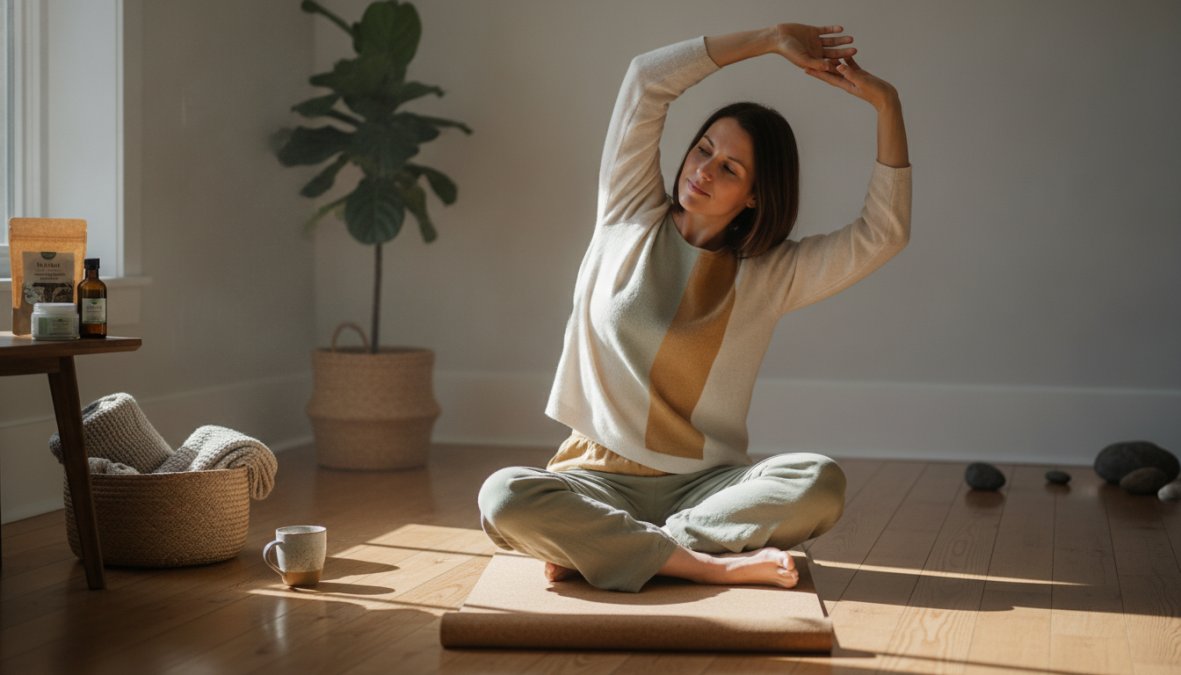
Movement is essential for chronic discomfort management, but type matters enormously. Gentle exercises work because they rebuild strength and flexibility without overwhelming a sensitized nervous system. Start so conservatively that you feel no pain during or after exercise, this breaks the cycle of pain triggering fear, which triggers avoidance, which triggers deconditioning.
Starting Slow: Progressive Movement Phases
Most people fail because they do too much too soon. Your nervous system interprets aggressive movement as a threat, increasing pain as a protective response.
Phase 1: Gentle mobility (Weeks 1-2). Spend 5-10 minutes daily moving joints through their comfortable range: neck rolls, shoulder circles, gentle spinal twists, and ankle circles. The goal is waking your nervous system to movement without demanding strength.
Phase 2: Active range of motion (Weeks 3-4). Add light resistance by moving against gravity or body weight. Examples include wall push-ups, standing marches, or gentle tai chi. Hold each position for 3-5 seconds, perform 8-12 repetitions, and rest 60 seconds between sets.
Phase 3: Gradual strengthening (Weeks 5+). Once you've completed two weeks without pain increases, add light resistance bands or bodyweight exercises like modified planks or glute bridges. Progress by adding one more repetition per week rather than jumping to heavier resistance.
Stay in each phase until you can complete the routine without pain increase in the following 24 hours. Listen to your body's signals, not timeline expectations.
Common Mistakes to Avoid When Starting
Pushing through pain. Your pain is information, not something to overcome through willpower. If an exercise causes discomfort during or within two hours after, it's too intense. Scale back or modify the movement.
Exercising inconsistently. A 20-minute session twice per week produces far fewer results than 10 minutes daily. Consistency matters more than intensity.
Ignoring warm-up and cool-down. Spend 2-3 minutes warming up with gentle movement before your routine and finishing with 2-3 minutes of slow stretching.
Comparing your progress to others. Your only competition is your own baseline from last week.
Mind-Body Practices for Chronic Pain: Nervous System Regulation
Chronic discomfort creates a loop: pain triggers stress, stress amplifies pain perception, amplified pain triggers more stress. Mind-body practices interrupt this loop by signaling safety to your nervous system. When your nervous system feels safe, pain perception naturally decreases.
Progressive Muscle Relaxation and Deep Breathing
Progressive muscle relaxation teaches your nervous system the difference between tension and relaxation. In a comfortable position, systematically tense and release each muscle group for 5 seconds: feet, calves, thighs, glutes, abdomen, chest, hands, arms, shoulders, neck, and face. The practice takes 10-15 minutes. After two weeks, your baseline tension decreases.
The 4-7-8 breathing technique works especially well: inhale for 4 counts, hold for 7 counts, exhale for 8 counts. Perform 5-10 repetitions. The extended exhale activates your parasympathetic nervous system, your body's natural brake on stress and pain.
Meditation and Visual Imagery Techniques
Body scan meditation changes your relationship to pain sensations. Lie down and mentally scan from your toes to your head, noticing sensations without judgment. When you notice pain, observe it like a scientist studying data, not like a victim suffering.
Visual imagery leverages your brain's inability to distinguish vividly imagined experiences from real ones. Spend 5 minutes daily imagining a place where you feel completely safe. Engage all senses: what you see, hear, feel, smell. Your nervous system responds as if you're actually there, triggering genuine relaxation responses.
Research from Johns Hopkins Medicine on mind-body interventions for pain demonstrates that consistent meditation practice reduces pain intensity by an average of 20-30% within 8 weeks.
Anti-Inflammatory Diet for Pain: Nutrition as a Pain Relief Strategy
Inflammation is a primary driver of chronic discomfort. Your diet either amplifies or reduces systemic inflammation. An anti-inflammatory diet emphasizes vegetables, fatty fish, nuts, seeds, and whole grains while minimizing refined carbohydrates, processed foods, and omega-6 vegetable oils.
Start by adding one anti-inflammatory food daily rather than removing foods. Add fatty fish like salmon or mackerel, berries, or extra virgin olive oil to salads. After two weeks, your body shifts toward a less inflammatory state. You'll notice improved sleep quality and reduced morning stiffness before dramatic pain changes.
Hydration amplifies the anti-inflammatory effect. Drink half your body weight in ounces of water daily. Dehydration increases pain perception and reduces your body's ability to clear inflammatory markers.
Consider adding Thrive Sea Moss Gel™, a mineral-rich superfood that supports hydration and wellness at $19.99 from Nirvana Wellness Store. It can be added to smoothies, water, or taken directly.
Emphasize: fatty fish (salmon, sardines, mackerel), leafy greens (spinach, kale, arugula), berries (blueberries, raspberries, cherries), nuts and seeds (almonds, walnuts, flaxseeds), extra virgin olive oil, turmeric, ginger, and green tea.
Sleep Hygiene for Chronic Pain: Establishing Consistent Bedtime Routines
Sleep is where your body performs repair and regeneration. Poor sleep perpetuates chronic discomfort. Pain disrupts sleep, and poor sleep amplifies pain perception. Breaking this cycle requires treating sleep as seriously as medication.
Go to bed and wake up at the same time every day, even on weekends. Your nervous system thrives on predictability. After two weeks of consistent timing, your body begins anticipating sleep naturally.
Create an optimized sleep environment: cool temperature (65-68°F), complete darkness, and minimal sound. If external noise is unavoidable, use white noise or earplugs.
Establish a 30-minute wind-down routine before bed: gentle stretching (5 minutes), progressive muscle relaxation (10 minutes), reading or journaling (10 minutes), and deep breathing (5 minutes). Avoid screens during this window; blue light suppresses melatonin production.
If pain disrupts your sleep, consider a supportive pillow that maintains neutral spine alignment. Poor pillow support forces compensatory positions that amplify pain.
| Sleep Factor | Implementation | Expected Timeline |
|---|---|---|
| Consistent schedule | Same bedtime/wake time daily | 2 weeks to establish |
| Environment optimization | Cool, dark, quiet room | Immediate improvement |
| Wind-down routine | 30-minute pre-sleep ritual | 1-2 weeks to feel effect |
| Pain management | Supportive pillow, positioning | 3-5 nights to adapt |
| Sleep duration | Target 7-9 hours nightly | 2-3 weeks for baseline shift |
Tracking Progress: Journaling and Accountability Systems
What gets measured gets managed. Most people with chronic discomfort have no systematic way to track whether their routines are working. Without data, motivation fades because progress feels invisible.
Start a simple pain and symptom journal. Each morning, rate your pain on a 0-10 scale. Each evening, record: pain level, sleep quality (0-10), exercise completed (yes/no), meals (poor/moderate/good), stress level (0-10), and mood. After two weeks, patterns emerge showing which days have lower pain and what preceded them.
Use a simple rating system: 1-3 (good day), 4-6 (moderate day), 7-10 (difficult day). Track weekly averages rather than daily fluctuations. Weekly averages show trends; daily numbers create false alarm responses to normal variation.
Share your tracking data with a healthcare provider or wellness coach if possible. External accountability accelerates progress.
Budget-Friendly Home Modifications and Tools
You don't need expensive equipment. A yoga mat ($15-30) provides cushioning for floor exercises. A resistance band ($10-20) offers progressive strengthening options. A foam roller ($20-40) helps release muscle tension.
For pain relief during acute flare-ups, Nirvana Magic Cream offers fast-acting natural relief at $24.99. It combines herbal ingredients proven to reduce discomfort without NSAID side effects.
Ergonomic modifications cost nothing. Adjust your chair so your feet rest flat on the floor and your elbows bend at 90 degrees. Position your screen at eye level.
A heating pad ($20-40) or hot water bottle ($10-15) provides soothing relief during flare-ups. Heat increases blood flow and reduces muscle tension.
Building Social Support: Emotional Wellness and Routine Adherence
Psychological barriers derail most wellness routines. The most common barrier is isolation. Managing chronic discomfort alone is significantly harder than managing it with support. Social connection directly reduces pain perception and increases routine adherence.
Find one person who will listen without judgment. Share your goals and progress weekly. The act of reporting creates accountability.
Consider joining a support group, online or in-person. Knowing others face similar challenges reduces shame and isolation. According to the American Psychological Association on chronic pain and mental health, cognitive-behavioral approaches reduce pain intensity by 25-40% when combined with physical interventions.
Celebrate small wins with others. When you complete a week of consistent exercise or your sleep improves, share it. External validation strengthens neural pathways associated with the behavior.
Integrating Natural Products Into Your Simple Routine
Natural products can support your routine when integrated strategically. Products enhance habits but don't replace them. A supplement won't fix poor sleep, but it might support sleep quality once you've established consistent bedtime routines.
Thrive Wellness Drink™ ($15.99) provides hydration and nutritional support. Many people find that replacing one sugary beverage with this wellness drink reduces inflammation while increasing nutrient intake.
For topical pain relief during flare-ups, Nirvana Magic Cream ($24.99) delivers fast-acting herbal ingredients. Apply it to localized areas of discomfort before or after movement. Many users report it reduces the pain spike that sometimes follows exercise.
When selecting natural products, look for: clear ingredient lists, third-party testing, and evidence-based formulations. Avoid products making exaggerated claims. Realistic products claim to "support" or "help manage" discomfort.
Integrate products gradually. Add one product per month. This lets you identify which products genuinely help your specific situation.
Simple natural routines for chronic discomfort work because they address the multiple systems driving pain: movement, nervous system regulation, nutrition, sleep, and emotional support. Building these routines requires patience and consistency, not perfection. The breakthrough moment comes when you realize your pain isn't controlling your life, you're controlling your response to it.
Nirvana Wellness Store supports this journey with Nirvana Magic Cream for topical relief, Thrive Sea Moss Gel™ for nutritional support, and Thrive Wellness Drink™ for daily hydration. These products integrate seamlessly into the routines covered here, providing additional support without replacing the foundational habits that create lasting change. Start with the routines, add products strategically, and track your progress consistently.
Frequently Asked Questions
What are the best natural routines for managing chronic discomfort?
Simple natural routines for chronic discomfort combine gentle movement, mind-body practices, anti-inflammatory nutrition, and consistent sleep patterns. Gentle exercises like tai chi and pilates improve flexibility without strain. Progressive muscle relaxation and deep breathing regulate your nervous system and reduce tension. An anti-inflammatory diet supports long-term pain relief, while proper sleep hygiene allows your body to heal. The key is consistency, these routines work best when integrated into daily life rather than attempted sporadically. Start with one practice and gradually add others as they become habitual.
How quickly will simple natural routines reduce chronic pain?
Results vary based on pain severity and routine adherence. Most people notice improved sleep quality and reduced tension within 1-2 weeks of consistent practice. Pain relief from anti-inflammatory diet changes typically appears after 3-4 weeks. Mind-body practices like meditation can provide immediate stress reduction, though long-term nervous system regulation takes 4-8 weeks. Physical improvements from gentle exercises develop over 6-12 weeks. Unlike fast-acting medications, natural routines build cumulative benefits. Track your progress with a pain journal to identify which practices help you most.
Can I use natural routines alongside other pain management methods?
Yes. Simple natural routines complement other treatments like physical therapy, medication, and acupuncture. In fact, combining approaches often yields better results than any single method alone. Discuss your routine plans with your healthcare provider to ensure they align with your treatment plan. Natural routines strengthen your overall pain relief strategy by addressing multiple factors: inflammation through diet, nervous system regulation through breathing, physical capacity through gentle movement, and sleep quality through consistent bedtime habits. Many people reduce medication dependence as natural routines become established, but always consult your doctor before changing medications.
What psychological barriers prevent people from maintaining chronic pain routines?
Common barriers include perfectionism (stopping entirely after missing one day), lack of immediate results (discouragement before benefits appear), and social isolation (feeling unsupported in your routine). Overcoming these requires realistic expectations, tracking small wins, and building accountability through journaling or support groups. Start with one simple practice rather than overhauling everything at once. Create environmental cues, lay out your yoga mat the night before, set phone reminders for breathing breaks. Connect with others managing chronic discomfort through online communities or local groups. Psychological flexibility matters more than perfect adherence; missing a day doesn't erase progress.
This article was written using GrandRanker