


Table of Contents
- Why Women Lose Hair: Triggers You Can Actually Address
- Essential Oils for Thinning Hair: What the Evidence Shows
- Scalp Massage for Hair Growth: Technique, Tools, and Timing
- Best Vitamins for Hair Growth: What to Look For
- Hormones, PCOS, and Postpartum Shedding: Tracking Your Cycle
- Hair Porosity, Absorption, and Allergy Testing Before You Apply Anything
- Natural Remedies vs. Clinical Treatments: A Cost-Benefit Breakdown
- When to See a Dermatologist About Hair Thinning
- Frequently Asked Questions
Last Updated: September 12, 2026
Why Women Lose Hair: Triggers You Can Actually Address
Hair thinning in women rarely comes from one single cause, which is why so many natural hair thinning remedies fail before they even start. This guide from Nirvana Wellness Store explores how to build a routine that targets your specific trigger rather than guessing.
Below, we'll show you exactly how to identify your trigger and match it to the right remedy. But first, here's what most guides get wrong: they treat all shedding as the same problem, when the mechanism behind it changes everything about which treatment makes sense.
Two distinct processes drive most hair loss in women, and confusing them wastes months of effort.
The shedding cycle refers to the natural rhythm of hair growth, rest, and release. Telogen effluvium is the medical term for excessive shedding triggered by stress, illness, hormonal shifts, or nutritional gaps. It typically appears two to three months after the triggering event and resolves once the trigger is addressed.

Androgenetic alopecia, by contrast, is pattern thinning driven by genetics and androgen sensitivity. It does not resolve on its own and requires ongoing management. The American Academy of Dermatology's guidance on hair loss types outlines how these two conditions differ in progression and treatment response.
That distinction matters because a scalp massage or essential oil routine that helps one may do very little for the other.
| Trigger Type | Typical Onset | Pattern | Responds To |
|---|---|---|---|
| Telogen effluvium | 2-3 months after event | Diffuse shedding | Removing trigger, nutrition |
| Androgenetic alopecia | Gradual, progressive | Crown and part widening | DHT blocking, clinical care |
| Postpartum shedding | 3-6 months after birth | Diffuse, temporary | Time, nutrition, gentle care |
| Traction damage | Immediate to weeks | Edges, temples | Stopping tension, scalp care |
Essential Oils for Thinning Hair: What the Evidence Shows
Essential oils for thinning hair work best as scalp-supportive agents, not as standalone cures. Their value lies in improving scalp circulation, reducing inflammation, and supporting the follicle environment where new growth begins.
Several oils have antimicrobial and antioxidant-rich properties that support a healthier scalp microbiome. Rosemary oil, peppermint oil, and pumpkin seed oil appear most often in discussions of topical application for hair regrowth.
What most guides miss is the carrier oil question. Essential oils applied undiluted can irritate the scalp and cause contact dermatitis, which increases shedding rather than reducing it. A common approach is a 2-3% dilution in a carrier oil like jojoba, argan, or coconut.
A practical daily routine looks like this:
- Dilute 3-5 drops of your chosen essential oil in one tablespoon of carrier oil
- Apply directly to the scalp, not just the hair shaft
- Massage for 2-5 minutes to support scalp circulation
- Leave on for at least 30 minutes, or overnight for a deeper treatment
- Wash out with a gentle, sulfate-free cleanser
- Repeat 3-4 times weekly for at least three months before judging results
For women who want a ready-made option, Nirvana Hair Growth Oil is formulated with nutrient-rich botanical oils designed to moisturize dry scalp areas, reduce breakage, and improve the appearance of thinning or damaged hair. It works as a carrier-based blend you can apply directly, no mixing required.
The real difference between a DIY blend and a formulated product comes down to consistency. Getting the dilution right every time is harder than it sounds.
Scalp Massage for Hair Growth: Technique, Tools, and Timing
Scalp massage for hair growth is one of the few natural interventions with a clear mechanical rationale: it supports scalp circulation and follicle stimulation without introducing any chemical variable.
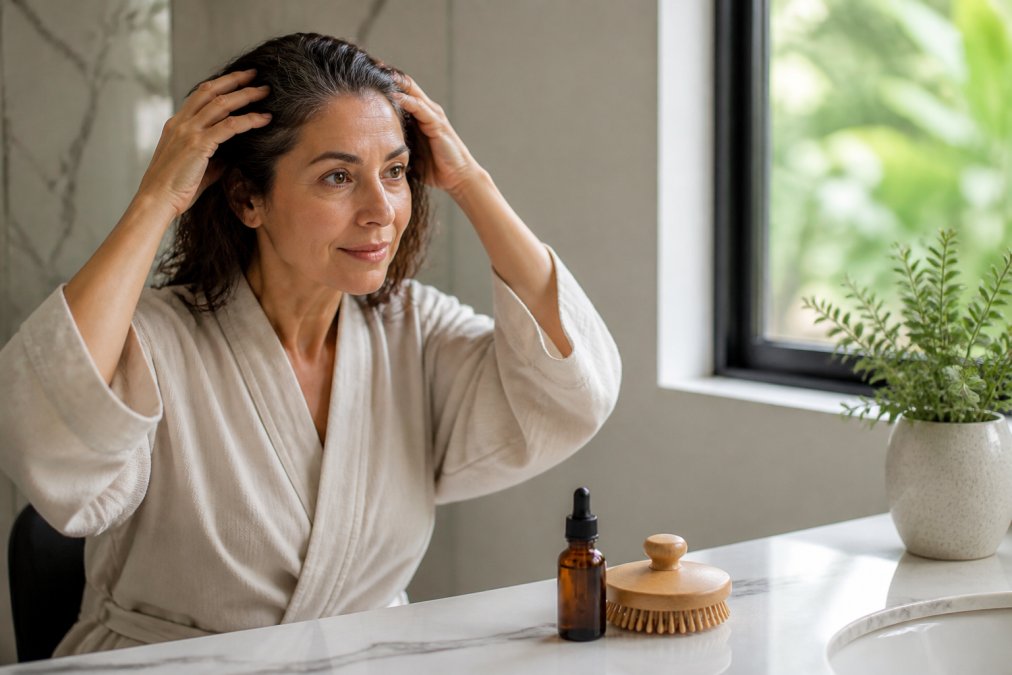
Technique matters more than duration. Pressing hard does not stimulate follicles; it inflames the scalp. Use the pads of your fingers, not your nails, and work in small circles across the entire scalp.
How long should you massage your scalp for hair growth? Four to five minutes daily is the practical target. Most people see the best consistency with a short morning or pre-wash session rather than a long weekly one.
Tools worth considering:
- Silicone scalp brush: good for even pressure and reaching the crown
- Wooden wide-tooth comb: useful for distributing oil through longer hair
- Fingertips: free, effective, and easiest to control pressure
Best Vitamins for Hair Growth: What to Look For
The best vitamins for hair growth are the ones that address an actual deficiency, not the ones with the loudest marketing. Hair is a non-essential tissue, which means your body diverts nutrients to vital organs first. When intake falls short, hair is often the first visible casualty.
Nutrient Deficiencies That Show Up in Your Hair
Iron, vitamin D, zinc, B12, and biotin supplementation are the five most commonly discussed. Each plays a different role:
- Iron: supports oxygen delivery to the follicle; low ferritin is a frequent finding in women with diffuse shedding
- Vitamin D: involved in the hair growth cycle; deficiency is common in northern climates and among women who avoid sun exposure
- Zinc: supports tissue repair and follicle health; deficiency can cause brittle hair and shedding
- B12: essential for cell division; deficiency is more common in vegetarians and women over 50
- Biotin: supports keratin infrastructure; true deficiency is rare, but supplementation is often recommended anyway
A daily multivitamin is the simplest way to cover the basics without juggling five bottles. Nirvana Daily Women's Vitamin™ is a comprehensive daily multivitamin for women created to help fill common nutritional gaps and provide foundational support for energy metabolism, immune health, bone health, antioxidant protection, and overall wellness.

Hormones, PCOS, and Postpartum Shedding: Tracking Your Cycle
Hormonal shifts drive a large share of hair thinning in women, and tracking your cycle is the fastest way to see the pattern. Shedding that spikes in the week before your period, or that began three months after giving birth, points to a hormonal trigger rather than a nutritional one.
PCOS (polycystic ovary syndrome) is one of the most common hormonal conditions affecting women. It can drive hair thinning on the scalp while increasing growth elsewhere, a pattern tied to androgen sensitivity.
For women navigating PCOS-related shedding, targeted nutritional support can complement a broader wellness routine. Nirvana PCOS Gummies are designed to provide daily nutritional support for hormone balance, metabolic wellness, and energy as part of a comprehensive approach.

Postpartum shedding typically begins three to six months after delivery and resolves within a year for most women. Gentle scalp care, adequate protein, and patience do more than aggressive intervention.
| Life Stage | Typical Hair Pattern | First-Line Approach |
|---|---|---|
| Premenopausal, cyclical | Shedding before period | Cycle tracking, iron check |
| PCOS diagnosis | Scalp thinning, facial growth | Practitioner care, nutrition |
| Postpartum | Diffuse shedding 3-6 months | Time, protein, gentle care |
| Perimenopausal | Gradual density loss | Hormone review, scalp care |
Hair Porosity, Absorption, and Allergy Testing Before You Apply Anything
Hair porosity determines how well any topical product absorbs, and ignoring it is why some women see results from an oil while others see buildup and breakage.
Hair porosity is the measure of how easily your hair cuticle absorbs and retains moisture. Low-porosity hair has tightly closed cuticles and resists absorption; high-porosity hair has open cuticles and absorbs quickly but loses moisture just as fast.
Test yours with a simple water float: drop a clean strand into a glass of water. If it floats for several minutes, you have low porosity. If it sinks quickly, you have high porosity.
Why this matters for natural hair thinning remedies:
- Low porosity: use lightweight oils and apply to damp hair; heavy products sit on top and cause buildup
- Medium porosity: most formulations work well; focus on consistency
- High porosity: use richer oils and layer with a leave-in to slow moisture loss
Allergy testing is the step almost nobody does. Before applying any new oil or topical to your scalp, patch-test on your inner forearm for 24 hours. Scalp skin is thinner and more reactive than most people assume, and a reaction can trigger shedding that sets you back months.
Natural Remedies vs. Clinical Treatments: A Cost-Benefit Breakdown
Natural remedies and clinical treatments are not competing philosophies; they operate at different points in the same pipeline. Natural approaches support the scalp environment, reduce inflammation, and address nutritional gaps. Clinical treatments like minoxidil or prescription options act directly on the follicle and the hormonal pathway.
The U.S. Food and Drug Administration's page on hair loss treatments notes that only a small number of products are FDA-approved for hair regrowth, and those are the ones with the strongest evidence base.
A cost-benefit view:
| Approach | Typical Monthly Cost | Time to See Results | Best For |
|---|---|---|---|
| Natural oils and massage | Low | 3-6 months | Early thinning, scalp health |
| Nutritional supplements | Low to moderate | 3-6 months | Deficiency-driven shedding |
| Clinical topicals | Moderate to high | 4-6 months | Pattern thinning |
| Prescription options | Varies | 6+ months | Confirmed androgenetic alopecia |
Most women get the best results by layering: natural scalp care and nutrition as the foundation, clinical intervention when the pattern suggests it's needed.
When to See a Dermatologist About Hair Thinning
See a dermatologist if your shedding is sudden and severe, if you can see widening of your part or visible scalp, if you have scalp pain, itching, or scaling, or if natural remedies have not produced any change after six months.
The American Academy of Dermatology's guidance on when to see a dermatologist recommends evaluation when hair loss is accompanied by other symptoms like fatigue, irregular cycles, or skin changes, since these often point to an underlying condition.
Red flags that warrant prompt evaluation:
- Patches of complete hair loss
- Scalp pain, burning, or significant itching
- Rapid shedding over a few weeks
- Hair loss alongside fatigue, weight change, or irregular periods
- No improvement after six months of consistent natural care
A dermatologist can run the bloodwork, perform a scalp biopsy if needed, and confirm whether you're dealing with telogen effluvium, androgenetic alopecia, or something else entirely. Knowing the diagnosis is what makes every subsequent decision easier.
Hair thinning is rarely solved by one product, but it responds well to a consistent routine that targets your actual trigger. At Nirvana Wellness Store, we offer a curated selection of wellness products designed to support your journey toward balance and vitality. Discover our range of products and experience the commitment to quality that defines our brand. Nirvana Hair Growth Oil is formulated to moisturize dry scalp areas, reduce breakage, and improve the appearance of thinning or damaged hair. Nirvana Daily Women's Vitamin™ is a comprehensive daily multivitamin for women created to help fill common nutritional gaps. Nirvana PCOS Gummies™ are designed for women seeking nutritional support for hormone balance, metabolic health, energy, and everyday wellness. Continue shopping and build the routine that fits your needs.
Frequently Asked Questions
What vitamin is lacking if my hair is falling out?
Low levels of vitamin D, iron, zinc, and B vitamins are the deficiencies most often linked to shedding. Vitamin D supports the hair follicle cycle, while iron and zinc play roles in cell division and protein synthesis. A blood panel ordered by your doctor is the only way to confirm a nutrient deficiency before adding supplements. Once confirmed, targeted supplementation and a daily multivitamin for women can help fill nutritional gaps and provide foundational support for overall wellness.
What are the most effective essential oils for thinning hair?
Rosemary oil has the strongest research support for natural hair thinning remedies, with studies showing improved hair count after six months of daily scalp application. Peppermint, lavender, and cedarwood are also used for scalp circulation and antimicrobial properties. Always dilute essential oils in a carrier oil before applying, and patch-test on your inner arm for 24 hours first. Essential oils for thinning hair work best as part of a consistent routine, not as a one-time treatment.
How does scalp massage contribute to hair growth?
Scalp massage for hair growth works by increasing blood flow to the dermal papilla, the structure at the base of each follicle that receives nutrients. A daily four-minute massage with fingertips or a silicone brush can also reduce stress-related tension, which matters because stress pushes follicles into the shedding cycle. Pair massage with a nutrient-rich hair growth oil to moisturize the scalp and reduce breakage while you stimulate circulation.
Can dietary changes help reverse hair thinning in women?
Diet can meaningfully support hair regrowth when thinning is tied to a nutrient deficiency or poor protein intake. Hair is mostly protein, so aim for adequate protein at each meal, plus iron-rich foods, omega-3s from fish or supplements, and antioxidant-rich produce. If an underlying condition like androgenetic alopecia or PCOS is driving the thinning, diet alone will not reverse it. Use dietary changes as a foundation alongside targeted remedies and medical guidance.
When should a woman see a doctor for hair thinning?
Book an appointment if you notice sudden or patchy shedding, visible scalp through the crown, thinning that continues past six months, or accompanying symptoms like fatigue, irregular periods, or unusual weight changes. A dermatologist can check for telogen effluvium, androgenetic alopecia, and thyroid issues. Bring a list of your supplements and any hormone-related symptoms so they can order the right blood work on the first visit.