


Table of Contents
- Understanding the Hair Growth Cycle and Why Natural Hair Growth Tips for Women Matter
- Scalp Massage Techniques to Boost Hair Follicles and Circulation
- Best Oils for Natural Hair Growth: Rosemary, Aloe Vera, and Onion Juice
- Vitamins for Hair Growth and Thickness: Biotin, Keratin, and Beyond
- Protective Hairstyles for Natural Hair Growth and Hair Breakage Prevention
- Natural Hair Care Routine for Growth: Heat-Free Methods and Regular Trims
- Topical Treatments and Hair Serums: Caffeine, Melatonin, and Minoxidil
- Nutrition and Protein-Rich Diet for Hair Growth and Elasticity
Natural Hair Growth Tips for Women: 7 Science-Backed Methods
Last Updated: July 21, 2026
When hair stops growing the way it used to, the frustration sets in fast. At Nirvana Wellness Store, we understand that natural hair growth tips for women require a real understanding of how hair actually grows, why it stops, and what restarts the process. This guide breaks down the science behind hair growth cycles and delivers seven evidence-based strategies that work when conventional approaches fail.
Understanding the Hair Growth Cycle and Why Natural Hair Growth Tips for Women Matter
Hair cycles through three distinct phases. The anagen phase is the active growth phase lasting two to seven years for scalp hair. During anagen, the hair shaft extends from the dermal papilla, the living tissue at the base of the follicle that controls hair health. Extending the anagen phase is the real goal behind most natural hair growth tips for women.
The catagen phase is a two-week transition period where the hair follicle shrinks and stops receiving nutrients. The telogen phase is the resting stage lasting two to four months, where the hair sits dormant before shedding. Shedding 50 to 100 hairs daily is normal; the problem occurs when too many hairs enter telogen simultaneously, causing noticeable thinning.
Understanding these phases explains why consistency matters more than intensity. A gentle routine maintained for months beats an aggressive approach abandoned in weeks.
Hair thinning happens for specific, addressable reasons. Nutritional deficiencies are the most common culprit, when your body lacks biotin, iron, zinc, or protein, hair follicles get deprioritized. Hormonal fluctuations disrupt the hair cycle, pushing too many follicles into telogen simultaneously. Scalp health determines whether follicles function at all; a compromised microbiome, poor circulation, or sebum buildup blocks nutrients from reaching the dermal papilla.
Scalp Massage Techniques to Boost Hair Follicles and Circulation
Scalp massage increases blood flow to the dermal papilla, delivering more oxygen and nutrients to hair follicles. Dermal papilla cells respond directly to increased blood flow by extending the anagen phase and increasing hair shaft diameter.
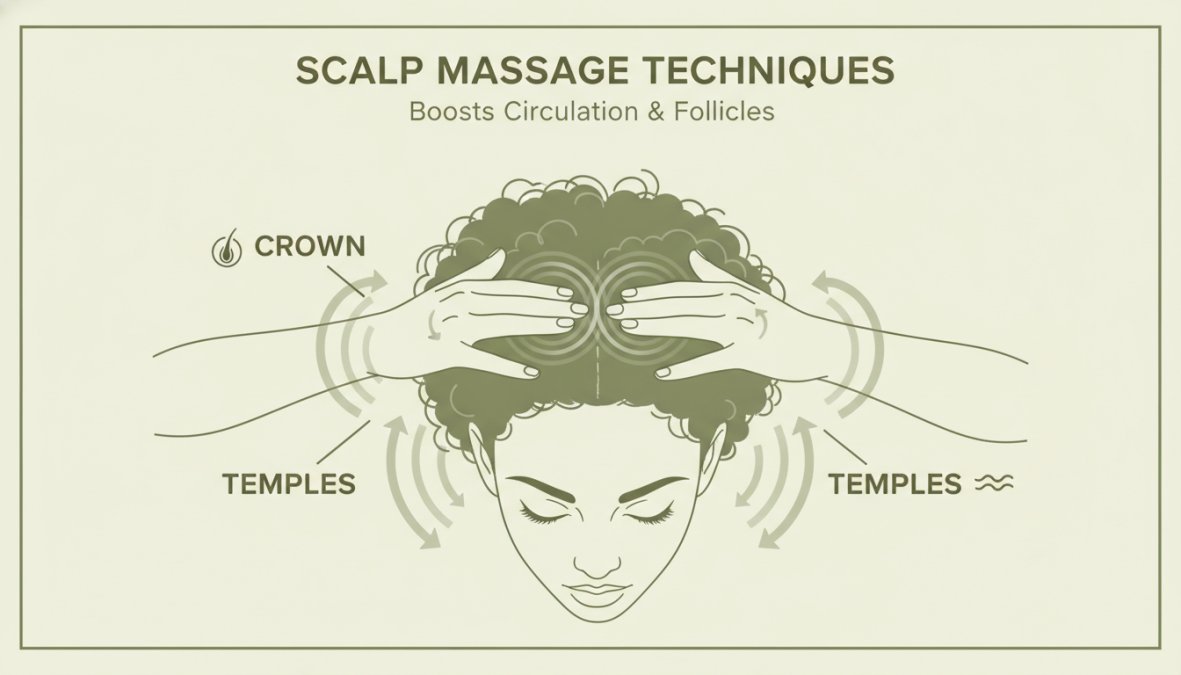
Use consistent, moderate pressure with your fingertips. Start at your hairline and work backward toward the crown using small circular motions. Press firmly enough to feel movement, but not so hard it causes discomfort. Spend about 30 seconds on each scalp section, moving systematically from front to back, then side to side.
The key is pressure and consistency. Gentle rubbing doesn't increase circulation enough to matter. Daily scalp massage for five to ten minutes shows measurable improvements in hair density within three months. Weekly massage produces minimal results because the stimulus isn't frequent enough.
Massage right before shampooing when your scalp is clean and dry. Duration matters less than frequency, five to ten minutes daily beats thirty minutes once per week. After three months, hair breakage typically decreases and new growth becomes visible.
Best Oils for Natural Hair Growth: Rosemary, Aloe Vera, and Onion Juice
Rosemary oil is the most researched natural oil for hair growth. It contains carnosic acid and ursolic acid, compounds that stimulate the dermal papilla and extend the anagen phase. Studies show rosemary oil increases hair density measurably within four months while improving scalp microbiome health.
Mix five to ten drops with a carrier oil like coconut or jojoba oil, then massage into the scalp. Leave it on for at least thirty minutes or overnight. Apply two to three times per week. Consistency matters more than concentration.
Aloe vera supports hair elasticity and sebum balance. Hair elasticity determines how much stress your hair handles before breaking. Aloe vera contains polysaccharides that strengthen the hair shaft, increasing elasticity. It also regulates sebum production and reduces scalp inflammation, which pushes follicles out of anagen prematurely. Extract gel from fresh aloe leaves, apply directly to the scalp, and leave for twenty minutes before rinsing. Use once per week.
Onion juice increases collagen production in the hair shaft. Collagen is the structural protein that gives hair strength and thickness. Blend a raw onion, strain through cheesecloth, and apply the juice directly to the scalp. Leave for fifteen to thirty minutes, then shampoo thoroughly. Use once per week. Mix with peppermint or rosemary oil to mask the smell.
Combining these oils is more effective than using them individually. A rotation system works best: rosemary oil Monday, Wednesday, Friday; aloe vera Tuesday; onion juice Thursday; rest weekends. Nirvana Wellness Store's Hair Growth Oil combines rosemary and other growth-supporting botanicals in a single blend at $34.99 for a 2oz bottle.
Vitamins for Hair Growth and Thickness: Biotin, Keratin, and Beyond
Biotin is a B-vitamin that supports keratin production, the structural protein forming the hair shaft. A daily biotin supplement of 2.5 milligrams taken consistently for three to six months shows measurable improvements in hair thickness and strength.
Omega-3 fatty acids reduce scalp inflammation and improve blood flow to hair follicles. They also support collagen production, strengthening the hair shaft. A diet rich in fatty fish, walnuts, and flaxseeds provides adequate omega-3s. If needed, supplement with 1,000 to 2,000 milligrams daily. Results take three to four months.
Iron is critical for hair growth, it carries oxygen to hair follicles. Iron deficiency causes noticeable hair loss. A blood test determines your iron status. If deficient, supplementing brings dramatic improvements within two to three months.
Zinc supports the dermal papilla directly. A daily zinc supplement of 15 to 30 milligrams supports hair growth, particularly for women with documented deficiency. Pair zinc with copper at a 10:1 ratio to prevent copper absorption interference.
Stick to recommended daily amounts, megadoses don't accelerate hair growth and increase side effect risk. Expect three to four months of consistent supplementation before visible improvements appear.
Protective Hairstyles for Natural Hair Growth and Hair Breakage Prevention
Hair breakage is the silent killer of hair growth progress. You can grow new hair, but if it breaks off as fast as it grows, you never see length improvement. Protective hairstyles reduce mechanical stress on the hair shaft.
Low-manipulation styles are key. Tight braids, buns, and ponytails pull on the hair shaft and follicle, causing traction alopecia. Loose braids, soft buns, and gentle twists reduce pulling force dramatically. The style should feel secure but not tight.
Rotate styles regularly. Wearing the same tight bun daily creates constant stress on the same follicles, leading to permanent damage. Alternate between different styles to distribute stress across different follicles.
Detangle only when hair is dry or saturated with deep conditioning treatment. Use a wide-tooth comb, not a brush. Start at the ends and work upward, never yanking from roots.
Regular trims every eight to twelve weeks remove split ends before they travel up the hair shaft. Split ends don't heal; cutting is the only solution.
Sleep on a silk or satin pillowcase instead of cotton. Cotton creates friction that breaks hair and damages the cuticle. Silk reduces friction dramatically, particularly important for textured hair.
Natural Hair Care Routine for Growth: Heat-Free Methods and Regular Trims
Heat styling damages the hair shaft permanently by breaking down proteins that form hair structure. Repeated heat styling accumulates damage until hair becomes visibly thin and weak. Heat damage is irreversible.
If you use heat tools, keep temperature below 350 degrees Fahrenheit and use heat protectant spray. Limit heat styling to two to three times per week maximum. Air-dry your hair most days.
Hot water also damages hair by opening the hair cuticle. Rinse with cool or lukewarm water, especially the final rinse, to seal the cuticle and lock in moisture.
Regular trims are the foundation of healthy hair growth. When ends split, the split travels up the hair shaft if left untrimmed. Trimming every eight to twelve weeks removes damaged ends before they compromise healthy hair. Trimming accelerates visible growth because you're not losing length to split ends anymore.
Topical Treatments and Hair Serums: Caffeine, Melatonin, and Minoxidil
Topical caffeine stimulates the dermal papilla by blocking an enzyme that suppresses hair growth signals. When that enzyme is blocked, the dermal papilla receives stronger growth signals and extends the anagen phase. Topical caffeine applied twice daily shows measurable improvements within three to four months.
Apply caffeine serum to damp scalp immediately after showering. Massage thoroughly and let hair air-dry without rinsing.
Melatonin is an emerging topical treatment that protects hair follicles from oxidative stress and directly stimulates the dermal papilla. A topical melatonin spray applied at night shows improvements comparable to minoxidil with fewer side effects.
Red light therapy amplifies melatonin's effects. Red light wavelengths penetrate the scalp and stimulate mitochondrial function in hair follicles, increasing energy production in the dermal papilla. A red light therapy cap used for twenty to thirty minutes daily combined with melatonin serum produces faster results. Results typically appear within two to three months.
Minoxidil is the only topical treatment FDA-approved for hair loss. It dilates blood vessels in the scalp, increasing blood flow to hair follicles. It extends the anagen phase and increases hair shaft diameter.
Minoxidil only works while you're using it; stopping causes hair to revert within three to six months. It also causes initial shedding for the first two to three months before improvement appears. This is normal and temporary, but many women stop during this phase, never reaching the point where it works.
For hormonal hair loss, combine minoxidil with a DHT blocker like saw palmetto for better results than minoxidil alone. Side effects are generally mild, scalp irritation, dryness, or itching typically fade within weeks. Start with the lowest concentration (2%) and increase only if needed.
Nutrition and Protein-Rich Diet for Hair Growth and Elasticity
Hair is made of keratin, a type of protein. Without adequate dietary protein, your body can't produce enough keratin to support healthy hair growth. Aim for 1.2 to 1.6 grams of protein per kilogram of body weight daily. For a 150-pound woman, that's about 80 to 110 grams daily.
Complete proteins contain all nine essential amino acids. Animal proteins like chicken, fish, eggs, and Greek yogurt are complete. Plant-based proteins like beans and lentils are incomplete individually but can be combined to form complete proteins.
Iron-rich foods support hair growth by carrying oxygen to follicles. Red meat, dark leafy greens, lentils, and fortified cereals are excellent sources. Pair iron-rich foods with vitamin C sources like citrus fruits to increase iron absorption.
Omega-3 rich foods reduce scalp inflammation and support collagen production. Fatty fish like salmon, mackerel, and sardines are best sources. Walnuts, flaxseeds, and chia seeds provide plant-based omega-3s.
Zinc-rich foods support the dermal papilla. Oysters, beef, pumpkin seeds, and chickpeas are excellent sources.
Long-term maintenance produces permanent improvement that compounds over time. A hair growth supplement taken for three months then stopped produces temporary improvement that fades within months. A consistent protein-rich diet, scalp massage routine, and protective styling maintained year-round produces lasting results. Hair health requires sustained support, like fitness, one month at the gym doesn't create lasting fitness, but consistent exercise does.
| Strategy | Timeline to Results | Maintenance Required | Best Combined With |
|---|---|---|---|
| Scalp massage | 3-4 months | Daily, 5-10 minutes | Rosemary oil |
| Biotin supplement | 3-4 months | Daily, 2.5mg | Protein-rich diet |
| Protective styling | 2-3 months | Ongoing rotation | Regular trims |
| Minoxidil | 2-3 months (after shedding phase) | Twice daily, ongoing | DHT blocker if hormonal loss |
| Rosemary oil | 4 months | 2-3 times weekly | Scalp massage |
| Dietary protein increase | 3-4 months | Daily, 1.2-1.6g/kg | Iron and zinc supplementation |
| Red light therapy | 2-3 months | 20-30 minutes daily | Melatonin serum |
Hair growth happens when you address the actual barriers preventing growth. Most women try random products and expect miracles. Those who see real results understand their hair's growth cycle, support scalp health consistently, and protect their hair from damage while it grows.
Nirvana Wellness Store's Hair Growth Oil combines rosemary and botanically-derived growth factors designed for the scalp massage protocol outlined above. At $34.99 for a 2oz bottle, it eliminates the need to source and mix individual oils. The Hair Oil Double Pack at $64.99 provides a two-month supply at a slight discount, ensuring consistency through the critical first months when improvement becomes visible. Start with one of these products, add daily scalp massage, and commit to the protocol for four months before evaluating results.
Frequently Asked Questions
How can I stimulate natural hair growth for women at home?
Start with consistent scalp massage using gentle circular motions for 5-10 minutes daily to boost scalp circulation. Apply natural oils like rosemary oil to stimulate hair follicles, take biotin and keratin supplements, and ensure your diet includes protein-rich foods and omega-3 fatty acids. Avoid heat styling and hot water, trim every 8-12 weeks to prevent split ends, and use protective hairstyles to minimize breakage. Results typically appear within 3-6 months of consistent practice.
What are the best vitamins for hair growth and thickness?
Biotin is the most researched vitamin for hair shaft strength and density. Omega-3 fatty acids support collagen production and scalp health, while keratin directly strengthens the hair shaft. Vitamin D, iron, and zinc also play crucial roles in the hair growth cycle. Consider consulting a healthcare provider before starting supplements, as some may interact with medications or have contraindications. Nirvana Hair Growth Oil complements supplementation by delivering botanical nutrients directly to the scalp.
How long does it take to see results from natural hair growth tips?
Hair follicles operate on a growth cycle, with the anagen (growth) phase lasting 2-7 years. Most women notice visible improvements in hair density and reduced breakage within 3-6 months of consistent natural hair care routines. However, significant new growth typically becomes apparent after 6-12 months. Long-term maintenance is more effective than quick fixes, hormonal hair loss and telogen effluvium may require 9-12 months to show improvement. Patience and consistency are essential for sustainable results.
Can diet affect natural hair growth?
Yes, diet directly impacts hair follicle health and the hair growth cycle. Protein-rich foods provide amino acids needed for hair shaft development, while omega-3 fatty acids support scalp microbiome health and sebum production. Iron, zinc, and B vitamins are essential for dermal papilla function and hair density. Conversely, crash diets and nutrient deficiencies can trigger telogen effluvium (temporary hair loss). A balanced diet with whole foods, lean proteins, and healthy fats is foundational to any natural hair growth routine.
This article was written using GrandRanker