


Table of Contents
- Understanding Hair Loss and the Hair Growth Cycle
- Why Choose Natural Alternatives to Chemical Hair Growth Serums?
- Top Natural Ingredients for Hair Growth: Rosemary Oil, Pumpkin Seed Oil, and Beyond
- Natural DHT Blockers: How They Compare to Finasteride
- DIY Hair Growth Serum Recipes for Different Hair Types
- Scalp Massage for Hair Growth: Technique and Integration
- Natural Alternatives to Chemical Hair Growth Serums: Product Recommendations
- Potential Interactions and Safety Considerations
Natural Alternatives to Chemical Hair Growth Serums: 2026 Guide
Last Updated: July 22, 2026
Hair loss affects millions globally. According to research on androgenetic alopecia prevalence, approximately one in two men and one in four women experience some form of hair loss by age 50. While chemical treatments like minoxidil dominate pharmacy shelves, a growing number of people are exploring natural alternatives to chemical hair growth serums as safer, more sustainable options. Below, we'll show you how to evaluate and use natural alternatives, compare them to conventional treatments, and build a regimen tailored to your hair type.
Understanding Hair Loss and the Hair Growth Cycle
Hair cycles through distinct phases that determine how long individual strands survive. The anagen phase is the active growth period, lasting 2-7 years depending on genetics and health. The catagen phase is a brief transition lasting 2-3 weeks, when growth stops and the follicle shrinks. The telogen phase is the resting period of 2-4 months, after which the hair sheds and the cycle restarts.
Hair loss occurs when this cycle becomes disrupted. Androgenetic alopecia (pattern baldness) happens when hair follicles become sensitive to DHT (dihydrotestosterone), a hormone derived from testosterone, causing follicles to shrink and produce thinner hairs until they stop growing. Telogen effluvium is a different mechanism where stress, illness, or nutritional deficiencies push too many hairs into the telogen phase simultaneously, causing noticeable shedding weeks or months after the trigger event.
Understanding which type of hair loss you're experiencing matters because different mechanisms respond to different treatments. DHT-driven hair loss responds well to DHT blockers and follicle stimulators. Telogen effluvium often resolves when the underlying stressor is addressed and nutrient levels are restored.
:::pro-tip If you've noticed sudden shedding after a stressful event, major illness, or significant dietary change, you likely have telogen effluvium rather than pattern baldness. This type often reverses within 6-12 months once the trigger is resolved. :::
Why Choose Natural Alternatives to Chemical Hair Growth Serums?
The decision to use natural remedies over prescription treatments comes down to long-term sustainability, side effect tolerance, and personal values.
Long-term Efficacy and Sustainability
Minoxidil works but requires indefinite use, stopping reverses regrowth within months. Natural alternatives like rosemary oil, pumpkin seed oil, and caffeine work through different mechanisms, stimulating blood flow, blocking DHT, and nourishing follicles, and many users report that benefits persist longer after discontinuation, suggesting they may help restore follicle health rather than merely masking the problem.
Research shows that rosemary oil performed comparably to minoxidil in a controlled study, with users experiencing similar improvements in hair thickness and density. Natural remedies work best when combined with lifestyle changes, improved diet, stress management, and scalp massage, whereas chemical treatments can work in isolation. This holistic approach often produces more durable results because it addresses root causes rather than symptoms alone.
Cost Analysis: DIY vs. Ready-Made Natural Serums
A bottle of minoxidil costs between $20-$40 per month, totaling $240-$480 annually. Prescription finasteride runs $15-$50 monthly, adding another $180-$600 per year.
Natural alternatives offer flexibility. Buying individual ingredients costs $40-$80 upfront and lasts 3-4 months, working out to roughly $10-$27 per month. Ready-made natural serums range from $25-$50 per bottle, lasting 4-8 weeks. For budget-conscious users, DIY recipes are significantly cheaper.
| Option | Monthly Cost | Annual Cost | Setup Time | Consistency |
|---|---|---|---|---|
| DIY Natural Serum | $10-$27 | $120-$324 | 30 minutes | Variable |
| Ready-Made Natural Serum | $25-$50 | $300-$600 | None | High |
| Minoxidil | $20-$40 | $240-$480 | None | High |
| Finasteride (Rx) | $15-$50 | $180-$600 | None | High |
Top Natural Ingredients for Hair Growth: Rosemary Oil, Pumpkin Seed Oil, and Beyond
The most effective natural alternatives contain ingredients backed by research showing they stimulate follicles, improve scalp circulation, or block DHT.
Rosemary Oil for Hair Growth: Science and Application
Rosemary essential oil improves blood flow to the scalp and may stimulate cellular regeneration within follicles. One controlled study found that participants using rosemary oil showed improvements in hair count comparable to minoxidil after six months of consistent use.
Rosemary oil must never be applied directly to the scalp, the concentration is too high. Instead, dilute 5-10 drops into 1 ounce of jojoba oil or coconut oil, apply to the scalp, and massage gently for 5 minutes. Leave it on for at least 30 minutes before shampooing. Use 2-3 times weekly. Many users notice reduced shedding within 4-6 weeks, though visible regrowth typically takes 3-4 months.
Rosemary oil is accessible at $8-$15 per bottle, lasting months. However, it doesn't address DHT directly, so combining it with a DHT blocker like saw palmetto creates a more comprehensive approach.
Pumpkin Seed Oil, Caffeine, and Other Proven DHT Blockers
Pumpkin seed oil contains compounds that inhibit 5-alpha reductase, the enzyme that converts testosterone to DHT. Research indicates that men taking pumpkin seed oil supplements showed measurable improvements in hair density after three months.
Caffeine stimulates hair follicles directly and improves blood flow. Topical caffeine penetrates the hair shaft and reaches the follicle base, making it effective when applied as a serum or shampoo.
Saw palmetto, derived from the berries of a small palm tree, is another DHT blocker commonly taken as an oral supplement (160mg twice daily). Results typically take 3-6 months, and individual response varies significantly.
Additional Natural Ingredients: Biotin and Green Tea Extract
Biotin is a B-complex vitamin essential for hair structure. While biotin deficiency causes hair loss, supplementing only helps if you're deficient. Typical doses range from 2.5-5mg daily, with results appearing gradually over 2-3 months.
Green tea extract contains polyphenols with antioxidant and anti-inflammatory properties. Applied topically or consumed as a beverage, it may reduce DHT levels and improve scalp circulation.
Combining multiple ingredients creates synergistic effects. A serum containing rosemary oil (for circulation), pumpkin seed oil (for DHT blocking), and caffeine (for follicle stimulation) addresses multiple mechanisms simultaneously, producing faster and more comprehensive results than any single ingredient alone.
Natural DHT Blockers: How They Compare to Finasteride
Finasteride (Propecia) is an FDA-approved prescription medication that blocks 5-alpha reductase with high efficacy, reducing DHT by approximately 70% systemically. However, it carries potential side effects including sexual dysfunction and mood changes, and requires a prescription.
Natural DHT blockers like saw palmetto and pumpkin seed oil work through the same pathway but less aggressively, reducing DHT by roughly 30-50% rather than 70%. This makes them less powerful but also less likely to produce systemic side effects. Results appear more slowly and are less pronounced.
For moderate to severe pattern baldness, finasteride outperforms natural alternatives. However, finasteride produces measurable improvement in about 66% of users, with another 20% maintaining existing hair. Natural alternatives show similar distributions, roughly 60-70% of consistent users see improvement, 20-25% see maintenance. The key difference is speed: finasteride produces visible results in 3-4 months, while natural alternatives typically require 4-6 months.
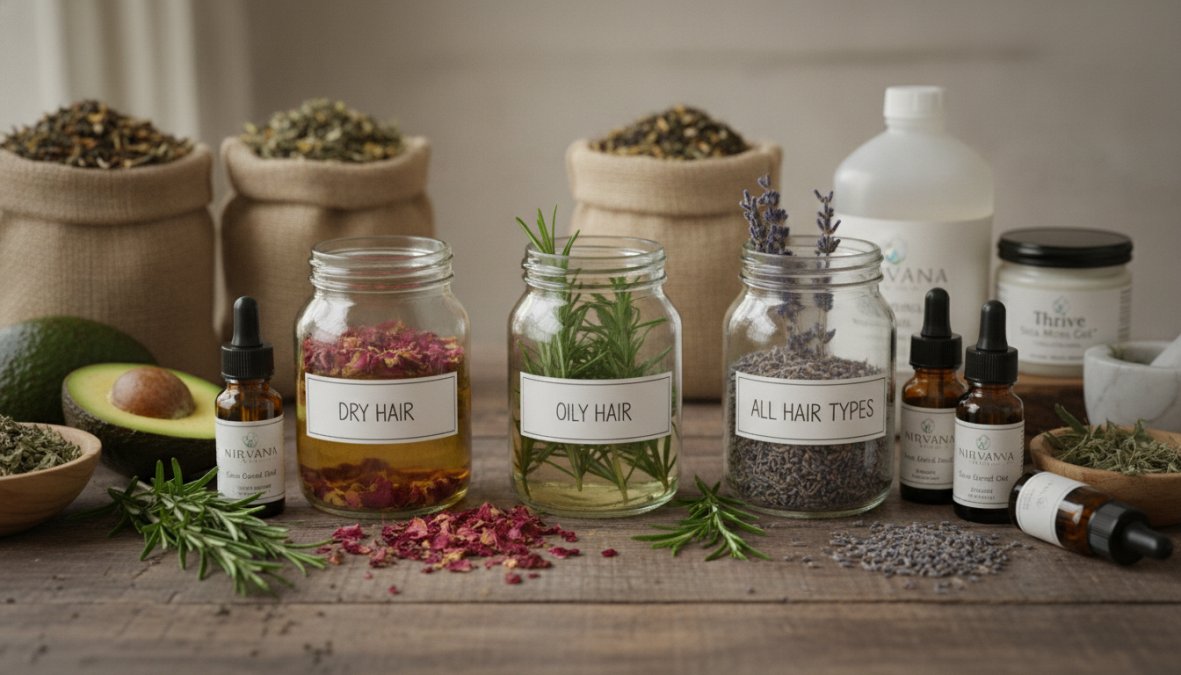
DIY Hair Growth Serum Recipes for Different Hair Types
Creating your own serum gives you control over ingredients and allows customization for your specific scalp condition.
Recipe for Oily Scalp
Ingredients:
- 1 ounce jojoba oil
- 5 drops rosemary essential oil
- 3 drops tea tree essential oil
- 2 drops lemon essential oil
- 1 capsule of saw palmetto extract (pierce and squeeze into mixture)
Mix all ingredients in a dark glass bottle and shake before each use. Apply 1 teaspoon to the scalp, focusing on the crown and hairline. Massage gently for 5 minutes, then leave on for 30 minutes before shampooing. Use 2-3 times weekly. This recipe lasts approximately 6-8 weeks.
Recipe for Dry or Damaged Hair
Ingredients:
- 0.5 ounce coconut oil
- 0.5 ounce castor oil
- 5 drops rosemary essential oil
- 3 drops peppermint essential oil
- 1 teaspoon raw honey
- 1 capsule biotin supplement (pierce and squeeze)
Warm the coconut and castor oils gently, then add remaining ingredients. Mix thoroughly and store in a glass bottle. Apply 1-2 teaspoons to damp hair, focusing on the scalp. Leave on for 45 minutes to overnight. Shampoo thoroughly to remove oil residue. Use 1-2 times weekly. This recipe lasts 4-6 weeks.
Recipe for Color-Treated Hair
Ingredients:
- 1 ounce argan oil
- 3 drops rosemary essential oil
- 2 drops lavender essential oil
- 1/2 teaspoon aloe vera gel
- 1 capsule saw palmetto extract (optional)
Mix ingredients in a glass bottle. Apply 1 teaspoon to the scalp and massage gently. Leave on for 20-30 minutes before shampooing with sulfate-free shampoo. Use 2 times weekly. This recipe lasts 8-10 weeks.
Scalp Massage for Hair Growth: Technique and Integration
Scalp massage increases blood flow to hair follicles, delivering oxygen and nutrients essential for growth. Research shows that regular scalp massage produces measurable improvements in hair thickness within 24 weeks of consistent practice.
When you massage your scalp while applying a natural serum, you accomplish two things simultaneously. The massage increases blood flow, allowing the serum's active ingredients to penetrate more deeply. The mechanical stimulation also activates follicles and may trigger growth signals independent of the serum itself.
Apply your serum, then massage using firm circular motions with your fingertips. Divide your scalp into four quadrants and spend 1-2 minutes on each, using consistent pressure. Perform this massage 2-3 times weekly when applying your serum. Many users report that combining massage with serum application produces faster results than either alone.
Natural Alternatives to Chemical Hair Growth Serums: Product Recommendations
Nirvana Hair Growth Oil: A Botanical Blend for Scalp Health
Nirvana Hair Growth Oil ($34.99 for 2oz) combines rosemary oil for circulation improvement, pumpkin seed oil for DHT blocking, and caffeine for direct follicle stimulation. Additional ingredients include biotin and green tea extract, creating a comprehensive approach to hair health.
Application is straightforward: apply 5-10 drops to the scalp, massage for 5 minutes, and leave on for at least 30 minutes before shampooing. Most users apply it 2-3 times weekly. The formula addresses circulation, DHT blocking, and follicle stimulation, making it effective for different types of hair loss. Users report noticeable improvements in hair shedding within 4-6 weeks, with visible regrowth appearing around the 3-month mark.
Comparison of Natural Serums vs. Minoxidil and Chemical Treatments
| Factor | Natural Serums | Minoxidil | Finasteride |
|---|---|---|---|
| Time to Results | 4-6 months | 3-4 months | 3-4 months |
| Efficacy for Mild Loss | High | High | High |
| Efficacy for Severe Loss | Moderate | High | Very High |
| Side Effects | Rare | Irritation, dryness | Sexual dysfunction, mood changes |
| Cost (Annual) | $300-$600 | $240-$480 | $180-$600 |
| Prescription Required | No | No | Yes |
| Sustainability | High | Moderate | Moderate |
| Works After Stopping | Partial | No | No |
Natural serums excel for users with mild to moderate hair loss who prioritize long-term sustainability and minimal side effects. Many dermatologists recommend combining approaches: using a natural serum as a foundational treatment while adding minoxidil or finasteride if results plateau after 6 months.
:::pro-tip If you're switching from minoxidil to a natural serum, don't stop abruptly. Taper your minoxidil use over 2-3 weeks while simultaneously starting the natural serum. This prevents sudden shock shedding and allows your follicles to adjust gradually. :::
Potential Interactions and Safety Considerations
Natural doesn't automatically mean safe, and combining multiple hair growth treatments requires caution.
Rosemary oil and caffeine are generally safe topically when diluted, but they can cause scalp irritation in sensitive individuals. Always patch-test new serums on a small area of scalp before full application.
Saw palmetto and pumpkin seed oil both affect DHT levels. Combining them with finasteride may over-suppress DHT. If you're taking finasteride, consult your doctor before adding saw palmetto or high-dose pumpkin seed oil supplements.
Hair growth treatments work best when combined with lifestyle support. Adequate protein intake supports follicle function. Stress management reduces cortisol, which can trigger telogen effluvium. Regular exercise improves circulation. Sleep quality affects hormone balance, including DHT levels. These foundational factors often matter more than any single product.
Hair loss is frustrating, but natural alternatives to chemical hair growth serums offer genuine options for people seeking safer, more sustainable approaches. Whether you choose ready-made serums or create your own DIY blends, consistency over 3-6 months is essential. Combine your chosen serum with scalp massage, lifestyle improvements, and patience, most users see meaningful results within this timeframe.
Frequently Asked Questions
Is rosemary oil as effective as minoxidil for hair growth?
Research suggests rosemary oil can be comparable to minoxidil for stimulating hair growth and improving hair thickness. However, results vary by individual and typically require 3-6 months of consistent use. Rosemary oil works by enhancing cellular generation and improving blood circulation to follicles, while minoxidil is FDA-approved for androgenetic alopecia. Natural alternatives like rosemary oil offer fewer side effects, making them attractive for those seeking gentler options.
What are the best natural DHT blockers for hair loss?
Top natural DHT blockers include saw palmetto, pumpkin seed oil, green tea extract, and caffeine. Saw palmetto works similarly to finasteride by inhibiting DHT production, while pumpkin seed oil contains compounds that may reduce 5-alpha reductase activity. These natural alternatives are typically gentler than prescription medications and can be incorporated into DIY serums or taken as supplements. Consistency is key, results usually appear after 3-4 months of regular use.
Can I make an effective hair growth serum at home?
Yes, DIY hair growth serums can be effective when formulated with proven ingredients like rosemary oil, pumpkin seed oil, and carrier oils. A basic recipe combines 10-15 drops of rosemary essential oil with 2 tablespoons of coconut or jojoba oil. For oily scalps, use lighter oils like grapeseed; for dry hair, use castor or argan oil. Apply to the scalp 2-3 times weekly, massaging gently. Homemade serums are cost-effective and allow customization for your specific hair type and concerns.
How does scalp massage enhance natural hair growth treatments?
Scalp massage increases blood circulation to hair follicles, delivering more nutrients and oxygen to support growth. When combined with natural serums, massage helps these ingredients penetrate deeper into the scalp and follicles. Spend 5-10 minutes daily using gentle circular motions with your fingertips. This technique works synergistically with natural remedies like rosemary oil and pumpkin seed oil, potentially accelerating visible results while promoting relaxation and reducing stress-related hair loss.
What are the potential side effects of natural hair growth alternatives?
Natural alternatives generally have fewer side effects than chemical treatments, but some risks exist. Essential oils like rosemary can cause scalp irritation if not diluted properly. Saw palmetto may interact with hormone-sensitive medications. Some individuals experience mild itching or allergic reactions. Always perform a patch test before full application, dilute essential oils with carrier oils, and consult a dermatologist if you have sensitive skin or take medications. Natural doesn't always mean risk-free, proper use and awareness are essential.
This article was written using GrandRanker