


Table of Contents
- Why Your Daily Self-Care Routine Changes in Your 40s
- How to Start a Self-Care Routine That Fits Your Life
- Building an Effective Skincare Routine for 40s
- Sleep, Recovery, and Hormonal Health
- Stress Management Techniques for Your 40s
- Nutrition and Hydration for Healthy Habits and Longevity After 40
- Movement, Strength, and Physical Vitality
- Making Your Daily Self-Care Routine Stick
Last Updated: August 6, 2026
Why Your Daily Self-Care Routine Changes in Your 40s
Your 40s bring real biological shifts: cellular turnover slows, collagen production declines, hormonal fluctuations intensify, and metabolic health requires deliberate effort. Women entering perimenopause face additional complexity. Men experience gradual hormonal shifts affecting energy and recovery. Both sexes see accelerated bone density loss without targeted strength training.

The routine that worked at 30 won't cut it now. Your skin needs targeted support, muscles need stimulus to prevent atrophy, sleep needs protection from stress and circadian disruption, and joints need attention before they demand it.
This isn't about fighting age, it's about understanding what your body actually needs and building a sustainable routine that addresses those specific needs. When you align your routine with what matters at this stage, results come faster than expected. Consistency beats intensity.
How to Start a Self-Care Routine That Fits Your Life
Most people fail at self-care routines because they try to do too much at once. You're not building perfection, you're building a system that fits your real life.
Step 1: Audit your current reality. How much time do you actually have? Your routine must fit your actual constraints, not an idealized version of your life. A 5-minute morning routine you'll actually do beats a 30-minute routine you'll skip.
Step 2: Choose one pillar first. Don't start with skincare, sleep, exercise, and nutrition simultaneously. Pick one, typically sleep or stress management, since these affect everything else. Once that's stable, add the next pillar.
Step 3: Stack new habits onto existing ones. If you already shower every morning, add a 2-minute skincare step right after. Habit stacking works because you're piggybacking on behaviors already automated.
Step 4: Set a specific time and location. "I'll do self-care" goes nowhere. "I do my skincare at 7 a.m. in my bathroom" creates a trigger your brain recognizes.
Step 5: Track what you actually do. A simple checkmark on a calendar creates accountability without judgment. You see patterns: what sticks, what doesn't, when you're most consistent.
The first month is hardest. By month two, actions become automatic. By month three, skipping feels wrong.
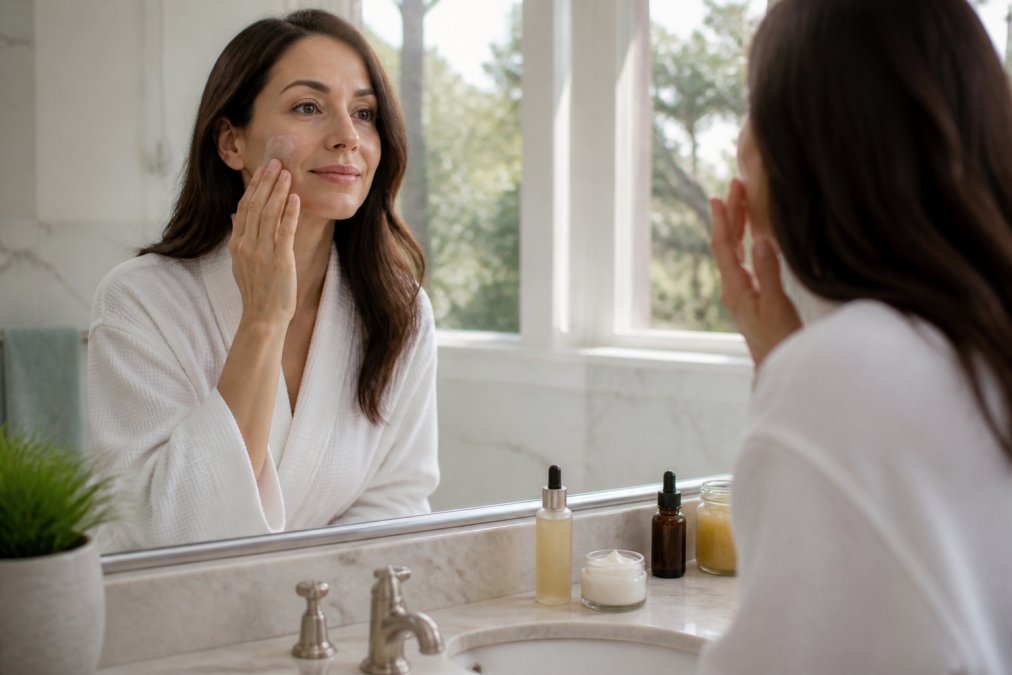
Building an Effective Skincare Routine for 40s
Your skincare routine for 40s needs to address slower cellular turnover, decreased moisture retention, loss of elasticity, and increased sensitivity. It doesn't need to be complex, it needs to be consistent and targeted.
The foundational four-step routine:
-
Gentle cleansing (morning and night): Use a cleanser that removes oil and debris without stripping your skin barrier. Cream or milk cleansers work better than foaming ones at this stage.
-
Toner or hydrating essence (after cleansing): This step hydrates before heavier products and preps your skin to absorb what comes next.
-
Targeted treatment (serums or actives): Address specific concerns with retinol, vitamin C, or niacinamide. Start low and go slow, your skin is more sensitive now. Two to three times per week is better than daily when beginning.
-
Moisturizer and sun protection: Moisturizing is non-negotiable. A good moisturizer locks hydration in. During the day, apply sun protection, sun damage accelerates aging more than any other single factor.
The routine takes 5-10 minutes total. Consistency matters more than complexity. Using the same products for 8 weeks lets you see actual results.
Antioxidants like vitamin C support collagen production and protect against environmental damage. Retinol increases cellular turnover and improves texture. Hyaluronic acid draws moisture into your skin. Niacinamide strengthens your skin barrier and reduces sensitivity. You don't need all of them, pick one or two and commit.
Sleep, Recovery, and Hormonal Health
Sleep quality deteriorates in your 40s. You fall asleep fine but wake at 3 a.m. You sleep 8 hours and still feel tired. For women, perimenopause disrupts sleep through hot flashes and night sweats. For men, declining testosterone affects sleep architecture. Both experience increased cortisol if sleep is poor, which then prevents recovery.
Sleep hygiene becomes essential, protecting your sleep environment and circadian rhythm, your body's internal clock that regulates alertness versus tiredness.
Sleep hygiene practices that work:
-
Consistent sleep and wake times: Your body runs on a 24-hour cycle. Keep your schedule within an hour of your weekday routine, even on weekends.
-
Cool, dark bedroom: Your core temperature needs to drop to sleep well. A bedroom around 65-68°F works for most people. Blackout curtains or an eye mask help.
-
No screens 30-60 minutes before bed: Blue light suppresses melatonin. Your phone, laptop, or TV tells your brain it's still daytime.
-
Limit caffeine after 2 p.m.: Caffeine has a 5-6 hour half-life. A 3 p.m. coffee is still 50% active at 8 p.m.
-
Movement during the day: Exercise improves sleep quality. Morning or afternoon exercise helps; evening workouts within 3 hours of bedtime can delay sleep.
Sleep is where recovery happens. Growth hormone releases during deep sleep. Cortisol should be highest in the morning and decline through the day. Poor sleep reverses this pattern, leaving you wired at night and exhausted during the day.
Women in perimenopause benefit from tracking sleep patterns alongside other symptoms. Hormonal fluctuations create predictable sleep disruption patterns. Hydration also affects sleep, dehydrate and you wake at night, but drinking large amounts right before bed causes bathroom trips. Drink most of your water during the day and taper in the evening.
Stress Management Techniques for Your 40s

Stress in your 40s is different. You're not stressed about starting your career, you're stressed about sustaining it, managing family obligations, watching aging parents decline, and processing that time is finite. This existential stress sits differently in your body.
Chronic stress elevates cortisol, which disrupts sleep, increases inflammation, accelerates aging, and makes weight management harder. Managing stress is foundational to everything else working.
Stress management techniques that fit real life:
Mindfulness practice: Three to five minutes of focused breathing activates your parasympathetic nervous system (the calm response). Do it when you first wake up or before bed. Consistency matters more than duration.
Movement as stress release: Walking, yoga, swimming, or strength training all reduce cortisol. Thirty minutes most days works better than intense bursts.
Boundary-setting: Saying no to extra commitments, limiting work email checking to specific times, and protecting personal time are essential. Your 40s are when you realize you can't do everything.
Social connection: Time with friends, family, or community, even 20 minutes, reduces cortisol and improves mood.
Journaling: Five minutes of writing about what's stressing you clarifies thoughts and reduces rumination.
Limiting comparison: Unfollowing accounts that trigger comparison and limiting social media time reduces cortisol.
The most effective stress management technique is the one you'll actually use. The goal is reducing chronic stress, not achieving perfect wellness.
Nutrition and Hydration for Healthy Habits and Longevity After 40
Your metabolism changes in your 40s. Muscle loss accelerates without adequate protein. Bone density declines without micronutrient support. Energy crashes happen faster without stable blood sugar.
Nutrition for longevity after 40 focuses on three things: adequate protein, micronutrient density, and stable blood sugar.
Protein intake: Aim for 0.7-1.0 gram per pound of body weight (roughly 25-35 grams per meal). Protein preserves muscle, supports bone density, and keeps you satisfied longer. Protein at breakfast specifically improves satiety and reduces afternoon snacking.
Micronutrient density: Processed foods are calorie-dense but nutrient-poor. Your 40s body needs vegetables, fruits, whole grains, and healthy fats. Colorful vegetables contain the most micronutrients per calorie.
Blood sugar stability: Eating carbohydrates with protein and fat slows digestion and prevents spikes. A piece of fruit alone causes a spike. Fruit with nuts or cheese stabilizes blood sugar. This single change improves energy, focus, and mood.
Hydration: Thirst sensation decreases with age. Aim for half your body weight in ounces daily. Hydration affects skin quality, energy, cognitive function, and joint health.
Many people benefit from adding targeted supplements. Thrive Sea Moss Gel™ from Nirvana Wellness Store ($19.99) provides mineral-rich support for overall wellness. Sea moss contains iodine, potassium, and other minerals that support thyroid function, energy, and cellular health. Thrive Wellness Drink™ ($15.99) offers another option for daily hydration and wellness support, combining hydration with energy and digestive support in one beverage.

The goal isn't perfection, it's building eating patterns that support energy, preserve muscle and bone, and reduce inflammation.
Movement, Strength, and Physical Vitality
Movement in your 40s serves two purposes: preserving muscle and bone, and maintaining cardiovascular health. Without deliberate strength training, you lose 3-5% of muscle mass per decade after 30. This loss accelerates in your 40s.
Strength training is non-negotiable. Use resistance (weights, bands, or bodyweight) to challenge your muscles 2-3 times per week. Focus on compound movements: squats, deadlifts, push-ups, rows. These work multiple muscle groups and preserve functional strength.
Bone density also declines in your 40s, particularly for women approaching perimenopause. Weight-bearing exercise and resistance training slow bone loss. This becomes critical preventative health.
Cardiovascular health matters too. Thirty minutes of moderate activity most days (brisk walking, cycling, swimming) maintains heart health and supports metabolic health.
Flexibility and mobility prevent injury. Stretching, yoga, or foam rolling for 10 minutes a few times per week maintains range of motion. Your 40s body is less forgiving of poor movement patterns.
The movement routine that works is one you'll actually do. Adherence beats the "perfect" routine.
Making Your Daily Self-Care Routine Stick
Knowing what to do and actually doing it are different things. The difference between people who maintain routines and those who don't isn't willpower, it's system design.
Make it automatic: Place your skincare products where you'll see them. Lay out workout clothes the night before. Set phone reminders for water intake. Automation removes decision fatigue.
Track progress visually: A simple calendar where you mark off days you complete your routine creates momentum. Seeing a chain of checkmarks makes skipping feel wrong.
Build in flexibility: Rigid routines fail. If you miss a day, do the routine the next day without guilt. Perfection isn't the goal, consistency over time is.
Celebrate small wins: After two weeks of consistent sleep schedule, acknowledge it. After a month of daily skincare, notice how your skin looks. These observations reinforce the routine.
Adjust based on what works: Your routine will evolve. Adapt rather than abandon. A routine that fits your actual life beats an ideal routine that doesn't.
Build community: Doing routines alone is harder. Find an accountability partner, join a fitness class, or share goals with friends.
The daily self-care routine for 40s that works is the one you've designed for your actual life. Start small. Build consistency. Add complexity only after the foundation is stable.
Your 40s are when self-care stops being optional and becomes the foundation everything else builds on. A deliberate daily self-care routine 40s protects your health, preserves your energy, and sets you up for vitality in your 50s and beyond. Nirvana Wellness Store offers carefully selected products like [Thrive Sea Moss Gel™ and Thrive Wellness(/products/thrive-wellness-drink™-daily-hydration-energy-whole-body-wellness) Drink™ | nirvanawellnessstore.com] designed to support your wellness journey. Start with one pillar, build consistency, and let small daily actions compound into the health outcomes that matter most to you.
Frequently Asked Questions
How should a 40-year-old woman prioritize self-care in a busy schedule?
Start with non-negotiables: a 5-minute morning skincare routine, 7-8 hours of sleep, and one stress management practice (even 10 minutes of deep breathing counts). Layer in strength training 2-3 times weekly and adequate hydration throughout the day. Quality matters more than quantity, consistency with three core habits beats sporadic effort across many. Use habit stacking: attach new self-care steps to existing routines (moisturize while your coffee brews, stretch while watching TV).
What are the most important healthy habits for longevity in your 40s?
Focus on muscle preservation through strength training, quality sleep for cellular repair, stress management to lower cortisol levels, preventative health screenings, consistent hydration, and a balanced diet rich in antioxidants. Perimenopause management (if applicable) and cognitive health through mindfulness or learning are equally critical. These habits directly impact bone density, metabolic health, and inflammation control, the foundations of vitality in your 40s and beyond.
How quickly will I see results from a new self-care routine?
Sleep and stress management improvements appear within 3-5 days. Skincare changes (clearer, more hydrated skin) typically show in 4-6 weeks with consistent use of quality products. Strength training and muscle preservation require 6-8 weeks of regular activity. Hormonal balance and energy improvements may take 8-12 weeks. The key is measuring what matters: energy levels, sleep quality, and how you feel, not just physical appearance. Products like Thrive Wellness Drink™ support hydration and energy from day one.
What should I do if my self-care routine isn't working after a few weeks?
Assess consistency first, most routines fail from inconsistency, not ineffectiveness. If you're consistent, adjust one element at a time: try a different skincare product, shift your sleep schedule, or change your stress management technique. Track what changes: energy, mood, sleep quality, skin clarity. If joint discomfort or other health concerns persist, consult your healthcare provider. Consider whether you're addressing all pillars: sleep, nutrition, stress, movement, and skincare. Many people see breakthroughs by adding a targeted supplement like Thrive Sea Moss Gel™ for mineral support.
This article was written using GrandRanker