
Table of Contents
- Best Non-Greasy Joint Relief Creams: Top 5 Comparison
- How to Choose a Joint Pain Cream: Key Factors
- How Topical Analgesics Work: The Science Behind Relief
- Key Ingredients in Non-Greasy Joint Relief Creams
- Joint Relief Cream Application Tips for Maximum Effectiveness
- Safety, Side Effects, and Drug Interactions
- Why Non-Greasy Formulations Matter for Daily Use
- Conclusion: Finding Your Ideal Non-Greasy Joint Relief Cream
Last Updated: July 15, 2026
Best Non-Greasy Joint Relief Creams: Top 5 Comparison
Finding effective joint pain relief without greasy residue is now possible. Non-greasy formulations absorb quickly, won't stain clothing, and integrate seamlessly into daily routines. According to American Academy of Dermatology research on topical pain relief, non-greasy formulations show comparable absorption rates to traditional creams while offering superior user compliance because people use them more consistently.
Below, we've compared five effective non-greasy joint relief creams based on active ingredients, absorption speed, and real-world performance.
Quick Comparison Table
| Product | Key Ingredient | Best For | Starting Price | Absorption Speed |
|---|---|---|---|---|
| Voltaren Arthritis Pain Gel | Diclofenac sodium (1%) | Osteoarthritis in hands/knees | $15-$25 | 15-20 minutes |
| Aspercreme with Lidocaine | Lidocaine (4%) | Immediate numbing relief | $8-$12 | 5-10 minutes |
| Biofreeze Professional Gel | Menthol (5%) | Athletes and active individuals | $12-$18 | 3-5 minutes |
| Penetrex Joint & Muscle Therapy | Arnica, MSM blend | Chronic daily joint support | $18-$25 | 10-15 minutes |
| Mineral Ice Pain Relieving Gel | Menthol (4%) | Budget-conscious users | $9-$12 | 5-10 minutes |
How to Choose a Joint Pain Cream: Key Factors
Selecting the right topical analgesic requires understanding your pain type and how your skin responds to different ingredients. Joint pain falls into two categories: inflammatory pain (arthritis, repetitive strain) responds best to NSAIDs like diclofenac sodium, which reduce inflammation; nerve and muscle pain responds better to numbing agents like lidocaine or menthol's cooling sensation.
The sensory experience matters significantly. A cream that feels unpleasant won't be used consistently, undermining effectiveness. Non-greasy formulations vary: some leave a cooling tingle, others are virtually unscented, and some have faint medicinal smells that fade quickly.
Understanding Active Ingredients
Diclofenac sodium penetrates the skin and reduces inflammation at the source, ideal for arthritis and joint swelling. Lidocaine numbs nerve endings, providing fast relief for acute pain but not addressing underlying inflammation. Menthol and camphor create cooling sensations that distract from pain through counter-irritation, effective for muscle soreness but temporary.
Single-ingredient formulations often outperform blends because each active ingredient can reach therapeutic concentrations. The best non-greasy joint relief creams typically focus on one primary mechanism rather than attempting multiple approaches simultaneously.
Absorption Rate and Sensory Profile
Fast-absorbing gels (3-5 minutes) work well before work or social situations. Slower-absorbing creams (15-20 minutes) often provide longer-lasting relief because ingredients remain in contact with skin longer.
Cooling gels provide immediate psychological relief through menthol sensation. Neutral, odorless formulations work better for people who find strong medicinal scents off-putting. The best non-greasy joint relief creams leave no visible residue and won't transfer to clothing or other people's skin.
How Topical Analgesics Work: The Science Behind Relief
Topical pain relievers deliver active ingredients directly to affected areas without systemic absorption, making them safer than oral NSAIDs for long-term use. Non-greasy gels often work faster than traditional creams because they don't sit on the skin surface as long.
NSAIDs like diclofenac reduce inflammation by inhibiting prostaglandin production, decreasing swelling and pain signals. This takes 15-20 minutes but addresses the root cause. Lidocaine blocks sodium channels in nerve cells to prevent pain signal transmission, working almost instantly. Menthol and camphor activate cold-sensitive nerve receptors, creating a cooling sensation that distracts from pain through gate control, your brain processes the intense cold feeling instead of pain signals.
Key Ingredients in Non-Greasy Joint Relief Creams
Diclofenac Sodium for Inflammation Reduction
Diclofenac sodium is a non-steroidal anti-inflammatory drug that reduces inflammation at the source. When applied topically, it penetrates skin and reaches joint tissues where it inhibits prostaglandin production. This makes it particularly effective for osteoarthritis and rheumatoid arthritis.
Topical diclofenac provides comparable pain relief to oral formulations for knee and hand osteoarthritis while carrying significantly lower risk of gastrointestinal side effects. Diclofenac creams typically contain 1% diclofenac sodium and require consistent application over several days before reaching full effectiveness. After three to five days of regular use, many users report meaningful reduction in joint stiffness and swelling. Voltaren Arthritis Pain Gel is the most widely available diclofenac option.
Lidocaine for Numbing and Fast-Acting Relief
Lidocaine is a local anesthetic that blocks pain signals by preventing nerve cells from transmitting sensation. At 4% concentration, the maximum strength available over-the-counter, it provides noticeable numbing within 5-10 minutes, making it ideal for acute flare-ups and immediate relief before activity.
Lidocaine works best for nerve pain, muscle soreness, and acute injuries rather than chronic inflammatory conditions. Relief typically lasts 2-4 hours, requiring reapplication for sustained pain management. Aspercreme with Lidocaine is the category leader for fragrance-free, non-greasy lidocaine relief.
Menthol and Camphor for Cooling Sensation
Menthol and camphor create a cooling sensation that provides pain relief through counter-irritation. These ingredients activate cold receptors on the skin, sending competing sensations that override pain signals. The cooling feeling is immediate but temporary; once your nervous system adapts, usually within 20-30 minutes, the pain-blocking effect diminishes.
Biofreeze Professional Gel contains 5% menthol and is trusted by physical therapists because it works fast and doesn't interfere with other treatments. Mineral Ice offers a similar menthol-based approach at a lower price point.
Joint Relief Cream Application Tips for Maximum Effectiveness
How you apply a topical pain reliever significantly impacts its effectiveness.
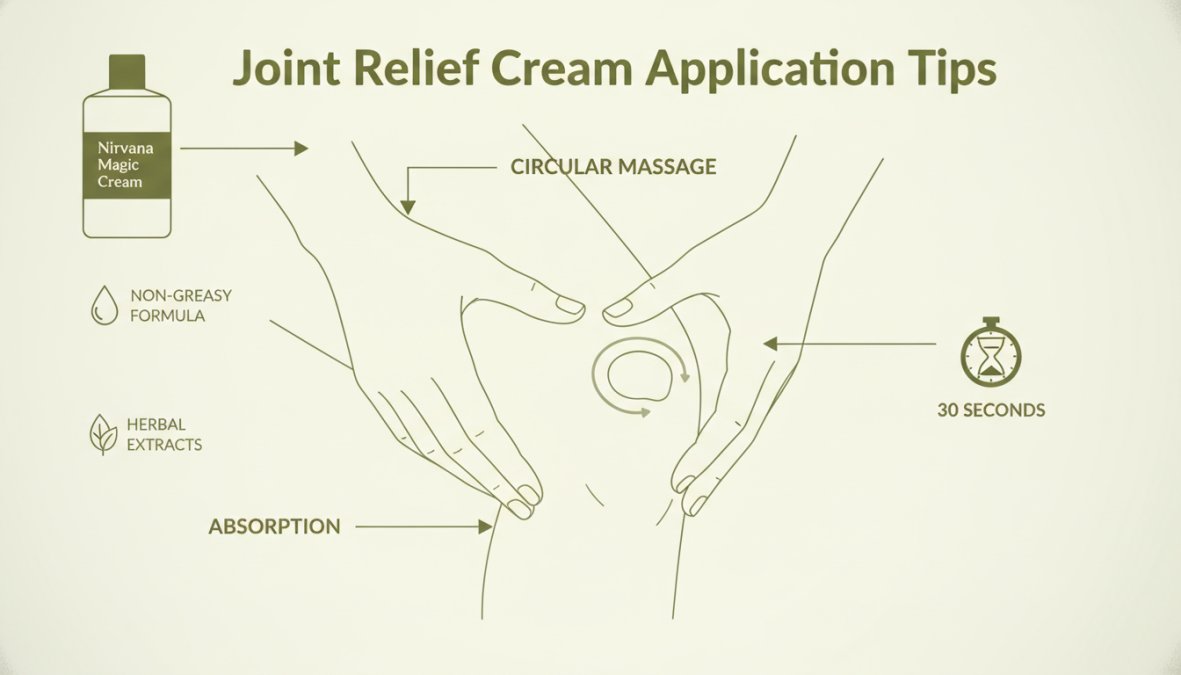
Application Techniques for Specific Joints
For hands and fingers, use a pea-sized amount and massage gently in circular motions for 30-60 seconds. For knees, apply a quarter-sized amount and massage around the joint, including above the kneecap, the sides, and behind the knee. For shoulders, apply to the back and upper arm, then perform gentle circular motions combined with slow arm movements. For back pain, use enough cream to cover the entire affected region and massage in long strokes along the spine and surrounding muscles.
Dosage and Frequency Guidelines
The maximum recommended frequency for most topical NSAIDs is three to four times daily, with at least 4 hours between applications. Diclofenac-based products are typically recommended for up to 7-10 days before reassessing effectiveness. Lidocaine and menthol products can be used more frequently for acute flare-ups.
A pea-sized amount for small joints and a quarter-sized amount for larger areas represents the therapeutic dose. Using more doesn't improve results and increases the risk of skin irritation.
Safety, Side Effects, and Drug Interactions
Topical pain relievers are generally safe because of minimal systemic absorption, but they're not risk-free.
Skin Sensitivity and Allergy Testing
The most common side effect is localized skin irritation, redness, burning, or itching at the application site, occurring in roughly 5-10% of users and typically resolving within 24 hours of discontinuing the product. True allergic reactions are rare but possible.
Before committing to regular use, perform a patch test. Apply a small amount to your inner forearm and wait 24 hours. If no redness, burning, or itching develops, the product is likely safe for you. People with sensitive skin should start with lidocaine or menthol products, which are less likely to cause irritation than NSAIDs.
When to See a Doctor for Joint Pain
Topical pain relievers are appropriate for minor joint discomfort, muscle soreness, and mild arthritis. See a healthcare provider if joint pain persists beyond two weeks despite consistent treatment, if pain is severe enough to limit daily activities, or if you notice swelling, warmth, or redness around the joint.
Topical analgesics work best as part of a comprehensive pain management strategy that includes physical therapy and appropriate activity modification. They're tools for symptom management, not cures for underlying joint disease.
Why Non-Greasy Formulations Matter for Daily Use
Non-greasy joint relief creams represent a significant quality-of-life improvement for people managing chronic joint pain. Traditional greasy creams trapped heat, stained clothing and bedding, and transferred to others through casual contact, creating barriers to consistent use.
Non-greasy gels and creams solve these problems while maintaining therapeutic effectiveness. They absorb in minutes, don't stain, and won't transfer to others. These improvements dramatically increase compliance, which directly correlates with better pain outcomes. Modern gel bases often enhance transdermal absorption compared to traditional cream bases, meaning non-greasy products frequently outperform their greasy predecessors in speed and penetration depth.
Conclusion: Finding Your Ideal Non-Greasy Joint Relief Cream
Joint pain doesn't have to disrupt your daily routine. The market now offers multiple non-greasy formulations that deliver real pain relief without the drawbacks of older products.
If you're managing arthritis or inflammatory joint pain, diclofenac-based products like Voltaren represent the gold standard. For people who need fast relief from acute pain or muscle soreness, lidocaine and menthol options provide immediate results. Nirvana Wellness Store offers comprehensive guidance on selecting topical pain relief products and carries Nirvana Magic Cream, a natural pain relief formula priced at $24.99 that combines fast-acting relief with non-greasy absorption.
Start by identifying your primary pain type, then select a product with the appropriate active ingredient. Test it on a small area first, apply consistently for at least three to five days, and pay attention to how your body responds. The right non-greasy joint relief cream should provide noticeable relief within the first week while fitting seamlessly into your daily routine.
Frequently Asked Questions
What makes a non-greasy joint relief cream different from regular pain relief creams?
Non-greasy joint relief creams use lightweight gel or fast-absorbing formulas that penetrate skin without leaving oily residue on clothing or skin. They typically contain ingredients like lidocaine, diclofenac sodium, or menthol in bases designed for rapid absorption. Regular creams often leave a moisturizing film that can stain clothes and feel heavy. Non-greasy options are ideal for daytime use and allow you to apply makeup or wear clothing immediately after application.
How long does it take for a topical analgesic to start working on joint pain?
Most non-greasy joint relief creams begin working within 15-30 minutes of application. Lidocaine-based products like Aspercreme provide numbing relief fastest, while diclofenac sodium creams like Voltaren may take several days of consistent use to reduce underlying inflammation. Menthol-based gels like Biofreeze offer immediate cooling sensation. For chronic joint pain management, consistent daily application typically shows optimal results within one to two weeks.
Can I use non-greasy joint relief cream on sensitive skin?
Yes, but perform a patch test first. Fragrance-free options like Aspercreme with Lidocaine and Icy Hot Lidocaine Cream are gentler for sensitive skin. Avoid products with strong menthol or camphor if you have reactive skin. Apply a small amount to your inner arm and wait 24 hours to check for redness, itching, or irritation. If you have dermatitis or eczema near the joint area, consult a healthcare provider before using any topical analgesic to avoid triggering inflammation.
What ingredients should I look for in a non-greasy joint relief cream?
Look for clinical-strength active ingredients: diclofenac sodium (an NSAID for inflammation reduction), lidocaine (for numbing), menthol (for cooling), or trolamine salicylate (for muscle aches). Check for moisturizing aloe to prevent skin drying. Avoid products with heavy oils or petroleum-based ingredients if you want true non-greasy absorption. Pharmacist-recommended brands often list absorption rate and drying time on packaging. Reading labels helps you choose formulations matched to your specific pain type, inflammation versus numbing versus cooling sensation.
Are there any drug interactions I should know about with topical joint pain relief?
While topical analgesics have lower systemic absorption than oral medications, interactions are possible. If you take blood thinners, NSAIDs, or have kidney disease, consult your doctor before using diclofenac-based creams. Avoid applying topical pain relievers near open wounds or broken skin. Do not combine multiple topical products without medical approval. Lidocaine products are generally safer for most users but can interact with certain heart medications. Always inform your pharmacist about all medications and supplements you take before starting a new topical pain relief regimen.
This article was written using GrandRanker