


Table of Contents
- How Sugar Fuels Inflammation and Why Alternatives Matter
- Quick Comparison: Best Sugar Alternatives for Inflammation
- Monk Fruit vs Stevia for Inflammation: Which Wins?
- Does Erythritol Cause Inflammation? What the Research Says
- Low Glycemic Index Sweeteners for Blood Sugar and Joint Health
- Gut Microbiome Impact: What Most Sweetener Guides Miss
- Culinary Application Guide: How to Swap Sugar in Everyday Cooking
- Inflammation Biomarker Testing: How to Track Your Progress
- Frequently Asked Questions
Last Updated: September 20, 2026
How Sugar Fuels Inflammation and Why Alternatives Matter
Finding the best alternatives to sugar for inflammation starts with understanding why refined sugar causes trouble. This guide from Nirvana Wellness Store walks through which sweeteners calm the fire and which quietly feed it.
The Link Between Refined Sugar and Systemic Inflammation
Refined sugar is any sweetener stripped of its natural fiber, minerals, and water content, leaving concentrated sucrose or fructose that absorbs quickly into the bloodstream. That speed is the problem: fast absorption produces sharp glucose spikes, and the body responds with an insulin surge plus inflammatory signaling. Fructose is metabolized almost entirely in the liver, where excess can drive fat accumulation and oxidative stress.
Quick Comparison: Best Sugar Alternatives for Inflammation
The best alternatives to sugar for inflammation have a low glycemic index, minimal fructose load, and little impact on the gut microbiome. Here is how the leading options stack up.
| Sweetener | Glycemic Index | Calories | Best For | Watch Out For |
|---|---|---|---|---|
| Monk fruit | Near zero | Zero | Baking, beverages | Pairs well with erythritol |
| Stevia | Near zero | Zero | Drinks, desserts | Slight bitter aftertaste |
| Erythritol | Zero | Near zero | Bulk baking | Digestive distress in large doses |
| Allulose | Very low | Low | Caramel, ice cream | Browns faster when heated |
| Yacon syrup | Low | Moderate | Drizzling, oatmeal | Contains FODMAPs |
| Coconut sugar | Medium | Moderate | Coffee, general use | Still raises blood glucose |
Monk Fruit vs Stevia for Inflammation: Which Wins?
Monk fruit edges out stevia for inflammation because its mogrosides have documented antioxidant properties and no bitter aftertaste. Stevia also fights inflammation via its own antioxidant compounds, but its lingering bitterness pushes some people back toward regular sugar.
Antioxidant Properties and Glycemic Impact
Both register near zero on the glycemic index, so neither produces glucose spikes. The difference is in the extras: monk fruit's mogrosides counter oxidative stress, a driver of systemic inflammation, while stevia brings steviol glycosides with similar antioxidant activity but a less neutral taste.
Does Erythritol Cause Inflammation? What the Research Says
Erythritol sits at the center of the loudest sweetener controversy in years, and the honest answer is nuanced. The compound itself does not appear to trigger inflammatory signaling the way refined sugar does, but it can create conditions, in the gut and, per newer cardiovascular research, in the bloodstream, that indirectly nudge inflammatory markers upward in some people.
What Erythritol Actually Is
Erythritol is a four-carbon sugar alcohol found naturally in melons, grapes, and fermented foods; commercially it is made by fermenting glucose with yeast. About 90% is absorbed in the small intestine and excreted unchanged in urine, with the remaining 10% continuing to the colon. That profile is why it delivers roughly 0.2 calories per gram, the FDA allows a zero-calorie label because it falls under the 5-calorie-per-serving threshold.
The Cardiovascular Signal That Changed the Conversation
In 2023, Cleveland Clinic researchers published findings in Nature Medicine linking elevated blood erythritol to increased platelet aggregation and clot formation in lab and animal models, plus an association with major adverse cardiac events in a patient cohort. The study did not prove causation, and the authors noted that people with metabolic conditions may produce more erythritol endogenously.
Digestive Distress and Sugar Alcohol Side Effects
Sugar alcohols, erythritol, xylitol, sorbitol, maltitol, and lactitol, share a weakness: the portion reaching the colon draws water in osmotically and ferments. Erythritol is best tolerated because so little reaches the colon. Maltitol has a higher glycemic index than many realize (roughly 35) and notoriously triggers gas and loose stools.
How Erythritol Compares to Other Sugar Alcohols
| Sugar Alcohol | Glycemic Index | Calories/g | Colon Fermentation | Common Use |
|---|---|---|---|---|
| Erythritol | 0 | ~0.2 | Low | Baking blends, beverages |
| Xylitol | 7-13 | ~2.4 | Moderate | Gum, mints, dental products |
| Sorbitol | 9 | ~2.6 | Moderate-high | Packaged desserts |
| Maltitol | ~35 | ~2.1 | High | Sugar-free chocolate, candy |
| Lactitol | ~6 | ~2.0 | Moderate | Baked goods |
Xylitol deserves a separate caution: it is highly toxic to dogs even in small amounts, so keep any xylitol-sweetened gum or baked goods well out of reach of pets.
The Bottom Line on Erythritol
For most healthy adults, moderate erythritol use is unlikely to drive inflammation directly. The bigger risks are digestive upset at high doses and an unresolved cardiovascular question mark for at-risk populations. For a zero-calorie bulk sweetener with no fermentation and no clotting signal, allulose is currently the cleaner choice.
Low Glycemic Index Sweeteners for Blood Sugar and Joint Health
Low glycemic index sweeteners keep blood glucose steady, which matters for metabolic health and joint comfort. Sharp glucose spikes promote insulin resistance, which is tied to higher levels of inflammatory markers like C-reactive protein.
- Monk fruit: near zero, no effect on blood glucose
- Stevia: near zero, no effect on blood glucose
- Allulose: very low, minimal insulin response
- Erythritol: zero glycemic impact
- Yacon syrup: low, but contains fermentable fibers
Gut Microbiome Impact: What Most Sweetener Guides Miss
Most sweetener guides stop at blood sugar and never mention the gut microbiome. That is the gap this section fills: the roughly 38 trillion microorganisms in your digestive tract train your immune system, produce short-chain fatty acids that calm inflammation, and regulate the intestinal barrier that keeps bacterial fragments out of your bloodstream.
Nirvana Thrive Wellness Drink →
How Sweeteners Reach Your Gut Bacteria
Any sweetener that escapes absorption in the small intestine becomes food for colonic bacteria. That is the fork in the road:
- Absorbed before the colon (monk fruit mogrosides, allulose, most erythritol): minimal fermentation, minimal microbiome disruption.
- Reaches the colon intact (sugar alcohols like maltitol and sorbitol, yacon syrup's inulin-type fructans, inulin added to many "keto" products): fermented by gut bacteria, which can be beneficial or disruptive depending on dose and the specific strains present.
What the Research Shows on Non-Nutritive Sweeteners
The landmark human study is the 2022 Cell paper from the Weizmann Institute, which tested saccharin, sucralose, aspartame, and stevia in healthy adults. Some participants' blood glucose responses worsened after just two weeks on a given sweetener, and when their microbiomes were transplanted into germ-free mice, the mice developed the same impaired glucose response, the effect was microbiome-mediated and person-specific, not universal.
Why This Matters for Inflammation Specifically
The chain runs: sweetener → shift in bacterial populations → change in short-chain fatty acid output → altered intestinal permeability → LPS translocation → immune activation → elevated CRP and other inflammatory markers. Every link has been documented, even if the full sequence has not been traced for every sweetener.
How to Track Your Own Response
- Baseline week: eat your normal diet, log digestion (bloating, gas, stool consistency), energy, and any joint or skin symptoms daily.
- Remove: cut all sugar alcohols and artificial sweeteners for seven days. Keep monk fruit, stevia, and allulose if you use them.
- Reintroduce one at a time: add back a single sweetener at a typical serving for three days, then log symptoms.
- Compare: if bloating, gas, or fatigue spike during a specific reintroduction, that sweetener is a likely culprit for you.
For daily gut and hydration support, a mineral-rich option like Pineapple Nirvana Sea Moss Gel™ fits easily into a smoothie or tea. It is crafted to support digestive wellness and immune function as part of a balanced routine.

Culinary Application Guide: How to Swap Sugar in Everyday Cooking
Swapping sugar in real cooking takes more than a one-to-one substitution. Monk fruit and stevia are far sweeter than sugar, so you use much less. Erythritol and allulose behave more like sugar in baked goods but brown differently.
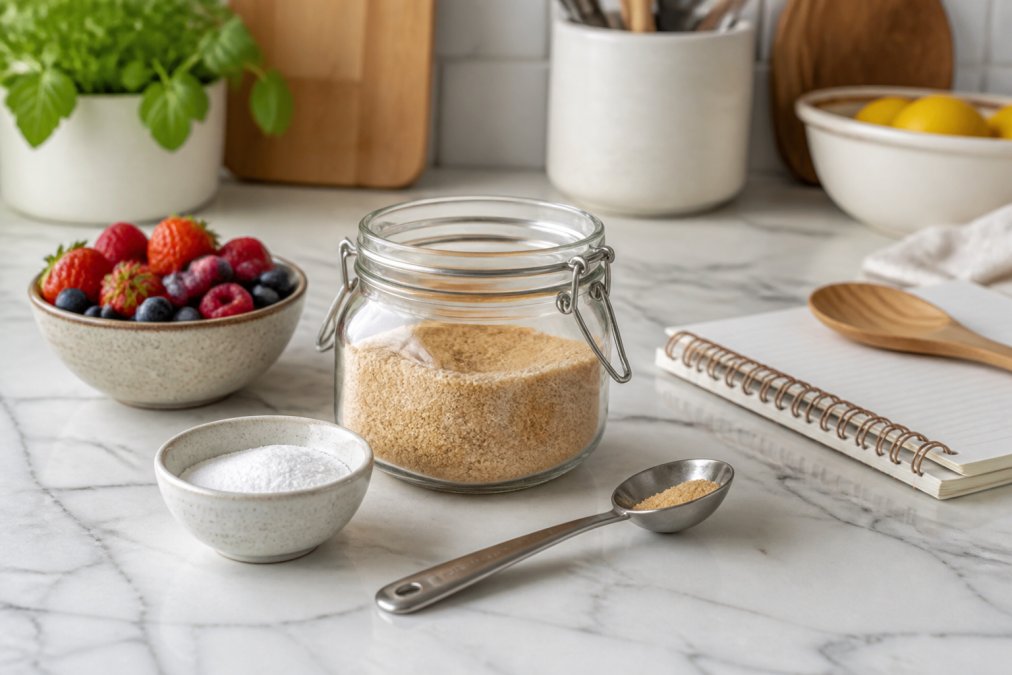
Use this quick reference:
| Original Sugar | Swap With | Ratio | Best In |
|---|---|---|---|
| 1 cup white sugar | Monk fruit blend | 1/2 cup | Cakes, cookies |
| 1 cup white sugar | Stevia powder | 1 tsp | Drinks, sauces |
| 1 cup brown sugar | Allulose | 1 cup | Caramel, custards |
| 1 tbsp honey | Monk fruit liquid | 1/4 tsp | Tea, oatmeal |
| 1 cup sugar | Erythritol | 1 cup | Bulk baking |
Inflammation Biomarker Testing: How to Track Your Progress
You cannot manage what you do not measure. If inflammation is your concern, ask your doctor about testing key inflammatory markers before and after changing your diet. The most common is C-reactive protein (CRP), released by the liver in response to inflammation; a high-sensitivity version, hs-CRP, detects lower levels and gauges cardiovascular risk.
CDC information on C-reactive protein testing
Frequently Asked Questions
What kind of sugar is the least inflammatory?
No sugar is completely free of inflammatory potential, but options with a low glycemic index cause smaller blood glucose spikes. Monk fruit and stevia contain zero calories and do not raise blood sugar, making them the least inflammatory choices for most people. If you prefer a sugar with nutritional value, raw honey and pure maple syrup have lower glycemic index values than refined white sugar, though they still contain fructose and should be used sparingly.
Will quitting sugar reduce inflammation?
Cutting back on added sugars can lower inflammatory markers like C-reactive protein, according to research on metabolic health. Many people notice reduced joint stiffness and improved energy within a few weeks. The key is replacing sugar with low glycemic alternatives rather than simply removing sweetness, since sudden dietary shifts are hard to maintain. Pairing the swap with anti-inflammatory foods like fatty fish and leafy greens amplifies the benefit.
Do artificial sweeteners cause inflammation?
Research on artificial sweeteners and inflammation is mixed. Some studies suggest certain non-nutritive sweeteners may alter gut microbiome composition in ways that affect inflammatory markers, while others find no significant effect at typical consumption levels. The response varies by individual, sweetener type, and dose. If you are managing chronic inflammation, natural options like monk fruit and stevia are generally considered safer choices than synthetic sweeteners, though more long-term human studies are needed.
How does high sugar intake affect joint pain?
High sugar intake drives systemic inflammation by promoting the release of pro-inflammatory cytokines. For people with arthritis or chronic joint discomfort, this can mean more frequent flares and increased stiffness. Refined sugar also contributes to weight gain, which adds mechanical stress to weight-bearing joints. Reducing added sugars and switching to low glycemic sweeteners is one practical step that supports joint comfort alongside other lifestyle changes.
What is the healthiest replacement for sugar?
Monk fruit and stevia are the two best alternatives to sugar for inflammation because they have zero calories, zero glycemic impact, and no known inflammatory effect. Monk fruit has a cleaner taste with no bitterness, while stevia is more widely available and cost-effective. For those who want a sweetener with added nutritional value, raw honey in small amounts offers antioxidant properties, though it still raises blood sugar. The healthiest choice depends on your taste preference and health goals.