


Table of Contents
- What an Anti-Inflammatory Lifestyle Does for Your Skin
- Chronic Inflammation and Skin Aging: What the Research Shows
- Foods That Fight Inflammation and Support Skin Repair
- An Anti-Inflammatory Diet for Acne and Redness
- The Impact of Stress on Skin Inflammation
- How to Reduce Skin Redness Naturally
- Topical Care and Internal Nutrition: A Combined Approach
- Frequently Asked Questions
Last Updated: September 30, 2026
What an Anti-Inflammatory Lifestyle Does for Your Skin
An anti-inflammatory lifestyle is a consistent pattern of eating, sleeping, moving, and managing stress that keeps the body's inflammatory response in balance, and the benefits of an anti-inflammatory lifestyle for skin show up as calmer tone, better barrier function, and slower visible aging. At Nirvana Wellness Store, customers pair these daily habits with targeted nutritional support rather than chasing quick fixes.
Here is the mechanism in plain terms. Low-grade chronic inflammation keeps immune cells active in the skin long after a trigger has passed. That sustained activity breaks down collagen and elastin faster than normal turnover replaces them, which shows up as sagging, dullness, and uneven pigment. The Cleveland Clinic overview of chronic inflammation explains how persistent inflammation affects tissue well beyond the site of the original trigger.
The payoff is cumulative, not instant. Most people who tighten their diet and sleep habits notice calmer skin within a few weeks, with texture and elasticity changes appearing over several months.
Chronic Inflammation and Skin Aging: What the Research Shows
Dermatological research consistently links chronic inflammation to accelerated skin aging through a process often called inflammaging. The mechanism runs through three connected pathways, and understanding them explains why an anti-inflammatory lifestyle changes skin at the structural level rather than just the surface.
1. Collagen and elastin breakdown. Matrix metalloproteinases (MMPs) are enzymes that remodel the extracellular matrix. In normal amounts they help with wound repair. When inflammatory signaling stays elevated, MMP activity outpaces the body's natural collagen production, and the dermis, the thick middle layer that gives skin its bounce, thins over time. This is the same pathway UV exposure triggers, which is why chronic inflammation and sun damage produce overlapping signs: sagging, creping, and loss of firmness.
2. Oxidative stress and cellular damage. Free radicals damage lipids, proteins, and DNA in skin cells. Antioxidant systems neutralize them, but when inflammatory load is high, free radical production can outrun that defense. The result is cumulative damage to fibroblasts, the cells that manufacture collagen, which slows repair capacity even after the trigger is gone.
3. Barrier and pigment disruption. Inflammatory signaling can weaken the skin barrier, increasing water loss and reactivity, and it can overstimulate melanocytes, which shows up as uneven tone, post-inflammatory hyperpigmentation, and lingering redness. This is why people with chronic inflammatory conditions often report both sensitivity and discoloration together.
Several markers matter here. Elevated cortisol, systemic inflammatory load, and poor metabolic health each independently affect skin elasticity and wound repair. The National Institute of Arthritis and Musculoskeletal and Skin Diseases publishes background on how skin structure and repair processes work, which helps explain why inflammatory load matters so much.
What most guides miss is the timeline. Visible aging from inflammation is not a sudden event. It accumulates quietly for years before it becomes obvious in the mirror, and the changes are structural by the time they are visible. That is the argument for treating anti-inflammatory habits as prevention rather than correction, the payoff shows up in the decade you do not spend trying to reverse damage.
Foods That Fight Inflammation and Support Skin Repair
The anti-inflammatory foods most worth building meals around are fatty fish, colorful vegetables and berries, nuts, seeds, olive oil, and mineral-rich whole foods. Each contributes something specific: omega-3 fatty acids to modulate the inflammatory response, antioxidants to neutralize free radicals, and phytonutrients that support cellular repair.
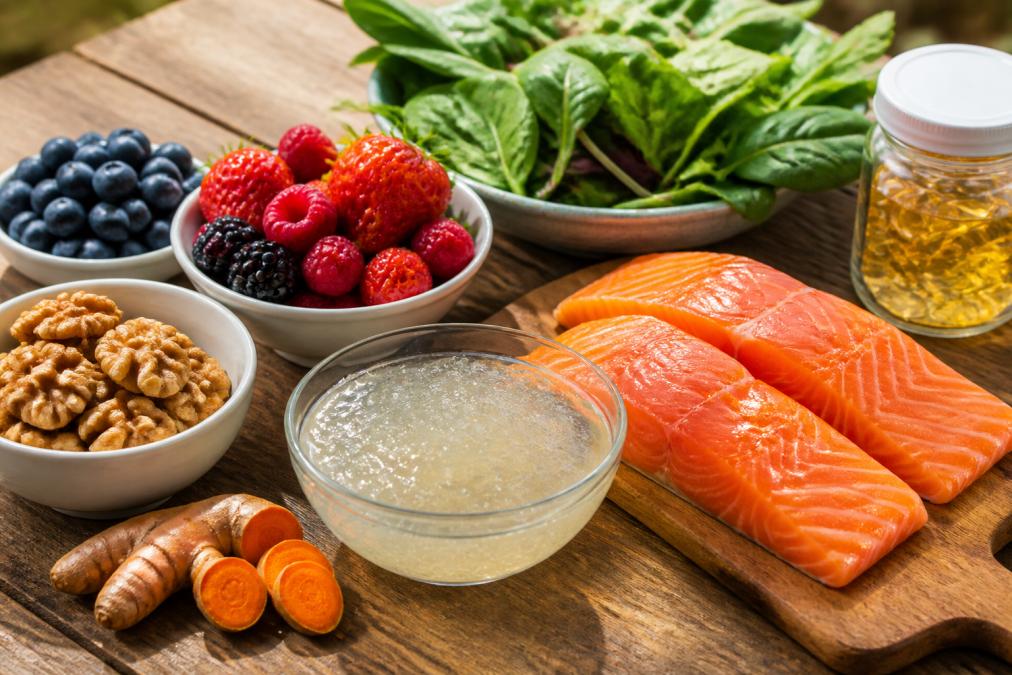
Omega-3 Fatty Acids, Antioxidants, and Phytonutrients
Omega-3 fatty acids are essential fats the body cannot produce efficiently on its own, and EPA and DHA are the forms most studied for their role in moderating inflammatory pathways. Antioxidants from berries, citrus, and leafy greens help limit oxidative stress. Phytonutrients give plant foods their color and act on cellular repair pathways.
Budget-Friendly Meal Planning for Skin Health
Eating this way does not require specialty stores. Frozen wild-caught salmon, canned sardines, frozen berries, and bagged greens cost far less than fresh equivalents and retain comparable nutritional value. Build a weekly rotation around three or four repeatable meals instead of chasing new recipes.
A practical weekly structure:
| Meal Slot | Budget Option | Key Nutrient |
|---|---|---|
| Breakfast | Oats with frozen berries and walnuts | Antioxidants, omega-3 |
| Lunch | Sardines on whole grain toast with greens | EPA, DHA, fiber |
| Dinner | Frozen salmon with roasted vegetables | Omega-3, phytonutrients |
| Snack | Apple with almond butter | Fiber, vitamin E |
| Daily add-in | 1-2 tbsp sea moss gel in a smoothie | Minerals, hydration |
An Anti-Inflammatory Diet for Acne and Redness
An anti-inflammatory diet for acne focuses on lowering glycemic load and cutting processed sugars, refined carbohydrates, and trans fats, all of which drive sebum production and flare-ups. High-glycemic foods spike insulin, which in turn raises androgen activity and oil output.
The Impact of Stress on Skin Inflammation
The impact of stress on skin inflammation is direct and measurable in daily life, and the mechanism is worth understanding because it explains why stress management is not a soft add-on to an anti-inflammatory routine, it is a load-bearing part of it.
- Weakens the skin barrier by reducing production of ceramides and other lipids that hold the outer layer together, which increases water loss and reactivity
- Increases oil production through androgen signaling, which is one reason stress and breakouts travel together
- Amplifies inflammatory signaling in the skin, which is why eczema, rosacea, and psoriasis tend to flare during high-stress periods rather than at random
- Disrupts sleep, which removes the body's main overnight repair window and compounds the effect the next day
- Anchor your wake time first. A consistent wake time stabilizes circadian rhythm more reliably than a consistent bedtime, because it sets the clock the rest of the day runs on. Most people find that fixing the wake time makes falling asleep easier within one to two weeks.
- Get daylight within an hour of waking. Ten to fifteen minutes of outdoor light in the morning supports the cortisol curve that should peak early and taper by evening. This is one of the few free interventions with a measurable effect on sleep quality.
- Move daily, but not intensely every day. Ten to twenty minutes of walking lowers circulating stress markers without the recovery cost of hard training. Intense exercise is beneficial, but stacking it on top of high life stress can raise inflammatory load rather than lower it.
- Protect a screen-free wind-down window. Thirty to sixty minutes before bed, dim lights and step away from screens. The goal is not perfect sleep hygiene, it is giving the nervous system a signal that the day is closing.
- Add one deliberate downshift practice. Breathing exercises, a short walk after dinner, journaling, or time with a pet all work. The specific practice matters less than doing one consistently.
How to Reduce Skin Redness Naturally
To reduce skin redness naturally, combine internal and topical approaches rather than relying on either alone. Internally, prioritize omega-3 intake, hydration, and antioxidant-rich foods. Topically, use gentle cleansers, avoid harsh exfoliants, and protect the barrier with a fragrance-free moisturizer and daily sunscreen.
A simple redness protocol to follow for four weeks:
- Remove one obvious trigger (sugary drinks or late-night screens) and hold it steady
- Add one omega-3 source daily, from food or a supplement
- Switch to a fragrance-free cleanser and moisturizer
- Apply sunscreen every morning, regardless of weather
- Track flare-ups in a notes app so patterns become visible
Topical Care and Internal Nutrition: A Combined Approach
The gap most skincare routines leave is the one between the bottle and the plate. Topical products act on the surface layers; nutrition and lifestyle affect the environment those layers are built from. Neither replaces the other.
Frequently Asked Questions
What foods should I eat on an anti-inflammatory diet for my skin?
Focus on fatty fish like salmon and sardines for omega-3 fatty acids, colorful vegetables and fruits rich in antioxidants, whole grains with a low glycemic index, nuts, seeds, and olive oil. These foods help lower inflammation markers and support collagen synthesis. Adding a daily omega-3 supplement like Nirvana Omega-3 Capsules can fill nutrient gaps when diet alone falls short.
How does chronic inflammation affect skin appearance?
Chronic inflammation breaks down collagen and elastin, leading to premature aging, wrinkles, and sagging. It also triggers excess sebum production and can worsen conditions like acne, rosacea, and eczema. Over time, systemic inflammation impairs the skin barrier function, making it harder for skin to retain moisture and protect against irritants. Reducing inflammation through diet and lifestyle helps maintain skin elasticity and a calmer complexion.
What are the best lifestyle habits to reduce skin inflammation?
Prioritize sleep to support circadian rhythm and cellular repair, manage stress with techniques like meditation or deep breathing to lower cortisol levels, stay hydrated, and exercise regularly to promote lymphatic flow. Avoid smoking and limit alcohol. These habits complement an anti-inflammatory diet and can noticeably reduce redness and flare-ups. Consistency matters more than intensity, so start with one or two changes and build from there.
Can an anti-inflammatory diet help with acne and redness?
Yes. High-glycemic foods and processed sugars spike blood sugar, which can increase sebum production and inflammation, worsening acne. An anti-inflammatory diet for acne emphasizes low-glycemic vegetables, omega-3s, and antioxidants. Reducing dairy and refined carbohydrates may also help. Pair dietary changes with gentle topical care and stress management for best results.