


Table of Contents
- What Is an Anti-Inflammatory Diet and Why It Fits a Tight Budget
- Core Anti-Inflammatory Food Groups for Your Shopping List
- Cheap Anti-Inflammatory Meal Plan: Seven Days of Low-Cost Eating
- Anti-Inflammatory Pantry Staples That Last for Months
- Frozen vs Fresh Produce for Inflammation: Which Saves More
- Foods to Avoid That Worsen Inflammation and Your Budget
- Cost-Per-Serving Breakdown: Store Brand vs Name Brand
- Supplements That Fill Nutrition Gaps Without Breaking the Bank
- Frequently Asked Questions
Last Updated: September 16, 2026
What Is an Anti-Inflammatory Diet and Why It Fits a Tight Budget
An anti-inflammatory diet centers on unprocessed foods, fiber-rich plants, and omega-3s. This guide from Nirvana Wellness Store shows how to build an anti-inflammatory diet shopping list on a budget without giving up the foods that matter most.
How Chronic Inflammation Drains Energy and Joints
Chronic inflammation is a low-grade, persistent immune response many adults describe as morning stiffness, joint aches, and flat energy, unlike normal healing after a cut or workout.
Core Anti-Inflammatory Food Groups for Your Shopping List
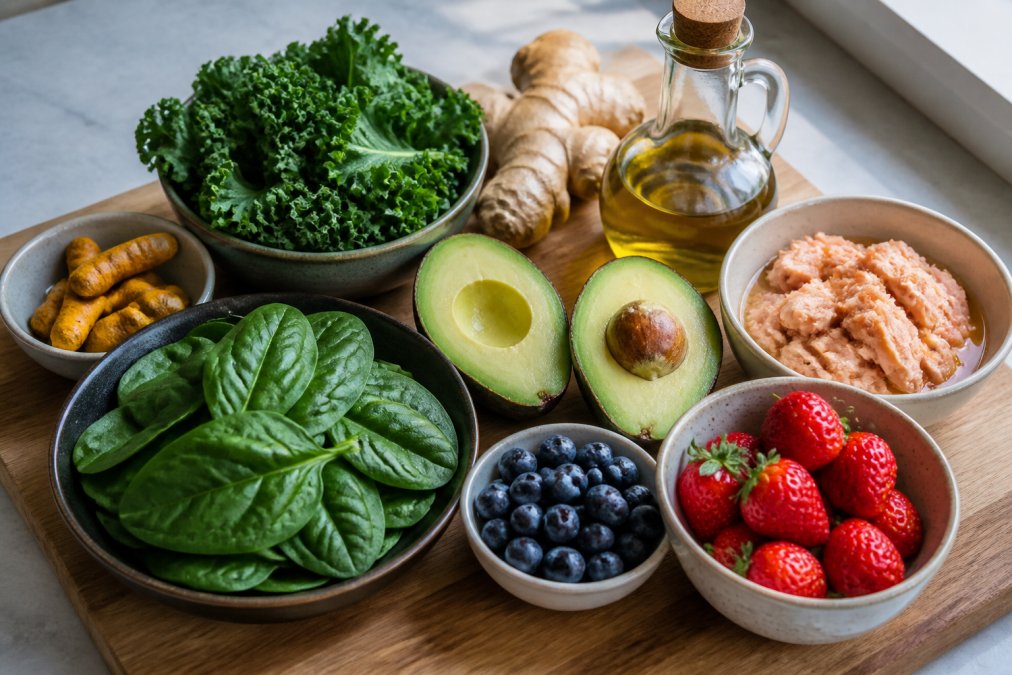
Every effective anti-inflammatory shopping list draws on five groups: fatty fish and nuts, leafy greens, berries, cruciferous vegetables, and legumes with whole grains, covering omega-3s, antioxidants, phytonutrients, and fiber.
Fatty Fish, Nuts, and Seeds for Omega-3s
Omega-3s are essential fats the body can't make, found in fatty fish, walnuts, chia, and flaxseed. Canned sardines and tuna deliver the same EPA and DHA as fresh fillets for far less.
Leafy Greens, Berries, and Cruciferous Vegetables
Leafy greens, berries, and cruciferous vegetables are the antioxidant backbone of any anti-inflammatory shopping list. Kale, spinach, broccoli, cauliflower, and cabbage are among the cheapest produce per pound.
Cheap Anti-Inflammatory Meal Plan: Seven Days of Low-Cost Eating
A cheap anti-inflammatory meal plan can land under $3 per serving if you anchor meals around beans, oats, eggs, and frozen vegetables. The trick is repetition with variation: cook one grain, one legume, and one protein in bulk, then remix.
Breakfast, Lunch, and Dinner Options Under $3 Per Serving
Here's a seven-day rotation that keeps costs low and inflammation-focused foods high.
| Day | Breakfast | Lunch | Dinner |
|---|---|---|---|
| Mon | Oats with frozen berries and walnuts | Lentil soup with spinach | Baked sardines, roasted broccoli, brown rice |
| Tue | Greek yogurt with chia and banana | Leftover lentil soup | Black bean tacos with cabbage slaw |
| Wed | Veggie omelet with kale | Tuna salad on whole grain | Chickpea curry with cauliflower |
| Thu | Oats with peanut butter and apple | Leftover chickpea curry | Baked cod, sweet potato, green beans |
| Fri | Smoothie with frozen berries and flax | Bean and rice bowl | Stir-fried tofu with broccoli and ginger |
| Sat | Eggs with sautéed spinach | Sardine toast with tomato | Lentil pasta with olive oil and garlic |
| Sun | Overnight oats with walnuts | Leftover lentil pasta | Roasted chicken thighs with carrots and turmeric |
Cost-Per-Serving Math: What the Week Actually Costs
Here's the math for the week above, based on typical national store-brand prices.
| Ingredient | Typical Package Size | Typical Price | Servings Used | Cost Per Serving |
|---|---|---|---|---|
| Dried lentils | 1 lb bag | $1.50-$2.00 | 6 | $0.25-$0.33 |
| Dried black beans | 1 lb bag | $1.50-$2.00 | 6 | $0.25-$0.33 |
| Rolled oats | 42 oz canister | $3.50-$4.50 | 30 | $0.12-$0.15 |
| Frozen mixed berries | 48 oz bag | $7.00-$9.00 | 12 | $0.58-$0.75 |
| Canned sardines in water | 3.75 oz can | $1.00-$1.50 | 1 | $1.00-$1.50 |
| Canned tuna in water | 5 oz can | $0.90-$1.30 | 1 | $0.90-$1.30 |
| Eggs | 1 dozen | $2.50-$4.00 | 6 (2-egg servings) | $0.42-$0.67 |
| Brown rice | 2 lb bag | $2.00-$3.00 | 20 | $0.10-$0.15 |
| Frozen broccoli florets | 32 oz bag | $3.00-$4.00 | 8 | $0.38-$0.50 |
| Whole wheat pasta | 1 lb box | $1.20-$1.80 | 8 | $0.15-$0.23 |
| Plain Greek yogurt | 32 oz tub | $4.00-$5.50 | 4 | $1.00-$1.38 |
| Olive oil | 16.9 oz bottle | $6.00-$9.00 | 33 (1 tbsp) | $0.18-$0.27 |
Low-Energy Meal Prep for Flare-Up Days
Budget shopping only pays off if you can cook the food. On flare-up days when standing at the stove is hard, the plan falls apart unless you've prepped:
- Pre-cook the base, not the meal. Cook brown rice and lentils on a good day, portion into containers, and refrigerate up to four days or freeze up to three months. Reheating takes two minutes.
- Use the freezer as a prep tool. Wash and chop kale, spinach, and broccoli the day you bring them home, then freeze in zip-top bags. They go straight from freezer to pan.
- Keep no-cook assemblies on hand. Canned sardines on whole grain toast, Greek yogurt with frozen berries and chia, and bean-and-rice bowls need no heat.
- Batch the spices. Mix turmeric, ginger, garlic powder, and black pepper in a jar so seasoning is one scoop instead of four.
- Sit for the chopping. A stool at the counter or a cutting board at the table keeps prep possible when standing isn't.
Where to Trim Without Losing Nutrition
If the week runs over budget, cut in this order: swap fresh berries and spinach for frozen, and chicken thighs for eggs or extra beans. Each swap saves roughly $2-$4 per week without changing the anti-inflammatory profile. Don't cut olive oil, turmeric, or fatty fish entirely; they do the most work and are already cheap per serving.
Anti-Inflammatory Pantry Staples That Last for Months
Anti-inflammatory pantry staples are the shelf-stable items that make weeknight cooking fast: dried legumes, whole grains, canned fish, olive oil, turmeric, ginger, and frozen produce.
Bulk-Buying and Storage Techniques for Grains, Legumes, and Spices
Buying in bulk cuts cost per serving, but storage determines whether you actually save. Dried beans and rice last a year or more in airtight containers in a cool, dark cabinet. A 25 lb bag of oats often costs less per pound than a 42 oz canister, and a 10 lb bag of brown rice can halve the per-serving cost versus a 2 lb bag.
- Transfer dried beans and grains to glass or food-grade plastic containers with tight lids
- Add a bay leaf to each container to discourage pantry pests
- Label each container with the purchase date
- Store whole spices in small jars away from the stove; heat degrades them
- Freeze extra flour or nuts in resealable bags to extend shelf life
- Keep a running inventory list taped inside the pantry door
Spoilage Timelines: How Long Each Staple Actually Lasts
Most pantry guides say "store in a cool, dark place" and stop there. The useful question is how long each item holds quality, which determines how much you can safely buy in bulk.
| Staple | Opened Shelf Life | Best Storage Method | Signs It Has Turned |
|---|---|---|---|
| Rolled oats | 6-12 months | Airtight container, cool cabinet | Musty smell, clumping |
| Brown rice | 3-6 months | Airtight container; freezer for long-term | Rancid or oily smell |
| Dried lentils | 12+ months | Airtight container, cool cabinet | Faded color, slow cooking |
| Dried beans | 12+ months | Airtight container, cool cabinet | Wrinkled skins, hard after soaking |
| Whole wheat flour | 1-3 months | Freezer in resealable bag | Bitter smell, clumping |
| Walnuts and pecans | 3-6 months refrigerated, 12 months frozen | Freezer for bulk | Rancid, sharp smell |
| Ground turmeric | 6-12 months | Small jar away from heat and light | Faded color, weak aroma |
| Whole turmeric root | 2-3 weeks refrigerated | Perforated bag in crisper drawer | Soft spots, mold |
| Canned sardines and tuna | 2-5 years unopened; 3-4 days after opening | Cool, dry cabinet | Dented or bulging cans |
| Olive oil | 18-24 months unopened; 2-3 months after opening | Dark bottle, cool cabinet, away from stove | Flat or waxy smell |
Store-Brand vs. Name-Brand: Where to Save and Where to Spend
Store brands usually match name brands on nutrition for staple anti-inflammatory foods at a noticeably lower cost per serving. The exceptions are items where you prefer a specific brand's flavor or texture.
| Item | Store Brand Advantage | Where Name Brand Wins |
|---|---|---|
| Canned beans | Nearly identical nutrition, lower price | Firmer texture in some brands |
| Frozen berries | Same antioxidant content | Larger berry size |
| Olive oil | Fine for cooking | Better flavor for finishing |
| Whole grain oats | Identical product | Specialty cut varieties |
| Canned sardines | Works in cooked dishes | Better for eating straight |
| Ground turmeric | Same active compound | Fresher aroma |
Building a Pantry That Survives a Bad Week
The point of a stocked anti-inflammatory pantry is that a flare-up day doesn't force a takeout order. Keep two meals' worth of no-cook options on hand: canned sardines or tuna, canned beans, whole grain crackers or frozen bread, and olive oil. Sardines on toast with olive oil and lemon is a complete anti-inflammatory meal in under five minutes, cheaper than one fast-food entrée.
Frozen vs Fresh Produce for Inflammation: Which Saves More
Frozen produce often matches or beats fresh on nutrient retention because it's frozen at peak ripeness. For an anti-inflammatory shopping list, frozen berries, spinach, and broccoli are usually the smarter buy.
Foods to Avoid That Worsen Inflammation and Your Budget
Processed foods high in added sugar, refined grains, and industrial seed oils tend to be both pro-inflammatory and expensive per nutrient. Cutting them usually improves how you feel and lowers the bill.
The main categories to limit:
- Sugary drinks and sweetened coffee beverages
- Packaged snack cakes, cookies, and pastries
- Processed meats like hot dogs and deli slices
- Refined white bread and instant noodles
- Deep-fried fast food and frozen fried entrees
Cost-Per-Serving Breakdown: Store Brand vs Name Brand
| Item | Store Brand Advantage | Where Name Brand Wins |
|---|---|---|
| Canned beans | Nearly identical nutrition, lower price | Firmer texture in some brands |
| Frozen berries | Same antioxidant content | Larger berry size |
| Olive oil | Fine for cooking | Better flavor for finishing |
| Whole grain oats | Identical product | Specialty cut varieties |
| Canned sardines | Works in cooked dishes | Better for eating straight |
| Ground turmeric | Same active compound | Fresher aroma |
Supplements That Fill Nutrition Gaps Without Breaking the Bank
Supplements fill gaps when diet alone doesn't cover a nutrient, and they don't need to be expensive. Two areas where a budget anti-inflammatory shopping list often falls short are omega-3s and vitamin D.
Frequently Asked Questions
What are the cheapest anti-inflammatory foods to buy?
Canned fatty fish like sardines and salmon, dried legumes such as lentils and black beans, frozen leafy greens, cabbage, carrots, onions, and store-brand olive oil give you the most anti-inflammatory value per dollar. Eggs, oats, and brown rice round out the list. These items deliver omega-3 fatty acids, fiber, and antioxidants at a fraction of the cost of fresh specialty produce, and most keep for weeks in a pantry or freezer.
How can I follow a cheap anti-inflammatory meal plan without spending hours cooking?
Batch-cook one grain, one legume, and one roasted vegetable on a low-energy day, then mix and match through the week. A pot of lentil soup, a tray of roasted sweet potatoes, and a batch of brown rice cover most meals. Frozen produce cuts prep time to almost nothing. A 15-minute assembly meal like a grain bowl with canned salmon, spinach, and olive oil fits the plan and costs under $4 per serving.
Are frozen vegetables as good as fresh for an anti-inflammatory diet?
Frozen produce is picked and flash-frozen at peak ripeness, so it often retains comparable vitamin and antioxidant levels to fresh items that have spent days in transit. For inflammation-focused eating, frozen spinach, broccoli, and berries are cost-effective and reduce food waste. Buy fresh when it is in season and affordable, and keep frozen backups for out-of-season weeks.
What foods should I avoid to reduce inflammation?
Cut back on added sugar, refined white flour, processed meats, sugary drinks, and deep-fried foods. These raise blood sugar quickly and contribute to chronic inflammation. Check labels for partially hydrogenated oils and high-fructose corn syrup. You do not need to eliminate everything at once; replacing one sugary snack or soda per day with fruit, nuts, or sparkling water is a practical first step that also lowers your grocery bill.
Is it expensive to eat an anti-inflammatory diet?
No. A budget anti-inflammatory diet shopping list built around legumes, whole grains, frozen produce, canned fish, and store-brand olive oil can cost less than a typical processed-food basket. The savings come from buying dried beans instead of canned, choosing frozen over out-of-season fresh, and using spices like turmeric and ginger instead of prepared sauces. Planning meals around cost-per-serving keeps the total low while still covering nutrient-dense foods.
Building an anti-inflammatory eating pattern on a tight budget is less about willpower and more about which aisles you shop. The foods that support normal inflammatory balance are usually the ones sitting on the lowest shelves at the lowest prices. If you want to close the omega-3 and vitamin D gaps without adding another grocery trip, Nirvana Wellness Store carries targeted supplements designed for exactly that. Continue shopping and see which foundational products fit your routine.