


Table of Contents
- Why Beginners Need Eco-Friendly Yoga Mats That Fit Their Budget
- Yoga Mat Alternatives: Beyond the Standard Sticky Mat
- Is a Cork Yoga Mat for Beginners Worth It?
- When to Use a Yoga Towel Instead of Mat
- How to Find a Budget Non-Slip Yoga Mat That Lasts
- Materials to Avoid: PVC, Phthalates, and Synthetic Glue
- Total Cost and Value: Comparing Eco-Friendly Options for Beginners
- Conclusion: Choosing Your First Eco-Friendly Yoga Mat
- Frequently Asked Questions
Last Updated: October 6, 2026
Why Beginners Need Eco-Friendly Yoga Mats That Fit Their Budget
A yoga mat is the first thing every beginner buys, and the one most people buy badly.
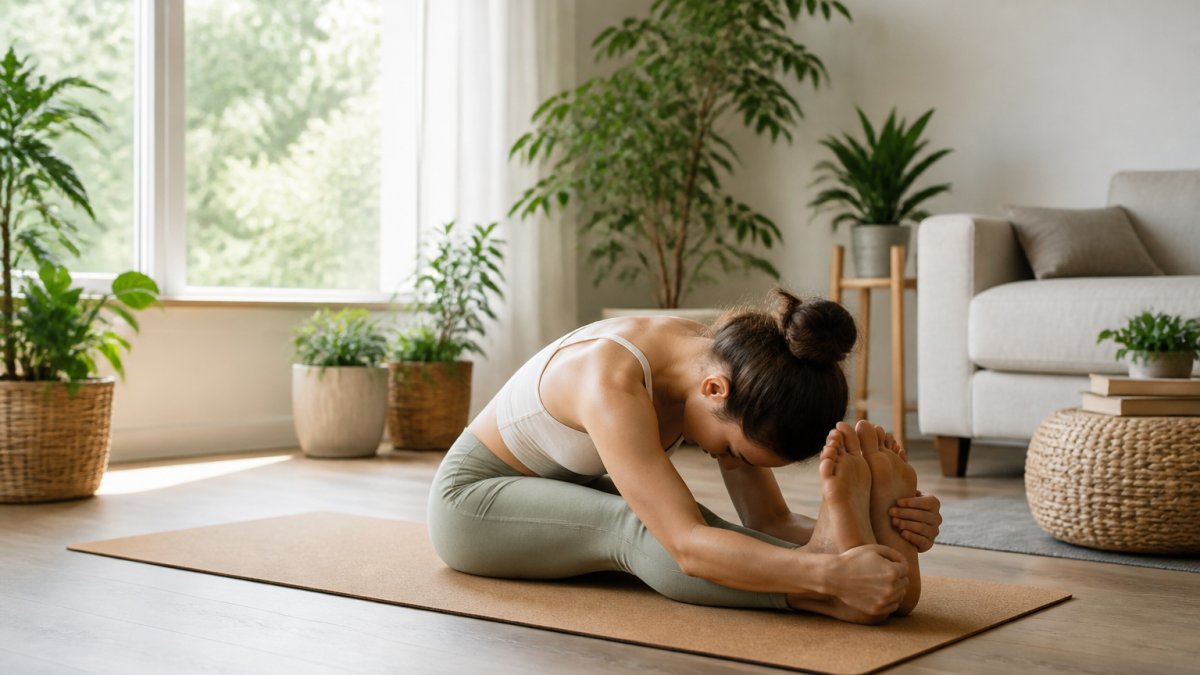
This guide recommends buying your first eco-friendly yoga mat the way you would buy running shoes: spend once on something that lasts.
Affordable eco-friendly yoga mats for beginners do exist, and they are not flimsy novelty items. The catch: "eco-friendly" is doing a lot of marketing work, and the label alone tells you almost nothing.
Yoga Mat Alternatives: Beyond the Standard Sticky Mat
"Alternative" covers everything from a $60 cork mat to the beach towel in your closet, and those two are not interchangeable. Here is what each does well, what it costs, and when it stops being safe.
The four categories, and what each one solves
Natural rubber. Tapped from the hevea tree, this is the most common base for sustainable mats.
Recycled PET microfiber. A suede-like microfiber woven from recycled plastic bottles, usually bonded to a rubber or synthetic base.
Woven cotton blankets, throws, and rugs. These work for seated, restorative, and yin-style practice where you are not planting sweaty hands and feet.
Terry and beach towels. The true budget entry point: a hygienic layer and a non-slip surface on carpet or over a padded floor, costing almost nothing if you already own one.
The trade-off is a triangle, not a line
Every surface here trades among three things: grip, cushioning, and price. At the entry level you generally get two.
- Cork gives grip and cushioning, but costs more and weighs more.
- Natural rubber gives cushioning and durability, but costs more and is heavy.
- Recycled microfiber gives price and portability, but grip depends on moisture.
- A towel gives price and portability, but no cushioning at all.
When a non-mat surface is the wrong call
A towel or thin blanket is a reasonable first-month experiment, not a permanent solution, and in some situations it is genuinely unsafe:
- Bare hardwood, tile, or concrete. A towel offers zero shock absorption. Kneeling poses press directly on the kneecap, and wrist-heavy poses like plank or downward-facing dog load the wrists with nothing to distribute the force. On hard flooring, you need at least 4 millimeters of cushioning.
- Standing balance poses. Warrior III, tree, and half-moon depend on a surface that does not shift. A bunched towel or loose woven throw slides underfoot, and a slip is how beginners tweak an ankle or wrist.
- Hot or heavily sweaty practice. A flat-weave cotton towel saturates and slides. If you sweat enough to soak it, you need a textured or nubby underside, or a mat.
- Shared studio mats. A towel is a good hygiene layer, but it does not fix a worn-out studio mat underneath. Check the mat before you trust it.
Match the surface to the practice you will actually do
The most common beginner mistake is buying for the practice they imagine rather than the one they will do for the next three months. Gentle, floor-based routines on carpet?
A practical sequence for a tight budget: start with a towel or blanket on carpet to confirm you will keep practicing, then buy one durable mat once you know your practice involves standing poses or sweat.
Is a Cork Yoga Mat for Beginners Worth It?
For most beginners who sweat during practice, yes. A cork yoga mat for beginners is worth it because cork's grip improves as it gets wet, the opposite of a standard sticky mat.
That solves the most common beginner complaint: on a synthetic mat a sweaty hand slides, while on cork moisture increases friction.
There are real drawbacks worth knowing before you buy.
- Cork mats are heavier than synthetic options, so they are less convenient to carry to a studio.
- They need occasional cleaning and should be kept out of prolonged direct sunlight, which can dry and crack the cork surface.
- Some people find the texture too firm for seated poses on a hard floor.
The verdict: if your practice involves flowing poses and you run warm, cork earns its place.
When to Use a Yoga Towel Instead of Mat
Use a yoga towel instead of a mat when portability or budget matters more than cushioning.
Where a towel falls short is support: on bare hardwood it does nothing for your knees, wrists, or spine.
Look for a towel with a textured or nubby underside rather than a flat weave. Flat cotton towels bunch and slide, which is worse than no towel at all.
How to Find a Budget Non-Slip Yoga Mat That Lasts
The best budget non-slip yoga mat is the one whose grip holds up after a month, not the one that feels sticky in the store. Grip degrades, and cheap mats degrade fastest.
Here is how we would evaluate any mat before buying, in order of importance:
- Test the grip damp, not dry. If you can, mist your hands and press them to the surface. Dry-grip tests tell you almost nothing.
- Check the thickness. Around 4 to 6 millimeters suits most beginners. Thinner mats are unstable for balance poses; thicker mats make standing poses wobbly.
- Look for a stated material, not a vague claim. "Eco-friendly" without a named material is a marketing term.
- Weigh the portability trade-off. Natural rubber and cork are heavier. If you carry your mat daily, that matters.
Watch for a mat that grips well for two weeks, then develops a slick, polished surface where your hands and feet land. That signals a low-quality top layer, and no cleaning brings it back.
Materials to Avoid: PVC, Phthalates, and Synthetic Glue
PVC is the material to avoid first.
Phthalates are a second concern: plasticizers added to soften PVC, and the main reason some mats carry that plastic odor.
Synthetic glue is the third and least obvious.
What to look for instead:
- Natural rubber as a base, which is renewable and durable
- Cork as a top surface, which is harvested from tree bark without felling the tree
- Recycled PET microfiber, which diverts plastic bottles from waste streams
- Organic cotton for towels and blankets, grown without synthetic pesticides
The practical test: a mat that lists its full material composition, including the binder, is usually made by someone who expects you to care. One that lists a single headline material is not.
Total Cost and Value: Comparing Eco-Friendly Options for Beginners
Sticker price is the wrong number to compare. What matters is cost per year of use, and once you run that number, the ranking of "affordable" options changes. Here is the math, with assumptions stated so you can adjust them.
How to calculate cost per year
The formula: purchase price divided by expected years of use, plus annual maintenance and cleaning supplies. The hard part is lifespan, because almost no seller publishes one. Use the warranty as a floor and your practice frequency as the multiplier.
- A mat used two or three times a week for gentle practice holds its surface far longer than one used daily for flowing or heated practice.
- Grip fails first, not the foam. Once the top layer polishes slick where your hands and feet land, the mat is done regardless of how the rest looks.
- Mats stored rolled, out of direct sun, and cleaned with a damp cloth last longer than mats left unrolled in a hot car.
The comparison, with the assumptions made explicit
| Option | Typical upfront price band | Expected life (2-3 sessions/week) | Annual maintenance | Cost per year, roughly |
|---|---|---|---|---|
| Cork over natural rubber | Higher | 3-5 years | Cork-safe cleaner, occasional reseasoning | Lowest of the durable options |
| Natural rubber | Moderate to higher | 2-4 years | Damp cloth, mild soap | Low |
| Recycled PET microfiber | Lower to moderate | 1-2 years | Machine washing, which itself wears the surface | Moderate |
| Organic cotton towel | Low | 1-2 years | Frequent laundering | Moderate |
| Beach towel | Lowest | Weeks to a few months | Frequent laundering | Highest, once you replace it |
Two patterns emerge. First, the cheapest options are also the shortest-lived, so savings shrink or reverse on replacement, a towel replaced three times in a year can cost more than one rubber mat that lasts three. Second, the two longest-lived options are both dense natural materials: density and resilience resist the surface breakdown that ends a mat's life.
The costs nobody lists
Upfront price is only part of the total. These recurring and hidden costs decide whether a mat is actually affordable:
- Cleaning supplies. A specialty cleaner adds a recurring cost; a damp cloth and mild soap does not. Over three years, that difference is real money.
- Replacement frequency. The single biggest variable. A mat replaced twice a year at a low price can outspend a durable mat replaced once every three years.
- Shipping and returns. Heavy mats cost more to ship, and return shipping on a 6-pound mat is not free. A clear return policy matters more for heavy mats.
- Storage and care mistakes. Leaving a natural rubber or cork mat in a hot car or direct sun can dry and crack the surface, cutting its life short, a cost you control.
What this means for a first purchase
For a beginner not yet sure they will keep practicing, the lowest-risk move is a low-cost interim surface, a towel or blanket on carpet, while you confirm the habit. Once your practice involves standing poses or sweat, buy one durable mat rather than a sequence of cheap ones.
Use a towel as a supplement, not a replacement: it absorbs sweat, extends the mat's life, and stays useful after you upgrade.
For readers who want to compare specific options, browse the current selection at Nirvana Wellness Store. Our product pages list materials clearly so you can check the composition before buying. Continue shopping
Conclusion: Choosing Your First Eco-Friendly Yoga Mat
The challenge is not finding an affordable option, it is resisting the cheapest mat on the shelf, then replacing it twice before the year is out.
At Nirvana Wellness Store, we curate wellness products designed to fit into a daily routine without complicating it. Our collection focuses on accessible tools for balance and vitality, with materials stated plainly on each listing.
Frequently Asked Questions
Are cork yoga mats good for beginners?
Cork yoga mats offer excellent grip, especially when you sweat, which helps beginners hold poses. They are naturally antimicrobial and made from renewable cork oak bark. However, they cost more than basic PVC mats and can feel firm if you need extra cushioning for sensitive knees. For beginners on a budget, a cork mat is a worthwhile investment if you practice regularly and want a non-toxic, durable option.
Can I use a towel instead of a yoga mat?
A yoga towel can replace a mat in a pinch, but it lacks the cushioning and stability a mat provides. Towels work best as a topper over a thin mat to absorb sweat and improve grip. For a beginner practicing on carpet, a thick towel may offer enough padding for gentle poses, but for hardwood floors or dynamic flows, a proper budget non-slip yoga mat is safer and more supportive.
What are affordable alternatives to a traditional yoga mat?
Affordable yoga mat alternatives include natural rubber mats, recycled PET microfiber towels, and woven cotton blankets. Natural rubber is non-toxic and costs less than cork. Recycled PET towels are lightweight and great for hot yoga. For very tight budgets, a thick cotton blanket can work for gentle practice at home.
Are natural rubber yoga mats non-toxic?
Natural rubber mats are generally non-toxic because they are made from tapped rubber tree sap rather than PVC or phthalates. Look for mats labeled PVC-free and phthalate-free. Some natural rubber mats use synthetic glue to bind layers, so check for water-based adhesives if you want a fully eco-friendly option. People with latex allergies should avoid natural rubber and choose cork instead.