


Table of Contents
- How Acupuncture and Massage Approach Back Pain Differently
- Acupuncture vs Massage for Back Pain: Side-by-Side Comparison
- What to Expect During Your First Acupuncture Session
- How Often Should You Get a Massage for Back Pain?
- Which Treatment Fits Your Back Pain Type?
- Natural Muscle Recovery Techniques That Support Both Therapies
- Conclusion
- Frequently Asked Questions
Last Updated: September 17, 2026
How Acupuncture and Massage Approach Back Pain Differently
Acupuncture vs massage for back pain relief comes down to two different mechanisms, not two versions of the same treatment. Acupuncture works through the nervous system, using fine needles at specific points to influence how pain signals travel. Massage works through the soft tissue, using hands or tools to release muscular tension and improve blood flow. At Nirvana Wellness Store, we hear from customers every week who are trying to sort out which approach fits their situation, and the honest answer is that the choice depends far more on your pain pattern than on which therapy is "better."
Acupuncture: Targeting Pain Signals and Inflammation
Acupuncture is a treatment in which thin needles are inserted at defined points on the body to influence nerve signaling and the body's inflammatory response. Practitioners trained in the National Center for Complementary and Integrative Health's acupuncture overview describe the effect as pain modulation rather than simple numbing: the needles appear to alter how the nervous system processes pain signals.
Massage: Releasing Muscular Tension and Improving Blood Flow
Massage therapy is a hands-on treatment that manipulates muscles and connective tissue to reduce muscular tension, break up trigger points, and increase circulation to the affected area. Where acupuncture leans on the nervous system, therapeutic massage leans on soft tissue mobilization.
Acupuncture vs Massage for Back Pain: Side-by-Side Comparison
The table below summarizes how the two therapies compare across the factors that matter most when you are choosing between them.
| Factor | Acupuncture | Massage |
|---|---|---|
| Primary mechanism | Pain modulation via the nervous system; may influence inflammatory signaling | Soft tissue mobilization, trigger point release, and improved local circulation |
| Best for | Chronic, persistent pain with a neurological component | Muscular tension, trigger points, stiffness, and acute strain |
| Typical session length | 20-40 minutes | 30-60 minutes |
| Sensation during treatment | Brief pinch at needle insertion, then deep relaxation | Pressure, sometimes tenderness at tight spots |
| Onset of relief | Often builds over several sessions | Frequently noticeable same day |
| Typical frequency | Weekly, tapering as pain improves | Weekly to biweekly for maintenance |
| Common side effects | Minor bruising or soreness at needle sites; rare fainting | Temporary soreness, occasional headache, or skin irritation |
| Who should avoid or get clearance first | Bleeding disorders, blood thinners, pregnancy (certain points), implanted devices | Blood clots, fractures, severe osteoporosis, active infection, or skin conditions in the area |
| Evidence base | Studied for chronic low back pain; results vary by protocol and practitioner | Studied for short-term relief of low back pain; evidence strongest for muscular causes |
| Typical out-of-pocket cost per session | Roughly $75-$150 in most metro areas | Roughly $60-$120 for a 60-minute session |
| Insurance coverage | Some plans cover for chronic pain; Medicare covers a limited chronic low back pain benefit | Rarely covered unless medically necessary and ordered by a physician |
How to Read the Trade-Offs
Three patterns show up again and again when people compare these two options.
- Speed vs. durability. Massage often produces relief you can feel the same day, but the effect tends to fade within days to a couple of weeks. Acupuncture tends to build, early sessions may feel subtle, with cumulative benefit over a series of visits.
- Tissue vs. signal. If you can press on the spot and reproduce the pain, the problem is more likely muscular, which favors massage. If the pain is diffuse, moves around, or persists after the tissue has calmed, that pattern favors acupuncture's neurological approach.
- Risk profile. Both are generally low-risk when performed by a licensed practitioner. The main differences are the contraindications listed above and the fact that acupuncture involves needles, which matters if you take blood thinners or have a bleeding disorder.
A Note on Evidence
Neither therapy is a guaranteed fix, and the research on both is mixed. The strongest signal for acupuncture tends to be in chronic low back pain, where multiple studies suggest it can reduce pain intensity compared with no treatment or usual care. For massage, the evidence is strongest for short-term relief, particularly when the pain has a clear muscular component.
What to Expect During Your First Acupuncture Session
A first acupuncture session typically runs 30 to 60 minutes, beginning with a health history and a brief physical assessment before any needles are placed. Most of that time is conversation and evaluation, not treatment.
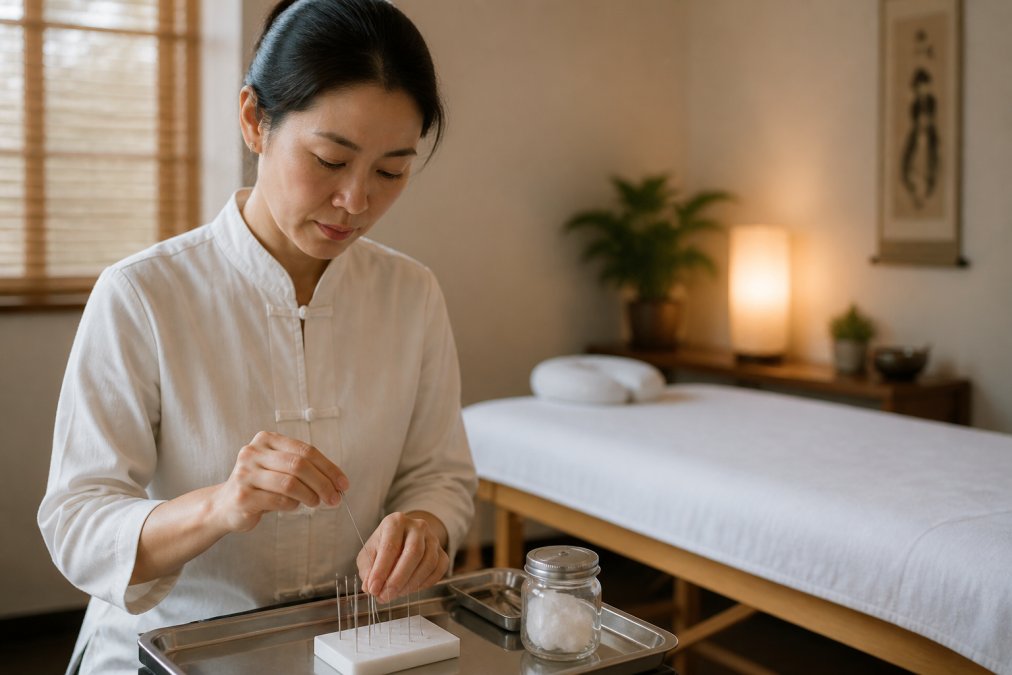
Here is the general flow:
- Intake and history. The practitioner asks about your pain pattern, medical history, medications, and prior treatments.
- Point selection. Based on the assessment, the practitioner chooses points along the meridians associated with your symptoms.
- Needle insertion. Very thin, sterile needles are placed. You may feel a brief pinch or a dull ache.
- Rest period. Needles stay in for roughly 15 to 30 minutes while you lie still.
- Removal and debrief. Needles are removed, and you discuss what to expect over the next few days.
How Often Should You Get a Massage for Back Pain?
For most people, one session per week during an active flare, tapering to every two to four weeks once pain settles, is a common starting rhythm. Treatment frequency should follow your symptoms, not a fixed calendar.
A reasonable pattern looks like this:
- Acute flare: weekly sessions for two to four weeks
- Improving phase: every two weeks
- Maintenance: monthly, or as needed
Which Treatment Fits Your Back Pain Type?
The right choice depends on your pain pattern, not on which therapy has better marketing. Use this framework to sort yourself into the right starting point.
Step 1: Classify Your Pain
Answer these three questions before you book anything.
- Can you point to the spot? If yes, the cause is more likely muscular, which favors massage. If the pain is diffuse or moves around, that pattern favors acupuncture.
- How long has it lasted? Under six weeks is acute; over three months is chronic. Acute muscular pain usually responds faster to massage. Chronic pain that has outlasted the original tissue irritation is where acupuncture tends to earn its place.
- What makes it better or worse? Pain that eases with movement and heat and worsens with prolonged sitting often points to muscular tension. Pain that flares unpredictably, or that persists even when the tissue feels calm, points to a nervous-system component.
Step 2: Match the Pattern to a Starting Point
- Acute strain after lifting or a sudden movement, pain you can press on: Start with massage. Weekly sessions for two to four weeks, tapering as it settles.
- Chronic low back pain lasting months, diffuse or hard to localize: Start with acupuncture. A common pattern is weekly sessions for four to six weeks, then reassess.
- Pain that is both muscular and persistent: Start with whichever you can access sooner, then add the other. Many people alternate weekly between the two during an active phase.
- Pain with numbness, weakness, or loss of bladder control: Neither therapy is the right first step. Get a medical evaluation before any bodywork.
Step 3: Sequence These With Physical Therapy
This is the piece most comparison guides skip, and it matters more than the acupuncture-versus-massage question itself.
A practical sequence looks like this:
- During a flare: Use massage or acupuncture to reduce pain enough that you can tolerate movement. Pain that keeps you still is pain that keeps you weak.
- Once pain is manageable: Begin PT for strengthening and movement retraining. This is where the durable gains come from.
- Ongoing: Keep acupuncture or massage on a maintenance schedule, monthly or as needed, to manage flare-ups while PT does the structural work.
Home-Based Alternatives Between Sessions
Professional sessions are the anchor, but what you do between them determines whether the relief holds.
- For muscular tension: A foam roller or massage ball on the glutes and mid-back, five to ten minutes daily, can reproduce some of what a therapist does between visits.
- For nervous-system-driven pain: An acupressure mat for ten to twenty minutes in the evening is a low-cost way to get a similar relaxation response to acupuncture without needles.
- For both: Gentle walking, heat before activity, and consistent sleep do more for recovery than any single session.
Natural Muscle Recovery Techniques That Support Both Therapies
Natural muscle recovery techniques work alongside acupuncture and massage rather than replacing them. The goal is to reduce inflammation, support circulation, and give the tissue what it needs between professional sessions.
- Gentle movement. Walking and light stretching keep blood flow moving without re-irritating tissue.
- Heat and cold. Heat before activity, cold after, is a common approach for muscular tension.
- Hydration and sleep. Both affect how quickly tissue recovers.
- Targeted topical support. A fast-acting cream applied to the lower back or hips can take the edge off between appointments.
- Nutritional support. Omega-3 fatty acids complement an active lifestyle and support overall joint wellness.
Conclusion
Choosing between acupuncture and massage for back pain is less about picking a winner and more about matching the tool to your pain pattern. Chronic, persistent pain often benefits from acupuncture's neurological approach, while muscular tension and stiffness usually respond faster to massage. Many people get the best results from combining both with consistent at-home recovery work.
Frequently Asked Questions
What is better for lower back pain, massage or acupuncture?
Neither is universally better. Acupuncture tends to work well for chronic low back pain with a neurological component because needle insertion may influence pain modulation and inflammation reduction. Massage excels for muscular tension, trigger points, and stress-related tightness by improving blood flow and promoting soft tissue mobilization. Your pain type, duration, and how your body responds to each approach should guide the decision.
Should I get acupuncture or a massage first for back pain?
If your pain started recently and feels muscular, a massage is often the more accessible starting point. If pain has persisted beyond six weeks or has tingling or radiating qualities, acupuncture may be worth trying first. Some people alternate both. Discuss timing with your healthcare provider, especially if you have a diagnosed condition or take blood-thinning medication.
What are the common side effects of acupuncture vs. massage?
Acupuncture side effects are typically minor: small bruises or soreness at needle sites, and occasional lightheadedness. Serious complications are rare when a licensed practitioner uses sterile needles. Massage side effects include temporary soreness, redness, or headache after deep tissue work. People with skin conditions, blood clots, or recent injuries should check with a doctor before either therapy.
How do these therapies complement a natural muscle recovery routine?
Both acupuncture and massage can pair with natural muscle recovery techniques such as hydration, gentle stretching, and targeted topicals. A non-greasy pain relief cream like Nirvana Magic Cream ($29.99) can be applied between sessions to soothe lower back tension and support mobility. Omega-3 supplementation may also complement an active recovery plan by supporting overall joint wellness.
Can I combine acupuncture and massage for back pain?
Yes, many people use both. Scheduling them on separate days gives your body time to respond to each therapy. Some practitioners suggest massage before acupuncture to relax muscles, while others prefer the reverse. Track your pain levels after each session to see which order works better for your specific back pain pattern.
If you are building a recovery routine that supports whichever therapy you choose, Nirvana Wellness Store carries the products that fit into it. Nirvana Magic Cream provides targeted, non-greasy comfort for back pain and lower back tension. Nirvana Omega-3 Capsules support joint wellness as part of a daily routine. Nirvana Vitamin K2 + D3 rounds out a bone and muscle support plan. Continue shopping at Nirvana Wellness Store and build the routine that keeps you moving.